
Florida
Geology Resources - Florida
- Florida - Department
of Environmental Protection
-
Florida Geological Survey (Below are a few of the geology-related
topics.)
- Florida's Geologic History
- Fossils
- Florida Geology Forum (back issues back to October 1999 available in PDF format)
- Florida Mining History
- Florida’s Minerals - Making Modern Life Possible
- Florida’s Rocks and Minerals
- Guide to Rocks and Minerals of Florida, Florida Geological Survey Special Publication No. 8, by Ernest W. Bishop and Lawrence L. Dee, Jr., Illustrated by Andrew R. Janson. (See the Florida Geological Survey web site for an explanation of the dates of publication for this document.) [PDF]
- Industrial Minerals
- List of Publications
- National Cooperative Geologic Mapping Program (NCGMP), presented by the Florida Geological Survey.
-
Florida Geological Survey (Below are a few of the geology-related
topics.)
- Rocks and Minerals - An Introduction
- Florida Photographs from the Florida Photographic Collection, presented by the Florida Memory Project.
- Florida State Minerals Information (USGS)
- Basic Central Florida Geology, presented by Florida Speleological Society.
- Coquina Stone (and Coral & Fossil stone) (photographs), presented on the Strombergar Architectural web site.
- Everglades National Park, Florida - Geology
- Florida Geology, presented by the Florida Speleological Society.
- Florida Geology, excerpt from –Sketch of the Geology of Florida” The Florida Review, June, 1911, pgs 488-490, presented on the Exploring Florida web site.
- Florida (southeastern) - Water Resources of Southeastern Florida with Special Reference to the Geology and Ground Water of the Miami Area (entire document), by Garald G. Parker, G. E. Ferguson, S. K. Love, and others, United State Department of the Interior, Geological Survey Water-Supply Paper 1255, United States Government Printing Office, Washington, 1955 (Out of print). Prepared in cooperation with the Florida Geological Survey, Dade County, cities of Miami and Miami Beach, and other agencies [South Florida Water Management District].
- Florida State University – Department of Geological Sciences
- Florida’s Geological History and Geological Resources, Special Publication No. 35, edited by Ted Lane, published for the Florida Geological Survey, Tallahassee, Florida, 1994.
- Geologic Map of Florida, The Geology of the Enchanted Forest, presented by "Geology with Andrew Alden."
-
“Geology and Origin of the Florida Keys,” by J. E Hoffmeister and H. G Multer Institute of Marine Sciences, University of Miami, Florida College of Wooster, Wooster, Ohio, GSA Bulletin; November 1968; v. 79; no. 11; pp. 1487-1502; 1968 Geological Society of America.
- Gillespie Museum of Minerals, Stetson University, Deland, Florida.
- Guide to Rocks and Minerals of Florida, Florida Geological Survey Special Publication No. 8, by Ernest W. Bishop and Lawrence L. Dee, Jr., Illustrated by Andrew R. Janson. (See the Florida Geological Survey web site for an explanation of the dates of publication for this document.) [PDF]
- Historic Florida Photographic Collection and Video Clips, presented by Florida Memory, State Library and Archives of Florida.
- Key Largo Limestone Revised: Pleistocene Shelf-Edge Facies, Florida Keys, USA (exceprt)
-
“Keys Geology,” by Jerry Wilkinson.
- A Location Guide for Rockhounds, (PDF) Collected by Robert C. Beste, PG, St. Louis, Missouri: Hobbitt Press, 2nd ed., December 1996, 148 pp. (Includes chapters on “Mineral Locations by State,” “Appendix and Glossary,” and “Bibliography.”)
-
National Cooperative Geologic Mapping Program (NCGMP), presented by the Florida Geological Survey.
- University of Florida – Department of Geological Sciences
- University of South Florida - Department of Geology
- Windley Key Fossil Reef Geological State Park
- Exposure of Caloosahatchee Marl (from Mineral
Industries and Resources of Florida, by E. H. Sellards, From the Sixth
Annual Report of the Florida State Geological Survey, pp. 21-114,
1914, Statistics on production collected in co-operation with the United
States Geological Survey.
Courtesy of DEP’s Florida Geological Survey.)
Fig. 19. Exposure of Caloosahatchee marl (pp. 58) 
Fig. 21. Sample of phosphate illustrating the formation of phosphate by the replacement process. The rock was clearly originally limestone at the Vicksburg formation, the form of the shells being well preserved. The carbonate has been replaced by phosphate, and the rock as shown by analysis is now a high grade phosphate. Natural size. Specimen contributed by H. R. Keyster, of the Dunnellon Phosphate Company, Rockwell, Florida. (pp. 85) 
- Photographs of Florida Stones and Fossils (from Geology
of Florida, by C. Whythe Cooke and Stuart Mossom, from the Twentieth
Annual Report of the Florida State Geological Survey, 1929. Courtesy
of DEP’s Florida Geological Survey)
Pl. 3. Fossils from the Ocala Limestone. 1. Amusium ocalanum Dall. 2. Oligopygus wetherbyi DeLoriol. 3. Oligopygus haldermani Conrad. 4. Echinocyamus vaughani Twitchell. 5. Lagunum floridanum Twitchell. 6. Lagunum archerensis Twitchell. 7. Rumphia eldridgei (Twitchell). (All echinoids after Clark and Twitchell.) (pp. 51) 
Pl. 7. Fossils from the Vicksburg Group (After Cooke). 1. Pecten poulsoni Morton. 2. P. anatipes Morton. 3. Scapharea lesueuri Dall. 4. Ostrea vicksburgensis Conrad. 5. Astarte triangulate Meyer. 6. Orthaulax pugnax (Heilprin). 7. Clypeaster rogersi (Morton). 8. Lepidoeyelina mantelli (Morton). (pp. 62) 
Pl. 8. Fossils from the Tampa Limestone. (All after Dall.) 1. Archais floridanus (Conrad). 2. Murex trophoniformis Heilprin. (3. Turritella tampae Heilprin. 4. T. systoliata Dall. 5. Pyrazisinus campanulatus Heilprin. 6. Lyria musician Heilprin. 7. Strombus lioeyelus Dall. 8. Chione rhodia Dall. 9. Antigona glyptoconcha Dall. 10. Trigoniocardia alicula Dall. 11. Cyrena pompholyx Dall. 12. Ampullina amphora Heilprin. (pp. 81) 
Pl. 10. Fossils from the Alum Buff Group. (After Gardner.) 1-2. Ostrea rugifera Dall. 3-4. Ostrea normalis Dall. (pp. 97) 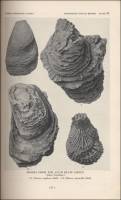
Pl. 11. Fossils from the Alum Bluff Group. (After Gardner.) 1. Cardium taphrium Dall. 2. Pecten nicholsi Gardner. 3. Pecten scanikos Gardner. 4. Pecten sayanus Dall. (pp. 99) 
Pl. 12. Fossils from the Alum Bluff Group. (After Gardner.) 1. Chione trimeris Gardner. 2. Chione glyptocyma Dall. 3. Glycymeris waltonensis Gardner. 4. G. drymanos Gardner. 5. Pecten acanikos Gardner. 6. Area waltonia Gardner. (pp. 101) 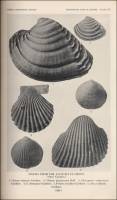
Pl. 15. Rock Springs, 6 miles north of Apoka. (pp. 132) 
Pl. 16. Fossils from the Choctawhatchee Formation. 1. Ptychosalpinx laqueata (Conrad). 2. Cancellaria propevenusta Mansfield (MS). 3. Dorsanum? plicatilum (Bose). 4. Peristernia filicata (Conrad). 5. Solenosteira Vaughani Dall. 6. Eupleura Miocenica Dall. 7. Ecphora quadricostata umbilicata Wagner. 8. Polinices coensis Dall. 9. Tegula exoleta (Conrad). (pp. 139) 
Pl. 17. Fossils from the Choctawhatchee Formation. 1. Cardita (Carditamera) vaughani Dall. 2. Anadara aresta Dall. 3. A. campsa Dall. 4. Chione xesta Dall. 5. C. ulocyma Dall. 6. Cardium virginianum Conrad. 7. Crassatellites meridionalis Dall. (pp. 141) 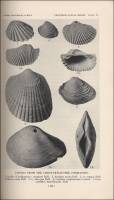


Research Resources - Florida
- Archives
- Archival Research Catalog, U. S. National Archives & Records Administration (NARA)
- Cuban Heritage Collection – University of Miami Libraries, Coral Gables, Florida.
- DuPont-Ball Library - Special Collections, Stetson University, Graceville, Florida.
- Florida A&M University Libraries - Special Collections
- Florida
Archives
- Florida State Archives Photographic Collection, presented by Florida Department of State, Division of Library & Information Services, Bureau of Archives & Records Management.
- Florida Memory, presented by the State Library and Archives of Florida
- Florida State University - Special Collections
-
Gulf Islands National Seashore – History & Culture, National Park Service.
- Lakeland Public Library - Special Collections, Lakeland, Florida.
- Library of Congress Digitized American Memory Collection
- National Union Catalog of Manuscript Collections (NUCMC) Listing of Archives and Manuscript Repositories
- Repositories of Primary Sources: Florida (University of Idaho Library, Special Collections and Archives)
- Sarasota County History Center, Sarasota, Florida.
- Southeastern Regional Black Archives Research Center and Museum, Located in Historic Carnegie Library, Florida A&M University, Tallahassee, Florida.
- Special Collections Web Resources, hosted by the Rare Book and Manuscript Section of the American Library Association, includes links to discussion lists, information about electronic records, and online preservation resources.
- St. Thomas University Archives and Special Collections, Miami Gardens, Florida
- U. S. National Archives & Records Management (NARA)
- University of Central Florida Libraries - Special Collections Department, Orland, Florida.
- University of Florida - George A. Smathers Libraries - Special and Area Studies Collections
- University of Miami - Otto G. Richter Library - Archives and Special Collections
- University of Northern Florida - Special Collections
- University of South Florida Libraries - Digital Collections
- University of South Florida - Tampa Library Special Collections, Tampa, Florida.
- Historical Sources
- Along the Georgia-Florida Coast, presented by the National Register of Historic Places.
- American Folklife Center - The Library of Congress' repository for American folk music and folklore and folklife collections.
- American Local History Network – Florida
- American Memory - the Library of Congress' gateway to primary source materials relating to the history and culture of the United States. “Mission: American Memory provides free and open access through the Internet to written and spoken words, sound recordings, still and moving images, prints, maps, and sheet music that document the American experience. It is a digital record of American history and creativity. These materials, from the collections of the Library of Congress and other institutions, chronicle historical events, people, places, and ideas that continue to shape America, serving the public as a resource for education and lifelong learning.”
- Buena Vista Historical Society
- Courthouses Recorded in Florida, by Historic American Buildings Survey (HABS) and the Historic American Engineering Record (HAER)
- The Cultural History Cybermuseum – a part of the Keys Historeum, presented by the Historical Preservation Society of the Upper Keys.
- Drive the Old Spanish Trail
- Exploring Florida: Social Studies Resources for Students and Teachers
- Florida Buildings, Structures, & Architects on the Philadelphia Architects & Buildings Project (PAB) web site. You can search the database for buildings, structures, and architects either as a visitor or you can register free. You cannot search for specific cities, but you can search for county locations. There are no photographs presented, but the location and/or address and the name of the architect are included if known; and the historic registration information is also included.
- Florida Civil War Heritage Trail, (book) by the Florida Association of Museums, with the support of historic preservation grant assistance provided by the Florida Department of State’s Division of Historical Resources, assisted by the Florida Historical Commission. (A free pdf version of the book is available on the web site.)
- Florida Department of State - Division of Historical Resources
- Florida Digital Newspaper Library, University of Florida Digital Collections, George A. Smathers Libraries.
- Florida GenWeb Project, Darrel R. Bell, State Coordinator.
- Florida Historical Society and the Alma Clyde Field Library of Florida History
- Florida History Internet Center
- Florida History Timeline, presented by e-ReferenceDesk.
- Florida Keys History Museum, presented by the Historical Preservation Society of the Upper Keys.
-
Florida Master Site File Florida’s Inventory of Historical, Cultural Resources, presented by the Florida Division of Historical Resources.
- Florida Master Site File is the State of Florida’s official inventory of historic and cultural resources
“Florida Records 200,000 Historic and Cultural Resources, Press release issued Sept. 8, 2015, Secretary of State Ken Detzner announced today that the Florida Master Site File has reached a milestone of 200,000 historic and cultural resources recorded within the State of Florida. The Florida Master Site File is the State of Florida's official inventory of historic and cultural resources….”
- Florida Master Site File is the State of Florida’s official inventory of historic and cultural resources
- Florida Memory, presented by the State Library and Archives of Florida
- Florida State University - Special Collections
- Florida’s Historic Places, presented by Exploring Florida.
- Florida’s History Through Its Places (photographs and history), presented by the State of Florida Cultural and Historical Programs.
- Ghost Towns of Florida, presented by Gary B Speck Publications.
- Historic Preservation Overview – Historic Federal Buildings, U. S. General Services Administration (GSA)
- The Industries Room of the Keys Historeum, presented by the Historical Preservation Society of the Upper Keys. (Includes: Rock Quarries, Sponging Industry, Florida Keys Electric Co-op, & the Diving Industry Recreational)
- Key’s Historeum, presented by the Historical Preservation Society of the Upper Keys. (Includes: 1. The Cultural History Cybermuseum; 2. The Reading Room of Written Upper Florida Keys History; & 3. The Natural History Cybermuseum.)
- Linkpendium - Florida
- Making of America (MOA) Making of America is a digital library of primary sources in American social history from the antebellum period through reconstruction.
- The National Parks Service - Links to the Past - People - Places - Objects & Events: “Explore America's cultural resources - buildings, landscapes, archeological sites, ethnographic resources, objects and documents, structures and districts.”
- The Natural History Cybermuseum – a part of the Keys Historeum, presented by the Historical Preservation Society of the Upper Keys.
- The Nineteenth Century in Print: The Making of America in Books and Periodicals. A distributed digital library collaboration at the Cornell University Library - Library of Congress - American Memories.
- Northeast Florida Tourism
- Orlando: Brief History of Orlando and Central Florida
- Pensacola Historical Society
- Pinellas County Historical Society
- Railways - A Summary of the State of Railroads in the United States, Including the Prospects for a Pacific Railroad, from the Report of the Superintendent of the Census for December 1, 1852 - Seventh Census. This web site presented by the Central Pacific Railroad Photographic History Museum.
- Resources for Historians - The History Guide, presented by Steven Kreis.
- St. Augustine: Tour and History (1918) - Highways and Byways of Florida, presented by Exploring Florida.
- The State of Florida’s Office of Cultural & Historical Resources, presented on the My Florida.com web site.
- Upper Keys Stone Quarries in the Industries Room of the Keys Historeum web site, presented by the Historical Preservation Society of the Upper Keys. (Includes: Rock Quarries, Sponging Industry, Florida Keys Electric Co-op, & the Diving Industry Recreational)
- Windley Key Fossil Reef Geological State Park
- WPA Life Histories from Florida - Manuscripts from the Federal Writer's Project, 1936-1940, Library of Congress.
“This guidebook is the newest addition to the Florida Heritage Trail series, which includes the Florida Spanish Colonial Heritage Trail, Florida Native American Heritage Trail, Florida World War II Heritage Trail, Florida Cuban Heritage Trail, Florida Black Heritage Trail, the Florida Jewish Heritage Trail and the Florida Women’s Heritage Trail.”
- Libraries
- Florida Department of State - Library and Information Services
- Florida Electronic Library
- Florida Memory, presented by the State Library and Archives of Florida
- Florida State University Libraries, Tallahassee, Florida.
- Florida’s Public Libraries, presented by publiclibraries.com.
- LIB CAT: US - Florida
- Library of Congress Digitized American Memory Collection
- Miami Dade Public Library System
- National Archive - Southeast Region Including Florida
- Museums
- The Alma Clyde Field Library of Florida History (Florida Historical Library Foundation)
- Florida Keys History Museum, Presented by the Historical Preservation Society of the Upper Keys.
- Florida Museum of Natural History
- Gillespie Museum of Minerals, Stetson University, Deland, Florida.
- Gulf Beaches Historical Museum, Pass-a-Grille, Florida.
- Halifax Museum, Daytona Beach, Florida.
- Historical Museum of Southern Florida, Miami, Florida.
- The Lightner Museum (located in the old Alcazar Hotel), St. Augustine, Florida.
- Museum of Florida History, by Florida Department of State, Division of Historical Resources.
- South Florida Science Museum, West Palm Beach, Florida.
- South Florida State University - Rock, Mineral, and Fossil Museum, Tallahassee, Florida. (According to Mining and Mineral Operations in the United States: A Visitor’s Guide, by Staff, Bureau of Mines, Area Mineral Resource Offices, U. S. Department of the Interior, Bureau of Mines, 1967, pp. 19, the university maintains a museum that is open to the public.)
- Southeastern Regional Black Archives Research Center and Museum, located in Historic Carnegie Library, Florida A&M University, Tallahassee, Florida.
- University of Florida - Florida Museum of Natural History, Gainesville, Florida.
- Ximenez-Fatio House Museum, St. Augustine, Florida.
- Other
- 1895 U.S. Atlas - Florida
- Color Landform Atlas - Florida
- Cyndi's List - Online Research Resources - Florida
- Florida Heritage Collection (A very few of the offerings at this site are listed below.)
- Florida Scenic Highways
- Geographic Names Information System (GNIS)
- Guide to 50 States - Florida
- Mapquest World Atlas - Florida
- The Perry-Castañeda Library Map Collection - Florida Maps - From the University of Texas at Austin.
- Topographic Maps and Atlases
- TopoZone “The TopoZone is the Web's center for recreational and professional topographic map users.” (Includes a place name search form.)
- World Almanac for Kids Online – Florida
- U. S. Census - Florida State & County QuickFacts
- WorldAtlas.com – Florida
- Yale Peabody Museum: GNIS - Search the USGS Geographic Names Database.
The Florida Stone Industry
- 1882 - The Florida Stone and Building Industry in 1882 (transcription), excerpts from Mineral Resources of the United States, Calendar Year 1882, J. S. Powell, Director, Department of the Interior, United States Geological Survey, Government Printing Office, Washington, D. C., 1883. Excerpts from the chapters on 1) "Structural Materials," 2) "Abrasive Materials," and 3) "The Useful Minerals of the United States."
- 1883 and 1884 - The Florida Stone Industry, Excerpts from Mineral Resources of the United States - Calendar Years 1883 and 1884 (PDF images of sections), Department of the Interior, United States Geological Survey, Government Printing Office, Washington, D. C., 1885.
- 1885 - The Florida Stone and Building Industry in 1885 (transcription), excerpts from Mineral Resources of the United States, Calendar Year 1885 (PDF images of sections), David T. Day, Geologist, Department of the Interior, United States Geological Survey, Government Printing Office, Washington, D. C., 1887. Excerpt from the chapter on "Structural Materials," by H. S. Sproull.
- 1886 - Florida Building and Ornamental Stones, 1886, and History of the Florida Stone Industry - Excerpt from Report of the United States National Museum Under the Direction of the Smithsonian Institutions For the Year Ending June 30, 1886, Chapter entitled, “The Collection of Building and Ornamental Stones In The U. S. National Museum: A Hand-book and Catalogue,” By George P. Merrill, Curator, Department Lithology and Physical Geology.
- 1886 - The Florida Stone and Building Industry, 1886 (transcription), Excerpts from Mineral Resources of the United States, Calendar Year 1886 (PDF images of sections), David T. Day, Chief of Division of Mining Statistics and Technology, Department of the Interior, United States Geological Survey, Government Printing Office, Washington, D. C., 1887. Excerpts from the chapter on "Structural Materials," by William C. Day.
- 1887 - The Florida Stone and Building Industry, 1887, Excerpts from Mineral Resources of the United States - Calendar Year 1887 (PDF images of sections), J. W. Powell, Director, David T. Day, Chief of Division of Mining Statistics and Technology, Department of the Interior, United States Geological Survey, Government Printing Office, Washington, D. C., 1888
- 1888 - The Florida Stone and Building Industry, 1888, Excerpts from Mineral Resources of the United States - Calendar Year 1888 (PDF images of sections), J. W. Powell, Director, David T. Day, Chief of Division of Mining Statistics and Technology, Department of the Interior, United States Geological Survey, Government Printing Office, Washington, D. C., 1890
- 1889 and 1890 - The Florida Stone and Building Industry, 1889, Excerpts from Mineral Resources of the United States - Calendar Year 1889 and 1890 (PDF images of sections), J. W. Powell, Director, David T. Day, Chief of Division of Mining Statistics and Technology, Department of the Interior, United States Geological Survey, Government Printing Office, Washington, D. C., 1892
- 1891 - The Florida Stone and Building Industry, 1891, Excerpts from Mineral Resources of the United States - Calendar Year 1891 (PDF images of sections), J. W. Powell, Director David T. Day, Chief of Division of Mining Statistics and Technology, Department of the Interior, United States Geological Survey, Government Printing Office, Washington, D. C., 1893
- 1892 - The Florida Stone and Building Industry, 1892, Excerpts from Mineral Resources of the United States - Calendar Year 1892 (PDF images of sections), J. W. Powell, Director, David T. Day, Chief of Division of Mining Statistics and Technology, Department of the Interior, United States Geological Survey Government Printing Office, Washington, D. C., 1893
- 1893 - The Florida Stone and Building Industry, 1893, Excerpts from Mineral Resources of the United States - Calendar Year 1893 (PDF images of sections), J. W. Powell, Director, David T. Day, Chief of Division of Mining Statistics and Technology, Department of the Interior, United States Geological Survey, Government Printing Office, Washington, D. C., 1894
- 1894 - The Florida Stone Industry - mid-1890s from the Sixteenth Annual Report of the United States Geological Survey, Part IV. Mineral Resources of the United States, 1894, Nonmetallic Products (PDF images of sections). Excerpts from the chapter on "Stone," by William C. Day. Click here if you wish to read the entire chapter on "Stone." The following excerpt is from the Chapter on "Stone" Regarding the State of Florida Stone Industry in the Mid-1890s.
-
"Florida.-Production of stone of any kind in this State is limited to the past few years. The value of the limestone output in 1894 was $30,639, and its use was divided about equally between the building of jetties and burning into lime."
- 1895 - The Florida Stone and Building Industry, 1895, Excerpts from Seventeenth Annual Report of the United States Geological Survey (PDF images of sections), Part III. Mineral Resources of the United States, 1895, Nonmetallic Products, Except Coal. Washington: Government Printing Office, 1896.
- 1896 - The Florida Stone and Building Industry, 1896, Excerpts from Eighteenth Annual Report of the United States Geological Survey (PDF images of sections), Part V. Mineral Resources of the United States, 1896, Nonmetallic Products, Except Coal. Washington: Government Printing Office, 1897.
- 1897 - The Florida Stone and Building Industry, 1897, Excerpts from Nineteenth Annual Report of the United States Geological Survey (PDF images of sections), Part V. Mineral Resources of the United States, 1896, Nonmetallic Products, Except Coal. Washington: Government Printing Office, 1898.
- 1898 - The Florida Stone and Building Industry, 1898, Excerpts from Twentieth Annual Report of the United States Geological Survey (PDF images of sections), Part VI. Mineral Resources of the United States, 1898, Nonmetallic Products, Except Coal and Coke. Washington: Government Printing Office, 1899.
- 1899 - The Florida Stone and Building Industry, 1899, Excerpts from Twenty-first Annual Report of the United States Geological Survey (PDF images of sections), Part VI. Mineral Resources of the United States, 1899, Nonmetallic Products, Except Coal and Coke. Washington: Government Printing Office, 1901.
- 1900 - The Florida Stone and Building Industry, 1900, Excerpts from Mineral Resources of the United States - Calendar Year 1900 (PDF images of sections), Charles D. Walcott, Director, David T. Day, Chief of Division of Mining and Mineral Resources, Department of the Interior, United States Geological Survey, Government Printing Office, Washington, D. C., 1901
- 1901 - The Florida Stone and Building Industry, 1901, Excerpts from Mineral Resources of the United States - Calendar Year 1901 (PDF images of sections), Charles D. Walcott, Director, David T. Day, Chief of Division of Mining and Mineral Resources, Department of the Interior, United States Geological Survey, Government Printing Office, Washington, D. C., 1902
- 1902 - The Florida Stone and Building Industry, 1902, Excerpts from Mineral Resources of the United States, Calendar Year 1902 (PDF images of sections), Charles D. Walcott, Director, Department of the Interior, United States Geological Survey, Government Printing Office, Washington, D. C., 1904.
- 1903 - The Florida Stone and Building Industry, 1903, Excerpts from Mineral Resources of the United States, Calendar Year 1903 (PDF images of sections), Charles D. Walcott, Director Department of the Interior, United States Geological Survey, Government Printing Office, Washington, D. C., 1904.
- 1904 - The Florida Stone and Building Industry, 1904, Excerpts from Mineral Resources of the United States, Calendar Year 1904 (PDF images of sections), Charles D. Walcott, Director, Department of the Interior, United States Geological Survey, Government Printing Office, Washington, D. C., 1905.
- 1905 - The Florida Stone and Building Industry, 1905, Excerpts from Mineral Resources of the United States - Calendar Year 1905 (PDF images of sections), Charles D. Walcott, Director, Department of the Interior, United States Geological Survey, Government Printing Office, Washington, D. C., 1906.
- 1906 - The Florida Stone and Building Industry, 1906, Excerpts from Mineral Resources of the United States - Calendar Year 1906 (PDF images of sections), George Otis Smith, Director, Department of the Interior, United States Geological Survey, Government Printing Office, Washington, D. C., 1907.
- 1907 - The Florida Stone and Building Industry, 1907, Excerpts from Mineral Resources of the United States, Calendar Year 1907 (PDF images of sections), Part II. Nonmetallic Products, George Otis Smith, Director, Department of the Interior, United States Geological Survey, Government Printing Office, Washington, D. C., 1908.
- 1908 - The Florida Stone Industry, 1908, Excerpts from Mineral Resources of the United States, Calendar Year 1908 (PDF images of sections), Part II - Nonmetallic Products, Department of the Interior, United States Geological Survey, Government Printing Office, Washington, D. C., 1909. Excerpts from the book from the chapter on "Stone," by A. T. Coons.
- 1994 - 2010-2011 – The Mineral Industry of Florida - United States Geological Survey (1994 through 2010-2011).
- Anastasia Formation Coquina located in St. Johns County to Palm Beach County & Inland, Florida, information and photograph by the Florida Geological Survey.
According to this web site, the Anastasia Formation Coquina “is composed of Pleistocene...interbedded sands and coquinoid limestones.” The color is described as an orangish brown “consisting of whole and fragmented mollusk shells in a matrix of sand, cemented by calcite.” For over 400 years coquina has been used as a building stone in Florida. You can read more about the locations of the exposures at the link above.
- Avon Park Formation (Marine Limestone with Dolostone) located in the Florida Peninsula & the Ocala Platform, Citrus & Levy Counties, Florida, information and photograph by the Florida Geological Survey.
According to this web site, the “...Avon Park Formation is composed of cream to light-brown or tan, Middle Eocene..., fossiliferous marine limestone interbedded with dolostone.” Exposures of this stone occur near the crest of the Ocala Platform in Citrus and Levy Counties throughout the Florida Peninsula and the eastern panhandle. The stone is composed of cream to light-brown or tan colors.
- Building Stone Resources in Florida (circa 1914), (excerpt from “Limestone,” Mineral Industries and Resources of Florida, by E. H. Sellards, From the Sixth Annual Report of The Florida State Geological Survey, 1914, pp. 40-41.)
“The building stone of the State consists chiefly of limestones, of which several varieties occur.
Coquina: - The coquina rock of Anastasia Island near St. Augustine has been known as a building stone for more than three hundred years. This coquina was in fact the first stone used for building purposes in America, its use having begun with the settlement of St. Augustine about 1565. Coquina consists of a mass of shells of varying size or fragments of shells cemented together ordinarily by calcium carbonate. A small admixture of sand is in some instances included with the shells. When first exposed the mass of shells is imperfectly cemented and the rock is readily cut into blocks of the desired size. Upon exposure, however, the moisture contained in the interstices of the rock evaporates and in doing so deposits the calcium carbonate which it held in solution, thus firmly cementing the shell mass into a firm rock. Thus indurated the resisting qualities of the rock are good. The shells from this formation have been extensively used with concrete in the construction of modern buildings at St. Augustine. Aside from its occurrence on Anastasia Island coquina is found at many other points along both the east and west side of the peninsula.
Vicksburg Limestone: - The Vicksburg limestone has been used to some extent for building purposes. This is true especially of that phase of the Vicksburg known as the ‘chimney rock’ described in the preceding reports as the Marianna and the Peninsular limestones. The chimney rock when first taken from the ground is very soft and can be easily sawed into blocks. Upon exposure to the air it hardens, due, as in the case of the coquina, to the evaporation of moisture from the interstices of the rock. The chimney rock was early used both in Alabama and Florida for the construction of chimneys and to some extent for building purposes.
“Locally the Vicksburg and some of the other limestones in Florida become very close grained and compact. In this condition the limestone is hard, approaching marble in appearance. Although little used this phase of the limestone formation is capable of producing a good building stone.
“Miami Oolite: - The Miami oolitic limestone has been used successfully as a building stone at Miami. This formation extends for some distance along the eastern border of the Everglades north and south from Miami. As in the case of the other limestones when first taken from the quarry it is relatively soft and easily worked, but hardens upon exposure. The court-house, Halcyon Hall hotel and some other buildings at Miami are constructed of this rock.
“The limestones of the Everglades of Florida constitute a resource that will become valuable as that section of the state is developed. In this connection may be included a brief paper on the geology of this interesting region, prepared originally for the State Drainage Commission, in which is included descriptions and analyses of the several limestones that are found underlying the Everglades. In making the examination of the exposures along the canals and in Lake Okeechobee, May 19 to 23, 1914, a small launch was used, placed at the writer’s disposal through the courtesy of the Chief Engineer of the State Drainage Commission.” *
(* Please note that the section entitled, “The Geology of the Everglades of Florida,” will not be included here. If you wish a copy of this section, feel free to contact me. Peggy B. Perazzo)
- Coquina Stone (and Coral & Fossil stone) (photographs), presented on the Strombergar Architectural web site.
- Dimension Stone in Florida - Coquina Stone Quarries. Due to the lack of other dimension stone in Florida, the soft coquina stone has been used since the 17th century as a building stone. Coquina stone hardens when exposed to the air. (From Industrial Minerals and Rocks, senior editor, Donald D. Carr; associate editors, A. Frank Alsobrook, [et al.] 6th ed., Society for Mining, Metallurgy, and Exploration, Littleton, Colorado, published by SME, 1994, pg. 24.) (Book)
- DiscoverySchool.com - Florida - Minerals and Mining. Limestone is Florida's most plentiful mineral. Limestone quarries
are located throughout the state. Coquina (Limestone): In Florida
a limestone called coquina was formed of shells and coral. This stone
was used in the construction of roads and buildings. (This information
is no longer available on this web site.) <http://school.discovery.com/homeworkhelp/worldbook/
atozgeography/f/201260.html> - Florida’s Geological History and Geological Resources, Special Publication No. 35, edited by Ted Lane, published for the Florida Geological Survey, Tallahassee, Florida, 1994.
- Florida's Industrial Minerals: Making Modern life Possible, presented by the Mineral Information Institute.
- Florida’s Rocks and Minerals, presented by the Florida Department of Environmental Protection.
- Lime Resources in Florida (circa 1914), (excerpt from “Lime,” Mineral Industries and Resources of Florida, by E. H. Sellards, From the Sixth Annual Report of The Florida State Geological Survey, 1914, pp. 36-37.)
“Lime or ‘quick lime’ is chemically an oxide of calcium or calcium and magnesium. It is formed ordinarily by burning limestone, although shells and other calcium carbonates may be used for the same purpose. Limestone when burned gives up carbon dioxide. The residue after burning forming a lime, consists of a calcium oxide, when a pure calcium carbonate limestone is used; or of calcium and magnesium oxide when a dolomitic limestone is used. The reaction in the case of a pure limestone is as follows: CaCO3 when heated breaks up into CaO+CO2. In the case of dolomitic limestone a magnesium oxide as well as calcium oxide is formed.
“The character of the lime varies according to the amount of magnesium present in the limestone form which it is made. Peppel* offers the following classification of the ordinary or ‘white limes’, including in that term limes containing not more than 5 per cent sandy and clayey impurities:
(* Page 36 footnote: Bulletin No. 4, 4 th Series, Ohio Geol. Survey, p. 254, 1906.)
(1) High-calcium, or ‘hot’ or ‘quick’ limes. Made from limestones containing not less than 85 per cent. of carbonate of calcium.
(2) Magnesium limes. Made from limestone containing between sixty-five and eighty-five per cent. carbonate of calcium and between ten and thirty per cent. of carbonate of magnesium.
(3) Dolomitic, or ‘cool’ or ‘slow’ limes. Made from limestones containing more than thirty per cent. of carbonate of magnesium.
“These limes differ slightly among themselves. The high calcium or ‘hot’ or ‘quick’ limes set more quickly, while the magnesium and dolomitic limes set more slowly. Limes thus serve different purposes, the high calcium limes being used when a quick-setting limes are desired. After calcination, the lime may be placed on the market as quick lime, or it may be slaked and placed on the market as hydrated lime. Hydrated lime is said to be desirable for certain purposes since the lime if properly slaked breaks up into exceedingly fine powder.
“The total quantity of quick and hydrated lime made in Florida during 1913 amounted to 18,917* tons, valued at $100,335.* The companies reporting production of lime in Florida during 1913 were as follows:
(* The Errata at the beginning of the book states: “Page 36, third line from the bottom of the page, for ’18,917,’ read 16,845; and for $100,335,’ read $89.873.)
Florida Lime Company, Ocala, Florida.
Live Oak Limestone Company, Live Oak, Florida.
Marion Lime Company, Ocala, Florida.
Standard Lime Company, Kendrick, Florida.
“In addition to these, the Virginia-Florida Lime Company, and the Blowers Lime and Phosphate Company, organized during 1913, were expected to begin operations during 1914.”
- Limestone Resources in Florida (circa 1914), (excerpt from “Limestone,” Mineral Industries and Resources of Florida, by E. H. Sellards, From the Sixth Annual Report of The Florida State Geological Survey, 1914, pp. 39-40.)
“In addition to that used in making lime, limestone is produced in Florida for other purposes as follows: Broken limestone used for railroad ballast, concrete and road material, and ground limestone for application to soils. A limited amount of limestone was probably also used in building, although not reported. The quantity of limestone produced for the various purposes mentioned are as follows: Railroad ballast, 93,750 tons, valued at $37,500; concrete, 123, 506 tons, valued at $72,432; road material, rock valued at $156,589; ground for application to soils, 16,908 tons, the total production amounting to $156,589.00.
“The following is a list of firms reporting the production of limestone in Florida during 1913:
Blowers Lime and Phosphate Company, Ocala, Florida.
Crystal River Rock Company, Crystal River, Florida.
Florida Lime Company, Ocala, Florida.
Marion Lime Company, Ocala, Florida.
E. P. Maule, Fort Lauderdale, Florida.
Palm Beach County, West Palm Beach, Florida.
Standard Lime Company, Kendrick, Florida.
- Limestone (in Florida circa 1925), Excerpt from: Agassiz, Garnault. "Florida in Tomorrow's Sun" Suniland, Nov. 1925, Vol. 3, No. 2., Pgs. 37-45; 88-94; 113-133, on the Exploring Florida web site.
- Marianna Limestone located near Marianna, Florida, information and photograph by the Florida Geological Survey.
The Marianna Limestone was quarried near Marianna, Florida, in the past for use as building stone. The color of the stone ranges from white to cream, and it is fossiliferous, variably argillaceous marine limestone occurring in the central panhandle.
- Miami Marine Limestone (formerly the Miami Oolite) located in Southeastern Peninsular Florida & in the Keys, Florida, information and photograph by the Florida Geological Survey.
According to this web site, the “... Miami Limestone consists of two facies: an oolitic facies and a bryozoan facies. The oolitic facies consists of white to orangish gray, oolitic limestone with scattered concentrations of fossils. Ooliths are small rounded grains so named because they look like fish eggs. Ooliths are formed by the deposition of layers of calcite around tiny particles, such as sand grains or shell fragments. The bryozoan facies consists of white to orangish gray, sandy, fossiliferous limestone. Beds of quartz sand and limey sandstones may also be present....” Use the above link to learn more about the fossils present and specific locations of Miami limestone outcrops.
- Mineral Production in Florida During 1913, (excerpt from “Summary Statement of Mineral Production in Florida During 1913,” Mineral Industries and Resources of Florida, by E. H. Sellards, From the Sixth Annual Report of The Florida State Geological Survey, 1914, pp. 101-102.)
Summary Statement of Mineral Production in Florida During 1913.
Collected in Co-operation with the United States Geological Survey.
Common or building brick, 42,450 M., valued at $240,126.00.
Lime, including quick and hydrated lime, 18,917* short tons, valued at $100,335.00.*
Limestone, including ground limestone for agricultural use and crushed rock for railroad ballast, concrete and road material - $156,589.00.
Mineral waters, 343,123 gallons, valued at $37,474.00.
Phosphate rock, 2,545,276 long tons, valued at $9,563,084.00.
Sand and gravel, including building and moulding sand and gravel, 87,061 short tons, valued at $21,194.00.
Sand-lime brick, including common and front brick, 73,415 thousand, valued at $79,679.00.**
Mineral products not separately listed, including ball clay, drain tile, diatomaceous earth, fullers earth and other miscellaneous materials, valued at $448,147.00.
Total mineral products in Florida during 1913, valued at $10,646,628.00.**
(* The Errata at the beginning of the book states: “Page 36, third line from the bottom of the page, for ’18,917,’ read 16,845; and for $100,335,’ read $89.873.)
( ** The Errata at the beginning of the book states: “...twelfth line from the top of the page, for ’73,415,’ read 13,371; and in last line on page, for ‘$10,646,628.00’ read $10,636,266.00.”)
- Ocala Limestone (formerly the Miami Oolite) which underlies most of Florida, information and photograph by the Florida Geological Survey.
According to this web site, the “...Ocala Limestone consists of white to cream, Upper Eocene...marine limestones and occasional dolostones....” The color ranges from white to cream, and is composed of almost pure calcium carbonate. The Ocala Limestone underlies most of Florida and is used as roadbase and cement. Visit the above link for more information about this limestone.
- Road Material Resources in Florida (circa 1914), (excerpt from “Limestone,” Mineral Industries and Resources of Florida, by E. H. Sellards, From the Sixth Annual Report of The Florida State Geological Survey, 1914, pp. 101-102.)
“The road materials of the State include chiefly the limestone, marl, and shell deposits, the flint, chert and gravel, and the sandy or road-making clays. The production of road materials can scarcely be estimated. The sandy clays in particular are used locally, no record being kept of the amount handled. The calcareous and siliceous materials find more general usage, the production and value being frequently reported. The value of this class of road-making material is recorded, so far as obtained under the headings ‘Limestone’ and ‘Gravel.’
“At the close of 1912 the total mileage of improved roads in Florida was approximately 2,848 miles. Of this number 857.8 miles are surfaced with marl or crushed stone; 1,408.75 are surfaced with sand-clay; 218 miles are surfaced with shell; 5.2 miles with cement; 26.5 miles with gravel;.4 mile with asphalt, and 8.5 miles with brick. These statistics are for the year 1912, the reports for the succeeding years not being sufficiently complete to justify publication. It is known, however, that the total mileage of improved roads in Florida was materially increased during 1912 and 1913. This applies particularly to the brick roads, several counties, among which are Duval, Hillsboro, Orange, St. Johns and Seminole counties, being now actively engaged in building paved brick roads along the important highways of travel....”
- Rock Quarries in the Keys, presented by the Historical Preservation Society of the Upper Keys in “The Industry Room” of the web site.
- St. Marks Formation Marine Limestone which is located in Wakulla, Leon, and western Jefferson Counties, information and photograph by the Florida Geological Survey.(The link from which the following information was obtained is no longer available.)
<http://www.dep.state.fl.us/geology/geologictopics/rocks/stmarks_fm.htm>According to this web site, the “...St. Marks Formation is a white to yellowish gray, sandy, fossiliferous Lower Miocene...marine limestone. It is exposed in sinks and streambeds in Wakulla, Leon and western Jefferson Counties. Mollusk molds and casts are often abundant.”
- Suwannee Limestone which is located in the eastern panhandle, northern peninsula, and in portions of west central Florida, information and photograph by the Florida Geological Survey.(The link from which the following information was obtained is no longer available.)
<http://www.dep.state.fl.us/geology/geologictopics/rocks/suwannee_limestone.htm>According to this web site, the color of the Suwannee Limestone is white to cream and there are limited occurrences of dolostone in other colors. Visit the above web site for a more specific description and locations of exposures.
- Tamiami Formation which occurs in Charlotte, Lee, Hendry, Collier, and Monroe Counties in the southern peninsula of Florida, information and photograph by the Florida Geological Survey.
According to this web site, the Tamiami Formation comprises “...a wide range of rock types, including: light gray to tan fossiliferous sands, light gray to green fossiliferous sandy clays and clayey sands, and white to light gray, poorly consolidated, sandy, fossiliferous limestone....”
- Tampa Member (formerly Tampa Limestone) of the Arcadia Formation some of which occurs Ballast Point and Six-Mile Creek areas in Tampa, Hillsborough County, information and photograph by the Florida Geological Survey.
According to this web site, the Tampa Member “...is a white to light gray, fossiliferous, Upper Oligocene to Lower Miocene...marine limestone....” Visit the above web site for more specific information on this formation.
- Upper Keys Stone Quarries in the Industries Room of the Keys Historeum web site, presented by the Historical Preservation Society of the Upper Keys.
Printed and Online Sources
- The African American Heritage of Florida, by D. Colburn and J. Landers, Gainesville: University Press of Florida, 1995.
- American Lighthouses: A Comprehensive Guide, by B. Roberts, Old Saybrook: Globe Pequot Press, 1998.
- America's Ancient City: Spanish St. Augustine 1565-1763 (The Spanish Borderlands Sourcebooks), ed. by K. Deagan, v. 25. New York: Garland Press, 1991.
- America's Atlantic Coast Lighthouses, by K. Kochel, Clearwater: Betken Publishers, 1996.
- America's First City: St. Augustine's Historic Neighborhoods, by K. Harvey, Lake Buena Vista: Tailored Tours Publications, 1997.
- The Apalachee Indians and Mission San Luis, by J. Hann and B. McEwan, Gainesville: University Press of Florida, 1998.
- Apalachee. The Land Between the Rivers, by J. Hann, Gainesville: University Presses of Florida, 1988.
- "The Architecture of Historic St. Augustine: A Photographic Essay," The Florida Historical Quarterly, by F. Blair Reeves, Vol. 44, July-October 1965, No. 1 & 2, pp. 94.
- Art of the Florida Seminole and Miccosukee Indians, by D. Downs, Gainesville: University Press of Florida, 1995.
- An Atlas of Maritime Florida, by R. Smith, J. Miller, S. Kelley, and L. Harbin, Gainesville: University Press of Florida, 1997.
- The Awakening of St. Augustine: The Anderson Family and the Oldest City, 1821-1924, by Thomas Graham, 289 pp.
- Bansemer's Book of Florida Lighthouses, by R. Bansemer, Sarasota: Pineapple Press, 1999.
- Before the White Man: The Prehistory of St. Johns County, Florida, by James M. Smith.
- The Building of the Castillo de San Marcos, by Luis Rafael Arana and Albert Manucy.
- The Cathedral-Basilica of St. Augustine and It's History, Davis, Albina M., editor, St. Augustine, 1987, iv, 21 pp.
- Chapin's Handbook of St. Augustine, by George H. Chapin, Geo H. Chapin publisher, St. Augustine, 1884.
- Coquina, by Jean Parker Waterbury, St. Augustine: St. Augustine Historical Society, 1993.
- "The Dolomitic Limestones of Florida," by R. H. Hopkins, Florida Geological Survey Report Inv. 3, 1942.
- An Environmental History of Northeast Florida, by J. Miller, Gainesville: University Press of Florida, 1998.
- Fifty Years of Southeastern Archaeology: Selected Works of John W. Griffin, by J. Griffin, P. Griffin, ed., & K. Deagan, Gainesville: University Press of Florida, 1996.
- Florida: A Short History, by M. Gannon, Gainesville: University Press of Florida, 1993.
- Florida Archaeology, by J. Milanich and C. Fairbanks, New York: Academic Press, 1980.
- Florida Books available at The Print Shoppe
- Florida Civil War Heritage Trail, (book) by the Florida Association of Museums, with the support of historic preservation grant assistance provided by the Florida Department of State’s Division of Historical Resources, assisted by the Florida Historical Commission. (A free pdf version of the book is available on the web site.)
- Florida History, by H. Bamford, St. Petersburg: Great Outdoors Publishing Co., 1976.
- Florida Indians and the Invasion from Europe, by J. Milanich, Gainesville: University Press of Florida, 1995.
- The Florida Keys: A History & Guide, by J. Williams, New York: Random House, 2000.
- The Florida Keys: A History of the Pioneers (Florida's History Through Its Places), by J. Viele, Sarasota: Pineapple Press, 1996.
- Florida's Past: People and Events That Shaped the State, by G. Burnett,. v. 1, 2, 3. Sarasota: Pineapple Press, 1988.
- Florida Place Names, by Allen Covington Morris, Coral Gables, Fla.: University of Miami Press, 1974, 160 pp.
- Florida’s Geological History and Geological Resources, Special Publication No. 35, edited by Ted Lane, published for the Florida Geological Survey, Tallahassee, Florida, 1994.
- Florida's Prehistoric Stone Technology, by B. Purdy, Gainesville: University Press of Florida, 1981.
- Fort Matanzas: Guardian of St. Augustine 's Back Door 1740-63, by Luis Rafael Arcana.
- Fort Matanzas National Monument Park Handbook,. St. Augustine, Florida: Century Souvenir Co., 1995.
- Four Walking Tours: North of the Plaza, South of the Plaza, by Jean Parker Waterbury., 32 pp.
- The French in Early Florida, by John T. McGrath, Gainesville, Florida: University Press of Florida, 2000.
- Geology of Bay County, Florida, by Walter Schmidt and Murlene W. Clark, Florida Bureau of Geology, Bulletin 57, 1980, 96 pp.
- The González-Alvarez Oldest House: The Place and Its People, by Jean Parker Waterbury, 40 pp.
- Guardians of the Lights: The Men and Women of the U.S. Lighthouse Service, by E. DeWire, Sarasota: Pineapple Press, 1995.
- Guide to Rocks and Minerals of Florida, Florida Geological Survey Special Publication No. 8, by Ernest W. Bishop and Lawrence L. Dee, Jr., Illustrated by Andrew R. Janson. (See the Florida Geological Survey web site for an explanation of the dates of publication for this document.) [PDF]
- Henry Flagler: Visionary of the Gilded Age, by S. Martin, Lake Buena Vista: Tailored Tours Pub., 1998.
- The Hispanic Presence in Florida, edited by José-Agustín Balseiro, with contributions by Vicente Murga, et al. Miami, Fla.: E. A. Seemann Pub., (1977), 1976. 160 pp.
- The History and Antiquities of the City of St. Augustine, Florida: A Facsimile Reproduction of the 1858 Edition, by G. Fairbanks, Gainesville: University Press of Florida, 1977.
- Historic Places of St. Augustine and St. John's County, by W. R. Adams and Paul L. Weaver, III, St. John's County Tourist Development Council, Southern Heritage Press, St. Augustine, 1993.
- Historical and Genealogical Holdings in the State of Florida, compiled for the Genealogy and Local History Caucus, Florida Library Association, Boca Raton: The Association, 1992, 63 pp.
- Historical Sketches of Colonial Florida, by R. Campbell, Gainesville: University Presses of Florida, 1975.
- A History of Florida, by C. Tebeau, Miami: University of Miami Press, 1987.
- History of Jacksonville, Florida and Vicinity 1513 to 1924, by T. Davis, Gainesville: University of Florida Press, 1964.
- A History of the Timucua Indians and Missions, by J. Hann, Gainesville: University Press of Florida, 1996.
- The Houses of St. Augustine 1565-1821, by Albert Manucy, University Press of Florida, Gainesville, 1992.
- Images of America: Wings Over Florida, by L. Homan and T. Reilly, July 1999.
- Indians of The Greater Southeast, ed. by B. McEwan, Gainesville: University Press of Florida, 2000.
- Jacksonville's Architectural Heritage: Landmarks for the Future, by W. Wood and J. Davis, Jacksonville: University Press of North Florida, 1990.
- Keepers of Florida Lighthouses 1820-1939, by N. Hurley, Alexandria: Historic Lighthouse Publishers, 1990.
- The Limestone, Dolomite, and Coquina Resources of Florida, by Walter Schmidt, et al., Florida Bureau of Geology, Report of Investigation 88, 1979, 54 pp.
- A Location Guide for Rockhounds, (PDF) Collected by Robert C. Beste, PG, St. Louis, Missouri: Hobbitt Press, 2nd ed., December 1996, 148 pp. (Includes chapters on “Mineral Locations by State,” “Appendix and Glossary,” and “Bibliography.”)
- The Many Lives of the Llambias House, by Jean Parker Waterbury.
- "Mineral Industries and Resources of Florida," by E. H. Sellards, From the Sixth Annual Report of the Florida State Geological Survey, pp. 21-114, 1914.
- Mineral Resource Potential of the Savannah Roadless Area, Liberty County, Florida, by Sam H. Patterson, Walter Schmidt, and Thomas M. Crandall, U.S. Geological Survey Map and Pamphlet MF-1470, 1983.
- Missions to the Calusa, by J. Hann, Gainesville: University of Florida Press, 1991.
- National Park Service Period, 1933 to Present, by John C. Paige, St. Augustine, Florida: National Park Service, Fort Matanzas Historic Structure Report, 1978.
- The New History of Florida, by M. Gannon, Gainesville: University Press of Florida, 1996.
- The Oldest City: St. Augustine, Saga of Survival, by George E. Buker, et al., Jean Parker Waterbury, editor, 1st ed. St. Augustine, Fla.: St. Augustine Historical Society, 1983. xi, 262 pp.
- The Other Florida, by G. Johonda, New York: Scribner, 1967.
- Places in The Sun: The History and Romance of Florida Place-Names, by Bertha E. Bloodworth and Alton C. Morris, Gainesville: University Presses of Florida, 1978, 209 pp.
- Prehistoric Peoples of South Florida, by W. McGoun, Tuscaloosa: University of Alabama Press, 1993.
- River of Lakes: A Journey on Florida's St. Johns River, by B. Belleville, Athens: University of Georgia Press, 1999.
- “Rural Southern Gravestones: Sacred Artifacts in the Upland South Folk Cemetery,” by Donald Gregory Jeane, in Markers IV, pp. 55-84, Association for Gravestone Studies. (Alabama, Arkansas, Florida, Georgia, Kentucky, Louisiana, Mississippi, North Carolina, Oklahoma, South Carolina, Tennessee, Texas, Virginia, West Virginia, USA)
- The Sarasota School of Architecture 1941-1966, by J. Howe, R. Wilson, and M. Sorkin, Cambridge: MIT Press, 1997.
- Sarasota Times Past: A Reflective Collection of the Florida Gulf Coast, by B. Bergen, Miami: Valiant Press, 1993.
- The Sea Shell Islands: A History of Sanibel and Captiva, by E. Dormer, Tallahassee: Rose Printing Company, 1987.
- Searching in Florida: A Reference Guide to Public and Private Records, by Diane C. Robie, Costa Mesa, CA: ISC Publications, 1982, 135 pp.
- “The Seashell that Shaped History,” by R. W. Neelands, North Florida Living Magazine, August 1985.
- The Spanish Missions of La Florida, by B. McEwan, ed., M. Gannon, and J. Griffin, Gainesville: University Press of Florida, 1993.
- Southeast Florida Pioneers: The Palm and Treasure Coasts, by W. McGoun, Sarasota: Pineapple Press, 1998.
- St. Augustine, Florida: Historic St. Augustine Preservation Board, 1985.
- St. Augustine, Florida: National Park Service, Fort Matanzas Historic Structure Report, 1978.
- Tacachale: Essays on the Indians of Florida and Southeastern Georgia During the Historic Period, ed. by J. Milanich and S. Proctor, Gainesville: University Press of Florida, 1994.
- The Technology of Marble Quarrying, U. S. Bureau of Mines Bulletin 106, by Oliver Bowles, Washington: Government Printing Office, 1916.
- The Treasurer's House (the Peña-Peck House), by Jean Parker Waterbury, by Daniel L. Shafer, 226 pp.
- “Under Grave Conditions: African-American Signs of Life and Death in N. Florida,” by Robin Franklin Nigh, in Markers XIV, Association for Gravestone Studies, 1997.
- The Unwritten History of Old St. Augustine, by A. M. Brooks, translated by Annie Averette.
- The War Department Years, 1821-1933, by Edwin C. Bearss, St. Augustine, Florida: National Park Service, Fort Matanzas Historic Structure Report, 1978.
- Yesterday's Florida, by N. Smiley, Miami: E.A. Seemann Publishers, 1974.
“This guidebook is the newest addition to the Florida Heritage Trail series, which includes the Florida Spanish Colonial Heritage Trail, Florida Native American Heritage Trail, Florida World War II Heritage Trail, Florida Cuban Heritage Trail, Florida Black Heritage Trail, the Florida Jewish Heritage Trail and the Florida Women’s Heritage Trail.”
Stone Carvers, Stone Cutters, etc., in Florida
- Pensacola, Florida – St. Michael's Cemetery – St. Michael's
Cemetery Foundation (St. Michael's Cemetery official web site)
- The Story of St. Michael's Cemetery (booklet), copyright John Appleyard and the John Appleyard Agency, Inc. This booklet was previously available at the first link below. There is a chapter in the book, Background of the Stone Carvers that was interesting at the second link below.
Commercial use of material within this site is strictly prohibited. It is not to be captured, reworked, and placed inside another web site ©. All rights reserved. Peggy B. and George (Pat) Perazzo.