
Structures and Monuments in Which
California Stone was Used
Finished Product from California Stone in California (Continued)
- Berkeley, Alameda County, California – the Berkeley Aquatic Park The following excerpt is from “An Island in Time: A mile off the Richmond shoreline, tiny patch of land is host to history and nature – and not many people,” by Katherine Tam, in Contra Costa Times Sunday Edition, May 15, 2011, pp. A1 and A9.
“Remnants of the past remain: rusting quarry equipment, ponds created by quarrying operations, old pilings....From the 1890s to the 1940s, the island was used as a rock quarry where workers harvested graywacke sandstone, some of which was used to build the Bay Bridge Toll Plaza and the Berkeley Aquatic Park.”
- Berkeley (?), Alameda County, California - “Deaf and Dumb and Blind Asylum” Buildings circa the 1860s (The following excerpt is from The Natural Wealth of California Comprising Early History; Geography, Topography, and Scenery; Climate; Agriculture and Commercial products; Geology, Zoology, and Botany; Mineralogy, Mines, and Mining Processes; Manufactures; Steamship Lines, Railroads, and Commerce; Immigration, Population and Society; Educational Institution, Population and Society; Educational Institutions and Literature; Together with a detailed description of each county, its topography, Scenery, Cities and Towns, Agricultural Advantages, Mineral Resources, and Varied Productions, By Titus Fey Cronise, San Francisco: H. H. Bancroft & Company, 1868, pp. 153. The book is available on Google Book Search for reading or downloading to your computer in PDF format.)
“Alameda county contains large quarries of granite, limestone and sandstone, suitable for building purposes. The quarry from which the stone used in erecting the Deaf and Dumb and Blind Asylum* was obtained, is situated on Pryal’s ranch, about four miles from Oakland. The supply of this stone in exhaustless. A quarry of close-grained, grayish sandstone, has recently been opened about four miles from Hayward’s. Nearly all the brown sandstone used in San Francisco, is obtained from quarries in this vicinity.”
(* Correct name: California State Asylum for the Deaf, Dumb and Blind?)
- Berkeley, Alameda County, California - University of California Buildings at Berkeley Built prior to 1950 (From Geologic Guidebook of the San Francisco Bay Counties: History, Landscape, Geology, Fossils, Minerals, Industry, and Routes to Travel, Bulletin 154, Olaf P. Jenkins, Chief, California Division of Mines, San Francisco, California, December, 1951. Used with permission, California Department of Conservation, California Geological Survey.)
"Two of the most extensive and recent building programs using stone were at the University of California at Berkeley and Stanford University at Palo Alto. The University of California used gray granite from Raymond, Madera County. Stanford University used a local, light-brown sandstone from the Graystone quarries south of San Jose in Santa Clara County." (The names of the buildings are not specified.)
- Hearst Memorial Mining Building, University of California, Berkeley – Building of granite from Raymond Granite, Raymond, Madera County. (From Report XIV of the State Mineralogist – Mines and Mineral Resources of Portions of California, Chapters of State Mineralogist’s Report – Biennial Period 1913-1914, Part IV. “The Counties of Fresno, Kern, Kings, Madera, Mariposa, Merced, San Joaquin, Stanislaus,” by R. P. McLaughlin and Walter W. Bradley, Field Assistants (field work in July, 1913, and July, 1914), San Francisco, California, July, 1915, California State Mining Bureau, San Francisco, California, 1916, pp. 173-370.)
Photo No. 123. Hearst Mining Building. University of California. Berkeley. Raymond Granite (1903). 
- Heart
Memorial Mining Building – the
Exterior Cladding. The following information is
from the Architectural Record web site.
According to this web site: “Exterior cladding - Masonry: Existing historic building exterior is Sierra White Granite bearing masonry construction. In addition to the block and ashlar elements, there are highly carved and decorative granite elements throughout.”
-
Heart Memorial Mining Building – Exterior & Interior Photographs, available in the “Hearst Memorial Mining Building” section of Wikipedia.
- Sather Campanile Building University of California,
Berkeley – Building of Granite from Raymond Granite
Company, Madera County. (From Report XIV of the
State Mineralogist – Mines and Mineral Resources of
Portions of California, Chapters of State Mineralogist’s
Report – Biennial Period 1913-1914, Part IV. “The
Counties of Fresno, Kern, Kings, Madera, Mariposa, Merced,
San Joaquin, Stanislaus,” by R. P. McLaughlin and Walter
W. Bradley, Field Assistants (field work in July, 1913, and
July, 1914), San Francisco, California, July, 1915, California
State Mining Bureau, San Francisco, California, 1916, pp.
173-370.)
Photo No. 125. Sather Campanile, University of California, Berkeley. Stone from Raymond Granite Company, Madera County, California. 
Photograph of Campanile Building taken about 2003. 
- Berkeley, Alameda County, California – University of California at Berkeley – the Campanile (Sather Tower) (The following information is from “Projects Utilizing Rocklin Granite,” compiled by members of the Rocklin Historical Society from various sources, 2011.)
“1910 Campanile (Sather Tower) University of California, Berkeley”
- Stanley
Hall, University of California, Berkeley – The
following information is obtained from, “Stanley
Hall dedication heralds new era of bioscience innovation,” by
Sarah Yang, Media Relations, September 26, 2007, on the
U.C. Berkeley News web site.
According to this web site, the exterior of Stanley Hall is clad in Sierra white granite, which is quarried at Raymond in Madera County, California.
- Stanley
Hall, University of California, Berkeley – The
following information is obtained from, “Stanley
Hall dedication heralds new era of bioscience innovation,” by
Sarah Yang, Media Relations, September 26, 2007, on the
U.C. Berkeley News web site.
- University Library Building, University of California,
Berkeley – Building of Granite from Raymond Granite,
Raymond, Madera County. (From Report XIV of the
State Mineralogist – Mines and Mineral Resources of
Portions of California, Chapters of State Mineralogist’s
Report – Biennial Period 1913-1914,
Part IV. “The Counties of Fresno, Kern, Kings, Madera,
Mariposa, Merced, San Joaquin, Stanislaus,” by
R. P. McLaughlin and Walter W. Bradley, Field Assistants (field
work in July, 1913, and July, 1914), San Francisco, California,
July, 1915, California State Mining Bureau, San Francisco,
California, 1916, pp. 173-370.)
Photo No. 126. University Library, University of California, Berkeley. Raymond granite (1912). 


Photographs of University Library taken about 2003.
- Hearst Memorial Mining Building, University of California, Berkeley – Building of granite from Raymond Granite, Raymond, Madera County. (From Report XIV of the State Mineralogist – Mines and Mineral Resources of Portions of California, Chapters of State Mineralogist’s Report – Biennial Period 1913-1914, Part IV. “The Counties of Fresno, Kern, Kings, Madera, Mariposa, Merced, San Joaquin, Stanislaus,” by R. P. McLaughlin and Walter W. Bradley, Field Assistants (field work in July, 1913, and July, 1914), San Francisco, California, July, 1915, California State Mining Bureau, San Francisco, California, 1916, pp. 173-370.)
- Bishop, Inyo County, California - Volcanic Tuff Used for Building Purposes (From The Structural and Industrial Materials of California, Bulletin No. 38, California, State Mining Bureau, San Francisco, California, 1906.)
Volcanic tuff taken from a quarry 6 miles from "...Laws, on the Carson and Colorado Railroad," was used for building purposes in Bishop and Independence."
- California (various cities in) – F. W. Woolworth Stores located in “various” California cities (from “The McGilvray Family History,” by Basin Research Associates, Inc., August, 1989. Used with the permission and courtesy of Basin Research Associates, Inc., San Leandro (www.basinresearch.com) and the City of San Francisco Planning Department)
- California - Sculpture made of California Stone by Gary D. Grossman, Sculptor (Scroll down to view all sculptures.)


The McGilvray-Raymond Granite Company provided the granite for the construction of F. W. Woolworth stores in various California cities, according to “The McGilvray Family History.”
- California (various cities in) – United States Post Offices located in “various” California cities (from “The McGilvray Family History,” by Basin Research Associates, Inc., August, 1989. Used with the permission and courtesy of Basin Research Associates, Inc., San Leandro (www.basinresearch.com) and the City of San Francisco Planning Department)
- Calistoga, Napa County, California - Building Stone from the Pickett Quarry used in Calistoga prior to 1906 (From The Structural and Industrial Materials of California, Bulletin No. 38, California, State Mining Bureau, San Francisco, California, 1906.)
If you visit the link above, by will be able to view sculptures created from California taupe soapstone (talc) by Gary D. Grossman, sculptor.
The McGilvray-Raymond Granite Company provided the granite for the construction of United States post offices in various California cities, according to “The McGilvray Family History.”
- Calistoga (southeast of), Napa County, California - Trachyte
Used for Building Purposes (From The Structural and Industrial
Materials of California, Bulletin No. 38, California, State
Mining Bureau, San Francisco, California, 1906.)
The trachyte taken from the Brown Quarry, southeast of Calistoga, was used for building purposes locally.
- Calaveras County, California - Marble Tombstones Used
in Calaveras County, California, circa 1959. (Newspaper
article transcribed by Dee Sardoc and presented on the Norcal
email list July 25, 2006.)
The San Andreas Independent, San Andreas, Calaveras County, CA, Saturday, May 7, 1859.
“MARBLE TOMBSTONES -- It is perhaps not generally known that the marble from which tombstones are cut in this part of the world is nearly all obtained from quarries in Vermont. Such is the fact; and yet we have just as good marble within 10 or 15 miles of most of our mountain towns. Our attention was called to this matter on Wednesday last, whilst examining the lettering cut upon a tombstone by our townsman, Mr. James FINNIE, who has done an extensive business in this line and informs us that most of the marble for such purposes is imported.”
- Camp Pendleton, San Diego County, California – the Seafront Projects – Granite Riprap (from Geology and Mineral Resources of San Diego County, County Report 3, by F. Harold Weber, Jr., Geologist, California Division of Mines and Geology, 1963, pp. 233. (Used with permission.) (This book is available on the Internet Archive – Texts.)
“In the past, large quantities of riprap have been used in construction of dams and for waterfront projects. Included with these are the Sweetwater Dam, 1887; El Capitan Dam, 1933-35; and the San Diego breakwater, 1894. For the breakwater, A. F. Babcock obtained riprap from a deposit of granite rocks near Foster. The Simpson-Pirnie Company, which was active from 1887 to 1932, produced riprap and rubble as well as dimension stone (it is described in the section on ‘Dimension Stone’). National Quarries, Incorporated, one of the larger producers of dimension stone in the county, has sold granite for use as riprap in seafront projects at Camp Pendleton.”
- Campo Seco, Calaveras County, California - Buildings of Tuffaceous
Sandstone and Fieldstones (From Geologic Guidebook Along
Highway 49 - Sierran Gold Belt: The Mother Lode Country, Bulletin
141, Olaf P. Jenkins, Chief, California Division of Mines,
San Francisco, California, 1949. Used with permission, California
Department of Conservation, California Geological Survey.)
"Three miles north of Valley Springs, which is on Highway 8 west of San Andreas, is Campo Seco. The most interesting buildings in this town are the two story buildings of the Adams Express Company and the smaller buildings adjacent to it (Fig. 82). The fronts of each of these structures is made of carefully dressed blocks of tufaceous sandstone, the sides and rear walls of rough hewn fieldstones of meta-andesitic agglomerate. Just west of this row of buildings the brick oven of an old baker can be seen (Fig. 83)."
Fig. 82. Adams Express Co. building, Campo Seco DMBS Cal-H19. 
Fig. 83. Brick and stone oven, Campo Seco DMBS Cal-H20. 
- Cartago (7 mi. north of), Inyo County, California – the Cottonwood Charcoal Kilns Monument of locally quarried Dolomite & Stone Masonry Kiln Ruins. Manual Castro, the manager of F. W. Aggregates (owner and operator of the dolomite quarries located near Lone Pine, once known as the Inyo Marble Company Quarries) donated this and other large pieces of dolomite quarried from the F. W. Aggregates quarries for use as local monuments. (The following photographs were taken by Peggy B. Perazzo in late September 2010. More information and photographs of the Inyo Marble quarries and present-day F. W. Aggregates dolomite quarries are available in the “Inyo Dolomite/Marble Company Quarries” section of our web site. Peggy B. Perazzo
According to the Wikipedia to the “Local Industry” section of the article on “Owens Lake”:
“The Cottonwood Charcoal Kilns, traditional stone masonry ‘beehive’ charcoal kilns, were built to transform wood from trees in Cottonwood Canyon above the lake into charcoal, to feed the Cerro Gordo mines’ silver and lead smelters across the lake at Swansea. The ruins are located on the southern side of the lakebed near Cartago. They were similar to the nearby Panamint Charcoal Kilns near Death Valley. The kilns are identified as California Historical Landmark #537.”


Cottonwood Charcoal Kiln Monument of dolomite quarried near Lone Pine, Inyo County
Close-up photograph of a portion of the dolomite monument
The Cottonwood Charcoal Kilns Ruins
- Catalina
Island – the Wrigley Memorial and Botanical Gardens (photograph
and history), presented by the Catalina Island Conservancy.
The monument was built in 1933-34, and an effort was made to try and use as much of the materials from Catalina Island as possible. Stone was quarried from Catalina Island and used in the foundation of the monument. Blue flagstone rock for the ramps and terraces originated from Little Harbor, Catalina Island. Marble quarried in Georgia was used inside the tower.
- Cerro Gordo, Inyo County, California – the Cerro Gordo Monument of Locally Quarried Dolomite – Manual Castro, the manager of F. W. Aggregates (owner and operator of the nearby dolomite quarries once known as the Inyo Marble Company Quarries) donated this and other large pieces of dolomite quarried from the F. W. Aggregates quarries (located near Lone Pine) for use as local monuments. (Photographs taken by Peggy B. Perazzo in late September 2010. More information and photographs of the Inyo Marble quarries and present-day F. W. Aggregates dolomite quarries is available in the “Inyo Dolomite/Marble Company Quarries” in the Inyo County section of our web site. Information about the ghost town of Cerro Gordo is available on the Ghosttowns.com web site.) Peggy B. Perazzo


Pat Perazzo, this web site’s webmaster, is in the above photo.
Cerro Gordo Monument of Dolomite
Side view of the Cerro Gordo dolomite monument quarried from the F.W. Aggregates quarries
The inscription on the Cerro Gordo Monument plaque reads:
“Cerro Gordo – Cerro Gordo discovered by Mexicans in 1865 was at $17,000,000, Inyo’s wealthiest mineral producer. Silver, lead, zinc, water and supplies all went by mule team, tram, the ‘Bessie Brady’ boat across Owens Lake and Remi Nadeau mule teams to build to build the pueblo of Los Angeles. Dedicated June 14, 1980. Slim Princess Chapter No. 395, E Clampus Vitus.”
- Chico, Butte County, California - the Chico High School (From The
Structural and Industrial Materials of California, Bulletin No.
38, California, State Mining Bureau, San Francisco, California,
1906.)
Brownstone (sandstone) from the Sespen Cañon Brownstone Quarry (located from 5 to 6 miles from Brownstone, a station on the Southern Pacific Railroad) was used in the construction of Chico High School.
- Clear Lake Highlands Lake County, California – Building
Foundations (From “Mines and Mineral Resources
of Lake County, California,” California State Division of
Mines, California Journal of Mines and Geology, pp. Vol.
43, No. 1, January 1947, pp. 15-40. Used with permission, California
Department of Conservation, California Geological Survey.)
“Near Clear Lake Park, sec. 16, T. 13 N., R. 7 W., W. D., is a colored vesicular lava that has been used for the foundations of buildings at Clear Lake Highlands. The color is various shades of red and brown caused by hematite. A few truck-loads of this stone have been shipped to the San Francisco area. No quarry has been opened; the stone used thus far has been loose chunks from the surface. The deposit is on the ranch known as the Mott place assessed to Charles N. Reid and others, Clear Lake Park. Similar rock is found on the shore of Clear Lake on land owned by W. Henderson of Kelseyville, in sec. 5 T. 13 N., R. 8 W. This occurrence is accessible only by boat; small amounts of the rock has been used.”
- Colma, San Mateo County, California – the Matson Burial Vault (The following information is from “Projects Utilizing Rocklin Granite,” compiled by members of the Rocklin Historical Society from various sources, 2011.)
“circa 1890? Matson (of Matson Steamship Lines) Burial Vault – Colma (horse drawn delivery photo in Rocklin museum archives)”
- Colma, San Mateo County, California – Woodlawn Cemetery Buildings (from “The McGilvray Family History,” by Basin Research Associates, Inc., August, 1989. Used with the permission and courtesy of Basin Research Associates, Inc., San Leandro (www.basinresearch.com) and the City of San Francisco Planning Department)
- Coloma, El Dorado County, California - Buildings of Cobblestone Walls and Rholite Tuff Blocks (From Geologic Guidebook Along Highway 49 - Sierran Gold Belt: The Mother Lode Country, Bulletin 141, Olaf P. Jenkins, Chief, California Division of Mines, San Francisco, California, 1949. Used with permission, California Department of Conservation, California Geological Survey.)
The light-yellowish trachyte taken from the Pickett Quarry, located about 1 ¼ miles east of Calistoga, was used as building stone in Calistoga.


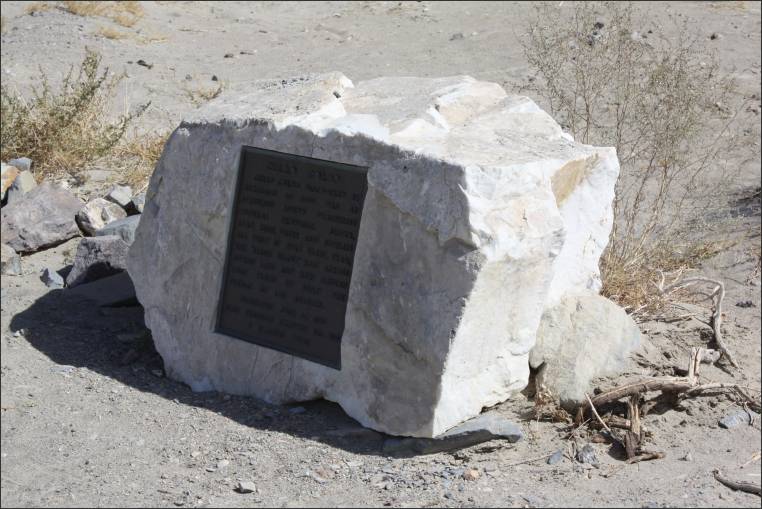

The McGilvray-Raymond Granite Company provided the granite for the construction of the Woodlawn Cemetery buildings, according to “The McGilvray Family History.”
- Coloma, El Dorado County, California - the Granite Jail (From Geologic
Guidebook Along Highway 49 - Sierran Gold Belt: The Mother Lode
Country, Bulletin 141, Olaf P. Jenkins, Chief, California
Division of Mines, San Francisco, California, 1949. Used with
permission, California Department of Conservation, California
Geological Survey.)
"...A number of the old buildings still stand. Among the more interesting is the old jail of the early 'fifties whose three foot thick walls of dressed granite have been partly removed (Fig. 133).
Fig. 133. Granite jail, Coloma, DMBS Eld-H16. 
- Coloma, El Dorado County, California - Old Winery Stone Blocks (From Geologic
Guidebook Along Highway 49 - Sierran Gold Belt: The Mother Lode
Country, Bulletin 141, Olaf P. Jenkins, Chief, California
Division of Mines, San Francisco, California, 1949. Used with
permission, California Department of Conservation, California
Geological Survey.)
"...On the back streets may be seen fences of piled rhyolite tuff blocks which came from an old winery operating in the 'sixties...."
- Columbia, Tuolumne County, California - Building Materials
in Columbia (From Geologic Guidebook Along Highway 49 -
Sierran Gold Belt: The Mother Lode Country, Bulletin 141,
Olaf P. Jenkins, Chief, California Division of Mines, San Francisco,
California, 1949. Used with permission, California Department
of Conservation, California Geological Survey.)
"...Almost all of (Columbia's) permanent buildings are made of brick, a reflection of the excellent brick-making lateritic clays available locally. Two brickyards (in operation in 1854) were located on the old Dambacher Ranch in Matelot Gulch, two miles north of Columbia. The extensive, marble-like, limestone outcrops seen in this region seem not to have been exploited for local building material although marble was quarried here and shipped to San Francisco as early as 1854."
- Columbia, Tuolumne County, California – Marble used in the Town of Columbia from the nearby marble quarries. (This is a photo tour of marble used in and near the town of Columbia. They were taken in early October 2010. Peggy B. Perazzo)
"...Two buildings built about 1860 and now (about 1948) owned by the State Division of Parks, have iron doors, river cobblestone walls and dressed rhyolite tuff facing blocks (Fig. 134)."
Fig. 134. Cobblestone building with rhyolite tuff facing, Coloma, DMBS Eld-H17.


 |
 |
 |
Marble grinder (?) in Columbia |
Marble used in brick wall in Columbia |
Marble walkway at the Harlan House Bed & Breakfast in Columbia |
- Colusa,
Colusa County, California - Colusa Carnegie Library (photograph
and history).
More photographs and history on the Colusa
Carnegie Library are available on the Historical
Marker Database web site.
The library opened in 1906. One of the building materials used was locally quarried Sites sandstone for the veneer and parapet.
- Colusa, Colusa County, California - the Carnegie
Library (from “Colusa County Sandstone
Builds Some of The World’s Most Famous Buildings,” by John
L. Morton, Colusa County Historian.)
Many fine buildings are attributed to the McGilvray sandstone quarry located at Sites, Colusa County, California, including the Carnegie Library building in Colusa.
- Colusa, Colusa County, California - the Carnegie
Library (from “Colusa County Sandstone
Builds Some of The World’s Most Famous Buildings,” by John
L. Morton, Colusa County Historian.)
- Cool, Placer County, California - Limestone Foundation Ruins (From Geologic
Guidebook Along Highway 49 - Sierran Gold Belt: The Mother Lode
Country, Bulletin 141, Olaf P. Jenkins, Chief, California
Division of Mines, San Francisco, California, 1949. Used with
permission, California Department of Conservation, California
Geological Survey.)
"Five miles north of Baileys near the site of Cool are some old lime kilns which operated in the 'sixties. The two kilns on the right side of the road have straight faces and curved sides. They are constructed of dressed limestone blocks and lined with quarried meta-andesite which was more heat resistant (Fig. 140). The ruins of several building foundations made of the same limestone which was burned in the kilns are nearby, and the quarry pit may be clearly seen. Just beyond is the modern (circa 1948) Cragco Company quarry."
- Corte Madera, Marin County, California – the Gap
Store located in the Village Shopping Center. The
following information is from the list of completed projects
on the Stone
Panels, Inc., web site. (The link from which the following information was obtained is no longer available.)
<http://www.stone-panels.com/completed.asp>According to this web site, the Gap store located in the Village Shopping Center was completed in 1991; and Sierra White granite* was used in the construction of the building. (* Sierra White granite was quarried at Raymond in Madera County, California.)
- Costa Mesa, Orange
County, California – the Night
Shift Artwork in Town Center Park behind Park Tower
and the Westin South Coast Plaza.
The information below is from the Orange
County Performing Arts web site. (The link from which the following information was obtained is no longer available.)
<http://www.ocpac.org/home/media/intheneighborhood/VisualArtsCM.html>According to this web site, the art work entitled, Night Shift, was created by Jim Huntington.
“…Cut from a massive chunk of Sierra white granite,* the piece is abruptly sliced through the top by a plate of polished, stainless steel. (* Sierra White granite is quarried at Raymond in Madera County, California.)
“Jim Huntington's sculptures are pure abstracts – determined by this artist’s search through quarries for pieces of stone developed over the millennia that have ‘spoken’ to him….”
- Costa Mesa, Orange County, California – Isamu
Noguchi’s Sculpture Garden (photographs)
The following information is from “California’s
Orange County: Noguchi’s Sculpture Garden,” by
Lee Foster, on the Foster Travel web site.
Lee Foster describes Noguchi’s Sculpture Garden in Costa Mesa as “A major artistic attempt to interpret California exists in a public setting….” According to the article, Sierra White granite* was used for the triangular form in the piece named “Water Use,” and Sierra White granite was used for the pathway and park bench in “The Forest Walk” portion of the park. In the portion of the sculpture park entitled, “Land Use,” a piece of Sierra White granite is used at the top of the eight-foot-high knoll.
Commercial use of material within this site is strictly prohibited. It is not to be captured, reworked, and placed inside another web site ©. All rights reserved. Peggy B. and George (Pat) Perazzo.