GEOLOGY

- Geology (General)
- Geology Institutions
- Geology & Geography Resources
- Geology-Related Glossaries, Dictionaries,
Terminology, etc. - Geology Photos
- Early Geologists & Photographs of Some Early Geological Field Trips
- Articles Regarding Geology from The Manufacturer and Builder (1831-1893)
- Geologic Tours and Studies of Structures
- Other & Some Geology Links for Kids
Broken Links: If you find broken links before I can check them, the easiest way to find them is to search for the web site in question on Google. Peggy B. Perazzo
Geology (General)
- Geology - Listed by State (Please see the individual state links on the main page).
- Geology - Listed by Country (other than the U.S.) - Not available yet.
- For books, maps, etc., please see the Sources section.
- State Geological Surveys and Related Agencies in the United States, presented by the California Department of Conservation, Division of Mines and Geology.
- State Geologic Maps, presented by Steven Dutch, Natural and Applied Sciences, University of Wisconsin – Green Bay
- U.
S. Bureau of Mines - Minerals Yearbook (1932 through 1993), courtesy
of the University of Wisconsin Ecology and Natural
Resources Collection.
(Links to the images of the books for the years 1932 through 1993
are available on this web site.)
The following note is included in Publications of the Geological Survey 1879 -1961, U. S. Department of the Interior, Geological Survey, reprinted 1965:
“Note: On July 1, 1925, by Executive order, the Division of Mineral Resources of the Geological Survey was transferred to the United States Department of Commerce, Bureau of Mines. On April 24, 1934, the Bureau was transferred to the Department of the Interior. The series (entitled Mineral Resources during the years 1924-31 and Minerals Yearbook thereafter) is published by the Department of the Interior, Bureau of Mines....”
Geologic Tours and Studies of Structures (buildings, walls, etc.)
Below is a list of online links, books, etc., that relate to information on the stones used in constructing these structures.
- The City Rocks: Explore the Hidden World of Building Stone, presented by Emily Burns.
- A Web Gallery of Stone Buildings and Their Building Stone, presented by Bruce Railsback, Professor, Department of Geology, University of Georgia.
- Burton Bradstock, Dorset, England, UK - The Geology and Building Stones of Burton Bradstock, Dorset, England, UK, by Jo Thomas.
-
The California GeoTour: An Index to Online Geologic Field Trip Guides of California, presented by the California Geological Survey.
-
California – Penryn Quarry, Penryn, California – Geological Side Trips from Interstate 80: Griffith Quarry in Penryn, by Andrew Alden.
- Cambridge, England, UK - Building Stones of Cambridge: A walking tour around the historic city centre, by Nigel Woodcock and David Norman.
- Canada – Building Stones and Monuments of the National Capital Region, presented by, Professor J.A. Donaldson, Carlton University - Ottawa Geoheritage. (Scroll down to Trip 5.)
- Canada – Calgary, Canada – A Virtual Tour of Historic Calgary, presented by the Calgary Public Library
- Canada – Hamilton, Canada – “Heart of the City, A Virtual Tour of Downtown Hamilton,” presented by the Hamilton Public Library. (Photographs of Hamilton buildings might be available in Hamilton Public Library’s Local History & Archives Department PreVIEW database, which contains over 11,000 images.)
- Canada – Toronto, Canada – Learning Geology from Buildings in Downtown Toronto,
Canada,
by Kathleen Kemp, Tucker Barrie, Marcia Charles, Janet Parkin,
Denise Payne and Michael Perkins. (The link on which this
tour was located is no longer available.)
<http://www.science.uwaterloo.ca/earth/waton/toronto.html> - Canada – Victoria, British Columbia, Canada – Dimension Stone in Victoria, British Columbia, a city guide and walking tour, by Z. D. Hora and L. B. Miller.
- Colorado – Denver, Colorado – Geology Tour of Denver's Buildings and Monuments, by Jack A. Murphy, publisher: Denver, Colorado, Historic Denver in cooperation with Denver Museum of Natural History, c1995, ISBN:0914248065 (Book).
- Georgia - Tour of Building Stones on the UGA Campus, by Dr. Paul Schroeder.
-
England - Gloucestershire, England – Huntley Quarry Geology Reserve
-
England – Isle of Portland, Dorset, Southern England – The Isle of Portland, Dorset – Geology of the Quarries , Ian West, Romsey, Hampshire and Visiting Scientist at: Faculty of Natural and Environmental Sciences, Southampton University.
- Illinois – Chicago, Illinois – Geology Along Michigan Avenue, presented by Ellin Beltz (photographs).
- Iowa – Geologic Sources of Historic Stone Architecture in Iowa, by Brian J. Witzke, Iowa Geological and Water Resources.
- Ireland – Dublin, Ireland –The Building Stones of Dublin: A Walking Guide, by Patrick Wyse Jackson, photography by Declan Burke, publisher: Dublin, Ireland, Town House and Country House, 1993, ISBN:0946172323 (Book).
- London, England – The Gloucester Wall Game: London, by Eric Robinson, no date, London Geologists' Association. [PDF]
- Maryland – Baltimore, Maryland – A Geologic Walking Tour of Building Stones of Downtown Baltimore, Maryland, by Sherry McCann-Murray, presented by the Maryland Geological Survey. This site includes contributions and photography by the Environmental Geology and Mineral Resources Program of the Maryland Geological Survey. (Adapted for the Internet from Educational Series No. 10.)
- Massachusetts – Boston, Massachusetts – “Boston Rocks: A History of the Earth in 13 Landmarks,” article by David B. Williams, Graphics by Javier Zarracina (in PDF format). This article was published on the May 3, 2009, in the Boston Globe. David Williams has a new book, Stories in Stone, that will be published in June 2009 by Walker and Company. More information on this book is available in the “Stone” section of his web site. (The following buildings are discussed in the above article (which includes photos of the buildings and the stones): 100 Cambridge Street, Government Center; Trinity Church, Copley Square; “New” Old South Church, Copley Square; Morse Auditorium, Boston University; Massachusetts General Hospital; Townhouses, Beacon Hill; Cathedral Church of St. Paul, downtown Massachusetts; Boston Public Library, Copley Square; Memorial Hall & Hauser Hall, Harvard University; King’s Chapel, downtown Massachusetts; Algonquin Club, Back Bay; and the Keystone Building, Financial District.)
- Missouri – Springfield, Missouri – Field Trip Guide to the Geology of Missouri State University’s Springfield Campus, written by Dr. Kevin R. Evans, Department of Geography, Geology & Planning, Missouri State University, edited by Dr. James F. Miller, Department of Geography, Geology & Planning Missouri State University, Dr. Thomas G. Plymate, Department of Geography, Geology & Planning, Missouri State University, Revised December 2006. [PDF]
- New York – Buffalo, New York – Buffalo as an Architectural Museum, by Chuck LaChiusa.
- New York - Ithaca, New York – Building Stones on the Cornell Campus
- Ohio – Cincinnati, Ohio – Guide to the Building Stones of Downtown Cincinnati; A Walking Tour, by J. T. Hannibal and R. A. Davis, 1992, Ohio Division of Geological Survey Guidebook 7 (Book).
- Ohio – Cleveland, Ohio – Guide to the Building Stones of Downtown Cleveland: A Walking Tour, Ohio Division of Geological Survey Guidebook, by J. T. Hannibal and M. T. Schmidt, 1992; reprinted 1997 with additional notes (Book).
- Ohio – Columbus, Ohio – Building Stones in the Vicinity of Capitol Square, Columbus, Ohio, A Walking Tour in Celebration of Earth Week October 10, 2000 (PDF), Tour Leaders: Garry D. McKenzie and Dale M. Gnidovec, Sponsors: the American Institute of Professional Geologists, the Ohio Department of Natural Resources, Division of Geological Survey, and the Ohio State University, 3 pp.
- Ohio – Columbus, Ohio – Guide to the Building Stones of Downtown Columbus: A Walking Tour, by R. W. Melvin and G. D. McKenzie, 1992, Ohio Division of Geological Survey Guidebook 6, reprinted with additional notes (Book).
- Ohio – Dayton, Ohio – Geologic Glimpses from Around the World - The Geology of Monuments in Woodland Cemetery and Arboretum, Dayton, Ohio: A Self-Guided Tour, by M. R. Sandy, 1992, Ohio Division of Geological Survey Guidebook 8 (Book).
- Ohio – Northeastern Ohio –Guide to Stones Used for Houses of Worship in Northeastern Ohio, by Joseph T. Hannibal, Curator of Invertebrate Paleontology at the Cleveland Museum of Natural History. The Urban Center's Sacred Landmark Series. Based on Guide to Stones Used for Houses of Worship in Northeastern Ohio, Cleveland Ohio, by Joseph T. Hannibal,Curator of Invertebrate Paleontology at the Cleveland Museum of Natural History. Published by the Sacred Landmarks Partnership of Northeast Ohio.
- United Kingdom – Burton Bradstock, Dorset, England, UK - The Geology and Building Stones of Burton Bradstock, Dorset, England, UK, by Jo Thomas.
- United Kingdom - Building Stones of Cambridge: A walking tour around the historic city centre, by Nigel Woodcock and David Norman.
- Utah – Salt Lake City, Utah, USA – Building Stones of Downtown Salt Lake City, presented by the Utah Geological Society, Public Information Series #60.
- Washington, D. C., USA – Building Stones of Washington Walking Tour, presented by the United States Geological Survey.
- Washington, D. C., USA– Descriptions and Origins of Selected Principal Building Stones of Washington, United States Geological Survey (Book).
- Washington, D.C., USA – National
Mall and Memorials Washington DC – Klondike
Gold Rush National Historical Park. This article discusses
the history and geology of the large stone monuments and memorials
in the National Mall in Washington, D.C.
“Welcome to the National Mall, a National Park in Washington, DC where large stone monuments and memorials honor important historical people and events. The National Mall is a good place to visit if you want to learn about American history and be a historian. Because of all the different stones used in the construction of the memorials, it is also a good place to visit if you want to learn about rocks and be a geologist.
“Historians and Geologists actually have many similarities. They both look at past events to better understand the present, and guess what will happen in the future. They both use tools to help them in their research. They both make timelines to keep track of events. The biggest difference is that Historians study the events of humans while Geologists study the events of the earth….”
- Washington State – Seattle, Washington – Downtown Rock Hound: A Seattle Geology Tour, by David B. Williams (in PDF format). (Web site: David B. Williams: Stories in Stone)
- Washington State – Spokane, Washington – Cornerstones of Spokane: A guidebook to the building stones of downtown Spokane. Text and map are from: McKelvey, G. E.; Bunning, Bonnie B.; Burnet, F. William; Hamilton, Mike; Swanson, Byron, 1981, Northwest, Mining Association (in PDF format).
- Wisconsin – Milwaukee, Wisconsin – Virtual Tour of Downtown Milwaukee’s Geology and Architecture: The Buildings and Building Stones of Downtown Milwaukee, presented by Tim Grundl, Associate Professor, Geosciences Department, Nancy Hubbard, Associate Professor, Architecture and Urban Planning, Bill Kean, Professor, Geosciences Department, University of Wisconsin, Milwaukee.
- Other: Rocks of Famous Monuments, presented by Guillermo Rocha, P.G. / Brooklyn College Geology Department.
Other & Some Geology Links for Kids:
- Collecting Rocks – Rocks Tell the Story of the Earth, by Rachel M. Barker, United States Geological Survey.
-
Date a Rock! An Age-Dating Simulation by Karen Kalumuck, Biology Education Director at the San Francisco Exploratorium.
- Do We Take Minerals For Granted? U. S. Geological Survey.
-
Geologic Recipes: Teach kids geology as they play with their food, Andrew Alden, About.com Geology
-
Geological Sites of Interest, presented by the Rogers Group in their “Rockology 101: Fun Facts” section.
-
Geology For Kids – Online Education Database
- The Geology News Blog: The latest and greatest news in geology, from around the world, presented by Dave Scumaker.
-
Geology of National Parks in the United States, presented by U.S. Geological Survey.
-
Google Earth Engine (“Our global, zoomable timelapse of Earth’s surface now extends back to 1984. Learn more about these stunning new visualizations on the Official Google Blog and in an in-depth, exclusive article by Time magazine. Explore the gallery below to see thirty years of change across the entire planet.”)
-
Interactive Rock Cycle Animation How Do Rocks Undergo Change?
-
Limestone Quarry Explosion Photos (Japan), presented on The Geology News Blog.
- Mineralogy for Kids, presented by the Mineral Society of America.
- Neighborhood Rocks - Find - Collect - Name & Play, presented by Eric D. Gyllenhaal. (Neighborhood Rocks is part of the Salt the Sandbox Web.)
- Offer to identify stones in Mines and Minerals magazine, June 1902, pp. 522:
ROCK DETERMINATION
“The Western Editor of Mines and Minerals will, without charge, examine and name, so far as possible, samples of rock sent him, the answers sent by postal card to the send of the specimen. He will only undertake to name average rocks, such as can be fairly determined at sight; and microscopic or chemical analyses will not be attempted; neither is it always possible to determine with absolute precision and certainty a small sample, or one decomposed and oxidized, and with such samples the sender must be content with the provisional determination that it appears like such and such a rock.
“Questions involving an opinion on mining property, for which an expert would be entitled to a fee, will not be answered, but advice that will aid the prospector will be given.
“The following conditions must be observed by those sending specimens for determination:“Each should be distinctly labeled.
“The name and address of the sender, written very distinctly, must be enclosed in the package.
“The package should be sent prepaid to Prof. Arthur Lakes, Room 32, Barth Block, Denver, Colo.
“A letter should accompany the specimens describing the locality, mode of occurrence of the rock, and other facts, and rough sketches may accompany such description.
“Samples will not be returned unless by request, and where stamps are enclosed to cover postage or expressage and cost of packing.”
- Playing Robinson's Wall Game, by Joseph T. Hannibal, The Cleveland Museum of Natural History. [PDF]
- Rocks of Famous Monuments, presented by Guillermo Rocha, P.G. / Brooklyn College Geology Department.
- Science in Your Backyard, presented by the U. S. Geological Survey. (A United States maps provides easy access to “Science in Your Backyard” in all of the U.S. states.)
- The U. S. Geological Survey & Science Education
-
Virtual Quarry Interactive, presented by the Mineral Products Association (MPA), the United Kingdom’s leading trade association for the UK aggregates, asphalt, cement, concrete, lime, mortar and silica sand industries.
- The Wall Game In Battersea Park, by Eric Robinson, 1996. in M. R. Bennett and others, eds., Geology on Your Doorstep: The Role of Urban Geology in Earth Heritage Conservation: Bath, the Geological Society Publishing House (Book)
Geology Institutions
- American Geological Institute (AGI)
- Association of American State Geologists - United States Geological Survey Sites, hosted by the Alaska Division of Geological & Geophysical Surveys. (Once you reach this site, choose individual U. S. Geological Survey sites by map or by list.)
- Directory of Geoscience Organizations of the World 1999 - "This directory contains information on 378 organizations from 160 countries and areas."
- Geoscience Departments in the U.S. and Canada, University of South Dakota
- Geoscience Departments WWW Directory - U.S. & Canada, created by V. J. Ansfield, University of South Dakota.
- Geoscience Societies (in Africa, America, Asia, Australia and Oceana, and Europe)

- Mineralogical Society of America
- NASA (National Aeronautic and Space Association)
- United States Geological Survey (USGS)

Geology & Geography Resources
- 40 Common Minerals – Tungsten, Silver, Feldspar & More, submitted by Danielle.
- Aleta's Geology Links, Aleta V. Turner.
- “Ask a Geologist,” at the U.S. Geological Survey (Answers questions “about volcanoes, earthquakes, mountains, rocks, maps, ground water, lakes, or rivers.”)
- Assorted Earth Science Web Links, presented by by Russ Jacobson.
- Athena Earth Sciences Resources, University of Geneva
- Atlas of Igneous and Metamorphic Rocks, Minerals, & Textures, part of the “Virtual Geology” Project at the University of North Carolina
- The British Stone List (BRE)
- Building Materials in Archaeology Use and Reuse of Building Materials – The Methodology, History and Philosophy of Building Materials in Archaeology, by Emeritus Professor Dr. Ian Windsor, DSc FRNS, 24 March, 2012 ©™® 1992.
- “Building Stone Treasure Troves” (PDF), by Sidney Horenstein (Published online: 9 October 2008
# Springer Science + Business Media, LLC 2008)
Following is a portion of the abstract for the article:
“Abstract Cities large and small have a treasure trove of building stones both local as well as imported from various regions of the country as well as foreign sources. Many of them contain fossils which are easily available for teachers to utilize for class field trips….”
- Collector’s
Corner, presented by the Mineralogical Society of America.
(From the web site) “There are a wide range of options one can use to begin a mineral collection. These can range from buying specimens (or a mine) to field collecting and trading. This is a brief introduction to rockhounding and mineral collecting.”
- Common Minerals and Their Uses - State Mineral Production Summaries - Major Minerals, Metals, and Energy Fuels, by the Mineral Information Institute. The minerals available in each state are listed including links to download a description of the mineral industry and state map showing mineral locations.
- Do We Take Minerals For Granted? U. S. Geological Survey.
- Earth Sciences at Nerd Wide Web
- Field Trips
- A Geologist’s Lifetime Field List – Generic geologic sites that every geologist should visit, created by Terry Acomb while completing an M. S. Degree at the University of Cincinnati Geology Department.
- And You Thought Your Field Trip Was Bad - "Scenes From the Past - IV;" William L. Hiss (U. S. Geological Survey); New Mexico Geological Society Guidebook; 28th Field Conference, San Juan Basin III, 1977 (Uncopyrighted publication) Lithosphere (June 1993); Fallbrook Gem and Mineral Society, Inc.; Fallbrook, CA.
- “A Field Trip Transect of the Northern Sierra Via Interstate 80,” (California) by Richard P. Hilton, Department of Geosciences, Sierra College, Journal of the Sierra College Natural History Museum, Spring 2009, vol. 2, no. 1, Rocklin, California.
- Geology Field Trips – John C. Butler, The Virtual Geosciences Professor.
- Geology of National Parks: 3D and Photographic Tours Featuring Park Geology and Natural History, U. S. Geological Survey.
- Tour of Park Geology, presented by the National Park Service.
- Virtual Field Trip Guides: United States & Canada, presented by the Walter Geology Library.
-
Fractures in Granite – “Mechanics of curved surfaces, with application to surface-parallel cracks” (pdf), by Stephen J. Martel, Department of Geology and Geosphysics, University of Hawaii, Honolulu, Hawaii, Geophysical Research Letters, Vol. 38, L20303, doi:10.1029/2011GL049354, October 20, 2011, 6 pp. (Photos include: “Figure 1. Sheeting joints near the summit of Half Dome, Yosemite National Park. They bound shingle-like slabs that are on the order of 1 m thick. Photograph courtesy of Greg Stock.” “Figure 4. Locations of topographic features, predictions of sheeting joints, and occurrences of sheeting joints near Olmsted Point, Yosemite National Park…(c) Photograph looking east across the southern portion of the study area. Sheeting joints decorate virtually every exposure in this picture….(d) Photograph looking southeast at the slope 0.7 km north of Olmsted Point. Sheeting joints are abundant in the saddle-shaped upper part of the picture but scarce in the bowl-shaped lower portion.” (This document is presented on Stone Quarries and Beyond with the permission of the author.)
- Fundamentals of Physical Geography, by Michael J. Pidwirny, Ph.D., Department of Geography, Okanagan University College, Canada. Following is one of the sections on Geology from this site, although there are many other subjects covered.
- Geographic Names Information System (GNIS), by the United States Geological Survey.
- Geolographic Names of the United States (GEONAMES), presented by the Peabody Museum of Natural History Yale University, New Haven, Connecticut. The U.S. Geological Survey GEONAMES data base is an annotated index lexicon of formal geologic nomenclature of the United States, its territories, and possessions.
- Geography Dictionary and Glossary, presented by ITS Tutorial School. (The material covers Physical Geography, Human Geography, and related subjects.)
- Geography Frequently Asked Questions – U.S. Geological Survey
- Geologic Names Lexicon - National Geologic Map Database - “GEOLEX,” presented by the United States Geological Survey. (GEOLEX is a search tool for lithologic and geochronologic unit names.)
- Geologic Resources – the National Park Service
-
Geological Sites of Interest, presented by the Rogers Group in their “Rockology 101: Fun Facts” section.
- Geologic Time, by William L. Newman, U.S. Geological Survey.
- Geology - U. S. Geological Survey
- Geology, presented on Wikipedia.
- Geology - About Geology, presented by Andrew Alden.
-
Geology and The Quarry Industry With Special Focus on The Selection of A Site For a New Quarry, by Winston Taddius Rajpaulsingh, Consulting Geologist, presented by the Geological Society of Trinidad and Tobago.
- The Geology News Blog: The latest and greatest news in geology, from around the world, presented by Dave Scumaker.
- Geology.com - Earth Sciences on the Web (Scroll down to "Geology Basics" - includes a dictionary.)
- Geology Frequently Asked Questions – U. S. Geological Survey
- Geology – the Saunders College Publishing Geology Web Site
-
Geology Resources, presented on the Engineering Degree.net web site.
- GeoScience Resources Links
- Historical Geology Topics, presented by Cochise College students, Roger Weller, Geology Instructor.
- “History of Geoscience: Women in the History of Geoscience,” on enotes.com (Women in this article include: * Etheldred Bennett, “a scientific researcher in paleontology and an accomplished artist,” from the south of England . * Mary Anning from the United Kingdom was the “most famous early female geologist.” * Florence Bascom , a female geologist from Williamstown , Massachusetts , “founded the department of geology at Bryn Mawr College . Bascom was the first woman geologist employed by the U. S. Geological Survey in 1896. * Eileen Gupp was “the first successful woman to be employed by the British Survey in the petrology department in 1927.” * Alice Wilson, born in 1881 in Cobourg, Ontario , Canada “became the first woman to reach a prominent position within the Geological Survey of Canada. * Mary Emilee Holmes was the “first fellow of the Geological Society of America” in 1889.
- “Lessons in Stone - Harvard's Building Blocks Teach Natural and Cultural History” - in Harvard Magazine (Text by David B. Williams; photographs by Jim Harrison).
-
A Location Guide for Rockhounds, (PDF) Collected by Robert C. Beste, PG, St. Louis, Missouri: Hobbitt Press, 2nd ed., December 1996, 148 pp. (Includes chapters on “Mineral Locations by State,” “Appendix and Glossary,” and “Bibliography.”)
-
“Mechanics of curved surfaces, with application to surface-parallel cracks” (pdf), by Stephen J. Martel, Department of Geology and Geosphysics, University of Hawaii, Honolulu, Hawaii, Geophysical Research Letters, Vol. 38, L20303, doi:10.1029/2011GL049354, October 20, 2011, 6 pp. (Photos include: “Figure 1. Sheeting joints near the summit of Half Dome, Yosemite National Park. They bound shingle-like slabs that are on the order of 1 m thick. Photograph courtesy of Greg Stock.” “Figure 4. Locations of topographic features, predictions of sheeting joints, and occurrences of sheeting joints near Olmsted Point, Yosemite National Park…(c) Photograph looking east across the southern portion of the study area. Sheeting joints decorate virtually every exposure in this picture….(d) Photograph looking southeast at the slope 0.7 km north of Olmsted Point. Sheeting joints are abundant in the saddle-shaped upper part of the picture but scarce in the bowl-shaped lower portion.” (fractured granite) (This document is presented on Stone Quarries and Beyond with the permission of the author.)
- The Methodology, History and Philosophy of Building Materials in Archaeology – Building Materials In Archaeology Use and Reuse of Building Materials, by Emeritus Professor Dr. Ian Windsor, DSc FRNS, 24 March, 2012 ©™® 1992.
- Mineralogy & Petrology Research on the Web, presented by Andrea Koziol, Associate Professor, Department of Geology, University of Dayton, Ohio
- Mineral Resources
Program, U. S.
Geological Survey
(A few of the sections in the “Mineral Resources Program” section
available are listed below.)
- Information Handouts
- Mineral Commodities Summaries
- Mineral Industry Surveys
- Mineral Yearbook
- Minerals Information – Publications and Data Products - Minerals Information products focus on the worldwide supply of, demand for, and flow of minerals and materials.
- Nonmetallic Mineral Products Industry (Monthly) Indexes
- Modern Life Emerges From The Rock (and industry terms), presented by the Rogers Group, Inc.
- National Atlas of the United States of America - NationalAtlas.gov - United States Department of the Interior.
- National Geologic Map Database, presented by the United States Geologic Survey.
- Physical Geology Topics, presented by Cochise College students, Roger Weller, Geology Instructor.
-
Popular Geology, presented by the British Geological Society.
- Rockhounds Information Page
- The Role of Women in the History of Geology, Special Publication No. 1281, (book) by Cynthia V. Burek (Author, Editor), Bettie Higgs (Editor) A conference held at the London Geological Society, Burlington House, London, on 28 November 2005), Geological Society of London; 1st edition (September 15, 2007), 352 pages, ISBN-10: 1862392277, ISBN-13: 978-1862392274. (Description: “Where were the women in Geology? This book is a first as it unravels the diverse roles women have played in the history and development of geology as a science predominantly in the UK, Ireland and Australia, and selectively in Germany, Russia and US. The volume covers the period from the late eighteenth century to the present day and shows how the roles that women have played changed with time. These included illustrators, museum collectors and curators, educationalists, researchers and geologists. Originally as wives, sisters or mothers many were assistants to their male relatives. This book looks at all these forgotten women and for the first time historians and scientists together explore the contribution they made to this male-dominated subject. There are individual profiles on remarkable women: Catherine Raisin, Dorothea Bate, Cuviers daughters, Grace Prestwich, Annie Greenly, Nancy Kirk, Margaret Crosfield, Ethel Skeat, Maria Ogivlie Gordon, Marie Stopes, Anne Phillips, Muriel Arber and Etheldred Bennett.”)
- “Sketching in the Field for Geological and for Prospecting Work,” in Mines and Minerals, A Mining and Metallurgical Journal, Vol. XXII, No. 11, June 1902.
- Smithsonian National Museum
of Natural History
- Research and Collections
- Department of Mineral
Sciences
- One of the interesting collections is the: Building
Stones Collection
Building Stones Collection: “Rocks utilized for building and ornamentation, composed primarily of material received from the Centennial Exposition at Philadelphia in 1876 and from the Tenth Census at the close of an investigation into the quarrying industries of the U.S. in 1880. Most specimens are from domestic quarries, with some foreign varieties represented, if imported into the U.S. between 1880 and 1920. A substantial portion of the original collection was transferred to the National Bureau of Standards (NBS) in the late 1940s for weathering tests. In 1989, the NBS changed its name to the National Institute of Standards and Technology (NIST). 714 specimens remain.”
- One of the interesting collections is the: Building
Stones Collection
- Stone Explained, by Dr. Tim Palmer, a chartered geologist and consultant on the petrology of building stones and limes, on the Natural Stone Specialist web site. (Scroll down to the “Stone Explained” section.)
- Stone in Archeology
“The ‘Stone in Archaeology – Towards a Digital Resource’ project is based on the large archaeological comparative rock collection housed in the Department of Archaeology, University of Southampton. The main aim of the project has been to create an easily accessible, unique, multidisciplinary, searchable relational database which comprises the principal stones known to be used in antiquity throughout England.
“This database allows the identification of stone samples by searching on the distinctive physical properties of a stone. The results of the search can be backed up by macroscopic and thin-section photomicrographs of each sample and any geologically relevant information. The resource also provides information regarding the use, quarry location/vicinity and distribution of the stone throughout various periods of history. The resource’s ability to be manipulated in many different ways is one of its strengths.”
- Unforbidden Geology: The not so hidden history of Man from the often overlooked geologic perspective, presented by Archae Solenhofen.
- United States Geological Survey - Geology
- U. S. Geological Survey Library
- USGS Yearbooks (Online) Minerals Yearbook (Starting in 1999 the Yearbooks were replaced with the annual financial reports.)
- The Virtual Geoscience Professor, presented by John Butler, University of Houston.
- A Web Gallery of Stone Buildings and Their Building Stone, presented by Bruce Railsback, Professor, Department of Geology, University of Georgia.
 |
 |
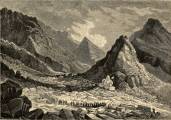
“Illustration of Perspective and Vanishing Point” (1902) |
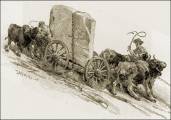
“Illustration of Shading” (1902) |
Geology-Related Glossaries, Dictionaries, Terminology, etc.
- Dictionary of Geological Terms, 3rd edition, Prepared by the American Geological Institute, Robert L. Bates and Julia A. Jackson, Editors, Anchor Books, New York, paperback ISBN 0-385-18101-9. (Book)
- Dictionary of Mining, Mineral, and Related Terms, compiled and edited by the Staff of the U.S. Bureau of Mines.
- Glossary of Geologic Terms (Iowa State University)
-
Glossary of Volcano and Related Terms, presented by the U.S. Geological Survey.
Articles Relating to Geology in The Manufacturer and Builder, et al
The following articles can be found online at the Library of Congress, American Memories, The Nineteenth Century in Print (1831-1893). These digital images are from Cornell University. (These images are slow to load.)
- Geology (April 1831) The North American Review, Vol. 32, Issue 71, April 1831, pgs. (bottom of) 471-490. (Article in digital images viewed at American Memory, Library of Congress.)
- Geology (September 1873) The Manufacturer and Builder, Vol. 5, Issue 9, September 1873, pg. 207. (Article in digital images viewed at American Memory, Library of Congress.)
- Geology (October 1873) The Manufacturer and Builder, Vol. 5, Issue 10, October 1873, pg. 231. (Article in digital images viewed at American Memory, Library of Congress.)
- Geology Explained in the Simplest Terms (April 1888) The Manufacturer and Builder, Vol. 20, Issue 4, April 1888, pg. 84. (Article in digital images viewed at American Memory, Library of Congress.)
- Geology (December 1888) The Manufacturer and Builder, Vol. 20, Issue 12, December 1888, pgs. 274-275. (The article includes a sketch of the stone; article in digital images viewed at American Memory, Library of Congress)
- Geology (January 1889) (Continued from December 1888) The Manufacturer and Builder, Vol. 21, Issue 1, January 1889, pgs. 12-13. (The articles includes the following sketches: A piece of Granite, and Some of the Grains of a Piece of Chalk; article in digital images viewed at American Memory, Library of Congress)
- Geology (February 1889) (Continued from January 1889) The Manufacturer and Builder, Vol. 21, Issue 2, February 1889, pgs. 34-35. (The article includes the following sketches: Piece of Conglomerate or Pudding Stone, Piece of Shale; article in digital images viewed at American Memory, Library of Congress)
- Geology (March 1889) (Continued from February 1889) The Manufacturer and Builder, Vol. 21, Issue 3, March 1889, pg. 59. (The article include the following sketches: 1) Stones detached from cliffs by rains, frosts, etc. and launched into a brook; 2) Stones from the same cliff after having been rolled about in the bed of the brook; 3) A small heap of sand, consisting of the same pieces of stone from the same cliff& article in digital images viewed at American Memory, Library of Congress)
- Geology (April 1889) The Manufacturer and Builder, Vol. 21, Issue 4, April 1889, pgs. 82-84. (The article includes the following sketches: 1) Section or cutting through the sediment brought by a rain into a pool on a roadway& and 2) Stratification of Sedimentary Rocks; article in digital images viewed at American Memory, Library of Congress)
- Geology (May 1889) (Continued from April 1889) The Manufacturer and Builder, Vol. 21, Issue 5, May 1889, pgs. 106-107. (The article includes the following sketches: 1) A Piece of Shale Containing a Portion of a Fossil Fern; 2) Piece of Shale with Animal Remains; 3) Quarry in Sedimentary Rock; article in digital images viewed at American Memory, Library of Congress)
- Geology (June 1889) (Continued from May 1889) The Manufacturer and Builder, Vol. 21, Issue 6, June 1889, pg. 132. (The article includes the following sketches: 1) Ripple marks in sandstone; 2) Rainprints in sandstone; 3) Fossils: Coral, part of Encrinite, Spirifer, and a marine shell; article in digital images viewed at American Memory, Library of Congress)
- Geology - Organic Rocks, or Rocks Formed of the Remains of Plants and Animals (July 1889) (Continued from June 1889) The Manufacturer and Builder, Vol. 21, Issue 7, July 1889, pgs. 154-155. (Article in digital images viewed at American Memory, Library of Congress.)
- Geology (August 1889) (Continued from July 1889) The Manufacturer and Builder, Vol. 21, Issue 8, August 1889, pgs. 178-180. (This article contains the following sketches: 1) Ground plan, or a map of peat moss filling up a former lake& 2) Some of the ooze from the Atlantic bed, magnified 25 times; 3) A piece of chalk with shell in it; A piece of limestone showing how the stone is made up of animal remains; article in digital images viewed at American Memory, Library of Congress)
- Geology (September 1889) (Continued from August 1889) The Manufacturer and Builder, Vol. 21, Issue 9, September 1889, pgs. 203-204. (The article includes the following sketches: 1) View of lava stream issuing from one of the extinct volcanic cones in Auvergue, in central France; 2) Piece of lava showing the crystals and steam holes; article in digital images viewed at American Memory, Library of Congress)
- Geology (October 1889) (Continued from September 1889) The Manufacturer and Builder, Vol. 21, Issue 10, October 1889, pgs. 227-228. (The article contains the following sketches: 1) Vesuvius, as it appeared at the beginning of the Christian era, when it was a dormant volcano; 2) Piece of volcanic tuff-a rock formed of consolidated volcanic ashes; 3) View of hot springs or geysers, Iceland; 4) Vesuvius as it appears at present time-an active volcano; article in digital images viewed at American Memory, Library of Congress)
- Geology (November 1889) (Continued from October 1889) The Manufacturer and Builder, Vol. 21, Issue 11, November 1889, pgs. 250-251. (Article in digital images viewed at American Memory, Library of Congress.)
- Geology (December 1889) (Continued from November 1889) The Manufacturer and Builder, Vol. 21, Issue 12, December 1889, pg. 275. (Article in digital images viewed at American Memory, Library of Congress.)
- Geology (January 1890) (Continued from December 1889 & continued in February 1890 issue) The Manufacturer and Builder, Vol. 22, Issue 1, January 1890, pg. 8. (The article includes the following sketches: 1) Inclined Strata; 2) Vertical Strata; 3) View of Contorted Strata; 4) Section of Igneous Rock forced up into cracks and fissures of the earth's crust; article in digital images viewed at American Memory, Library of Congress)
- Geology (February 1890) (Continued from January 1890 issue & continued in the March 1890 issue) The Manufacturer and Builder, Vol. 22, Issue 2, February 1890, pgs. 32-34. (This article includes the following sketches: 1) Section of a series of sedimentary rocks originally deposited horizontally on the sea bottom; 2) Section of a mountain formed of crumpled rocks which have been contorted before the deposition of the flat rocks; 3) View of a tableland cut into ridges and valleys by the flow of its river; article in digital images viewed at American Memory, Library of Congress)
- Geology (March 1890) (Continued from February 1890) The Manufacturer and Builder, Vol. 22, Issue 3, March 1890, pgs. 56-57. (Article in digital images viewed at American Memory, Library of Congress.)
- Lamination in Stone (April 1893) The Manufacturer and Builder, Vol. 25, Issue 4, April 1893, pg. 87. (Article in digital images viewed at American Memory, Library of Congress.)
- "The Rocks" - Their Physical Structure (continued) (May 1885) Quarrying Notes in The Manufacturer and Builder, Vol. 17, Issue 5, May 1885, pgs. 106-107. (Article in digital images viewed at American Memory, Library of Congress.)
- "The Rocks" (June 1885) (Includes the beginning of the article on the Granites) Quarrying Notes - The Manufacturer and Builder, Vol. 17, Issue 6, June 1885, pg. 130-131. Article in digital images viewed at American Memory, Library of Congress)
Granite-Related Articles from the Manufacturer and Builder, et al
- Granite Rock (January 1880) The Manufacturer and Builder, Vol. 12, Issue 1, January 1880, pg. 22. (Article in digital images viewed at American Memory, Library of Congress.)
- "The Building Stones" - Granite (Concluded) (July 1885) Quarrying Notes in The Manufacturer and Builder, Vol. 17, Issue 7, July 1885, pgs. 154-155. (Article in digital images viewed at American Memory, Library of Congress.)
- Granite (December 1889) (Continued in issue January 1890) The Manufacturer and Builder, Vol. 21, Issue 12, December 1889, pgs. 274-275. (Article in digital images viewed at American Memory, Library of Congress.)
- Granites and Sandstones (May 1891) The Manufacturer and Builder, Vol. 23, Issue 5, May 1891, pg. 104. May 1891. (Article in digital images viewed at American Memory, Library of Congress.)
- Quincy Granite (December 1893) The Manufacturer and Builder, Vol. 25, Issue 12, December 1893, pg. 278. (Article in digital images viewed at American Memory, Library of Congress.)
Limestone-Related Articles from the Manufacturer and Builder, et al
- Facts About Lime and Limestones (September 1891) The Manufacturer and Builder, Vol. 23, Issue 9, September 1891, pg. 207. (Text of article in digital images viewed at American Memory, Library of Congress.)
- Facts About Lime and Limestone (March 1892) The Manufacturer and Builder, Vol. 24, Issue 3, March 1892, pg. 63. (Article in digital images viewed at American Memory, Library of Congress.)
- Lamination in Stone (April 1893) The Manufacturer and Builder, Vol. 25, Issue 4, April 1893, pg. 87. (Article in digital images viewed at American Memory, Library of Congress.)
- The Limestones of Wisconsin (January 1886) The Manufacturer and Builder, Vol. 18, Issue 1, January 1886, pgs. 10-11. (Text of article in digital images viewed at American Memory, Library of Congress.)
- Magnesian Limestone (October 1893) The Manufacturer and Builder, Vol. 25, Issue 10, October 1893, pg. 231. (Article in digital images viewed at American Memory, Library of Congress.)
- The Presence of Magnesia in Limestones (September 1882) The Manufacturer and Builder, Vol. 14, Issue 9, September 1882, pg. 207.(Article in digital images viewed at American Memory, Library of Congress.)
Marble-Related Articles from the Manufacturer and Builder, et al
(Also see Limestone)
- Algerian Marbles (November 1887) (This article includes a sketch: "Salem (Ind.) Quarry Yards, Mills and Kilns, and Cars Loaded with Monoliths for the Georgia State Capitol.") The Manufacturer and Builder, Vol. 19, Issue 11, November 1887, pg. 253. (Article in digital images viewed at American Memory, Library of Congress.)
- American Marbles (January 1857) "The Living Age...", The Manufacturer and Builder, Vol. 52, Issue 660, January 17, 1857, pgs. 148-149. (Article in digital images viewed at American Memory, Library of Congress.)
- American Marbles (November 1888) The Manufacturer and Builder, Vol. 20, Issue 11, November 1888, pgs. 250-251. (Article in digital images viewed at American Memory, Library of Congress.)
- Australian Marble (June 1894) The Manufacturer and Builder, Vol. 26, Issue 6, June 1894, pg. 135. (Article in digital images viewed at American Memory, Library of Congress.)
- California Marble (May 1894) The Manufacturer and Builder, Vol. 26, Issue 5, May 1894, pg. 108-109. (Text of article in digital images viewed at American Memory, Library of Congress.)
- The Geology of the Marble Deposits (December 1884) The Manufacturer and Builder, Vol. 16, Issue 12, December 1884, pg. 274. (Article in digital images viewed at American Memory, Library of Congress.)
- Georgia - Extensive Marble Belt in Georgia (October 1894) The Manufacturer and Builder, Vol. 26, Issue 10, October 1894, pg. 230. (Article in digital images viewed at American Memory, Library of Congress.)
- Georgia Marble (January 1889) The Manufacturer and Builder, Vol. 21, Issue 1, January 1889, pgs. 14-15. (Article in digital images viewed at American Memory, Library of Congress.)
- Georgia Marble (December 1891) The Manufacturer and Builder, Vol. 23, Issue 12, December 1891, pg. 278. (Article in digital images viewed at American Memory, Library of Congress)
- Georgia - Extensive Marble Belt in Georgia (October 1894) The Manufacturer and Builder, Vol. 26, Issue 10, October 1894, pg. 230. (Article in digital images viewed at American Memory, Library of Congress.)
- Inyo Marble (California) (March 1889) The Manufacturer and Builder, Vol. 21, Issue 3, March 1889, pgs. 59-60. (Article in digital images viewed at American Memory, Library of Congress.)
- Marble in Oregon (October 1890) The Manufacturer and Builder, Vol. 22, Issue 10, October 1890, pgs. 225-226. (Article in digital images viewed at American Memory, Library of Congress)
- The Marbles of Vermont (September 1888) The Manufacturer and Builder, Vol. 20, Issue 9, September 1888, pg. 203. (The article includes a sketch: "Interior View of Marble Quarry at West Rutland, Vermont"; article in digital images viewed at American Memory, Library of Congress.)
- The Marbles of Vermont (December 1890) The Manufacturer and Builder, Vol. 22, Issue 12, December 1890, pgs. 272-273. (Article in digital images viewed at American Memory, Library of Congress.)
- Oregon Marble (January 1890) The Manufacturer and Builder, Vol. 22, Issue 1, January 1890, pgs. 8-9. (article in digital images viewed at American Memory, Library of Congress)
- Southern Marble (June 1887) The Manufacturer and Builder, Vol. 19, Issue 6, June 1887, pgs. 130-131. (Article in digital images viewed at American Memory, Library of Congress.)
- Statuary Marble in (Inyo) California (May 1886) The Manufacturer and Builder, Vol. 18, Issue 5, May 1886, pgs. 107-108. (Article in digital images viewed at American Memory, Library of Congress.)
- Tennessee Marble (June 1886) The Manufacturer and Builder, Vol. 18, Issue 6, June 1886, pgs. 130-131. (Article in digital images viewed at American Memory, Library of Congress.)
- Texas Marble (July 1887) (This article states that pure white marble was discovered when the Antonio and Arkansas Pass Railway was being built toward Boerne near San Antonio, Texas. Arrangements were being made to open quarries at that location.) The Manufacturer and Builder, Vol. 19, Issue 7, July 1887, pg. 156. (Article in digital images viewed at American Memory, Library of Congress.)
- Vermont Marble (May 1891) The Manufacturer and Builder, Vol. 23, Issue 5, May 1891, pgs. 105-106. May 1891. (Article in digital images viewed at American Memory, Library of Congress.)
Sandstone-Related Articles from the Manufacturer and Builder, et al
- "The Building Stones - The Sandstones" (September 1885) Quarrying Notes - The Manufacturer and Builder, Vol. 17, Issue 9, September 1885, pgs. 202-203. (Article in digital images viewed at American Memory, Library of Congress)
- The Berea and Amherst Sandstone (May 1887) The Manufacturer and Builder, Vol. 19, Issue 5, May 1887, pg. 107. (The article includes a sketch: "The Cleveland Co.'s Quarry No. 4."; text of article in digital images viewed at American Memory, Library of Congress)
- Berea Sandstone (March 1893) The Manufacturer and Builder, Vol. 25, Issue 3, March 1893, pg. 60. (The article includes a sketch of: "Berea Sandstone Quarry No. 6, North Amherst, Ohio."; article in digital images viewed at American Memory, Library of Congress)
- Granites and Sandstones (May 1891) The Manufacturer and Builder, Vol. 23, Issue 5, May 1891, pg. 104. May 1891. (Article in digital images viewed at American Memory, Library of Congress)
- Ohio Sandstone (December 1892) The Manufacturer and Builder, Vol. 24, Issue 12, December 1892, pg. 279. (The article includes a sketch: "Cleveland Stone Co.'s Quarry No. 3, Columbia, Ohio."; text of article in digital images viewed at American Memory, Library of Congress)
- The Portland Sandstone Quarries (February 1888) The Manufacturer and Builder, Vol. 20, Issue 2, February 1888, pg. 35. (The article includes a sketch: "Portland Sandstone Quarries - Splitting Out the Stone With Wedges."; article in digital images viewed at American Memory, Library of Congress)
- Potsdam Red Sandstone (April 1891) The Manufacturer and Builder, Vol. 23, Issue 4, April 1891, pg. 90. (Article in digital images viewed at American Memory, Library of Congress)
- The Potsdam Red Sandstone (January 1893) The Manufacturer and Builder, Vol. 25, Issue 1, January 1893, pgs. 9-12. (The article includes six sketches: (1) "Bird's-Eye View of the Potsdam Sandstone Quarries"; (2) "Quarry No. 2."; (3) "Quarry No. 2 - Under Development."; (4) "Quarry No. 3 (Dark Red) - Under Development."; (5) "Quarry No. 4."; and (6) "Selecting Large Blocks of Stone"; article in digital images viewed at American Memory, Library of Congress)
- Potsdam Sandstone (as a building material) (July 1893) The Manufacturer and Builder, Vol. 25, Issue 7, July 1893, pg. 158. (Article in digital images viewed at American Memory, Library of Congress)
- The Wisconsin Sandstones (December 1885) The Manufacturer and Builder, Vol. 17, Issue 12, December 1885, pg. 274. (Article in digital images viewed at American Memory, Library of Congress) Quarrying Notes - The Manufacturer and Builder, Vol. 17, Issue 9, September 1885, pgs. 202-203. (Article in digital images viewed at American Memory, Library of Congress)
Slate-Related Articles from the Manufacturer and Builder, et al
- The Building-Stone and Slate of Virginia (February 1869) The Manufacturer and Builder, Vol. 1, Issue 2, February 1869, pgs. 46-47. (Article in digital images viewed at American Memory, Library of Congress.)
- The Building Stones - Serpentine & Slate (November 1885) The Manufacturer and Builder, Vol. 17, Issue 11, November 1885, pg. 250. (Article in digital images viewed at American Memory, Library of Congress.)
- "Peach-Bottom" Slate (York County, Pennsylvania) (October 1890) The Manufacturer and Builder, Vol. 22, Issue 10, October 1890, pg. 225. (Article in digital images viewed at American Memory, Library of Congress.)
- Red Slate (August 1885) The Manufacturer and Builder, Vol. 17, Issue 8, August 1885, pgs. 181-182. (Article in digital images viewed at American Memory, Library of Congress)
- Red Slate (November 1893) The Manufacturer and Builder, Vol. 25, Issue 11, November 1893, pg. 253. (Article in digital images viewed at American Memory, Library of Congress.)
- Slate (July 1878) The Manufacturer and Builder, Vol. 10, Issue 7, July 1878, pg. 166. (Article in digital images viewed at American Memory, Library of Congress)
- Slate in Vermont (July 1892) The Manufacturer and Builder, Vol. 24, Issue 7, July 1892, pg. 158. (Article in digital images viewed at American Memory, Library of Congress)
Commercial use of material within this site is strictly prohibited. It is not to be captured, reworked, and placed inside another web site ©. All rights reserved. Peggy B. and George (Pat) Perazzo.