
Quarries in Missouri & Quarry Links, Photographs, and
Articles
Phenix Quarries
Continued on Page 1 2
- Phenix, Greene County, Missouri - the Phenix Marble Company’s “Old West Quarry” (from Missouri Marble, by Norman S. Hinchey, Report of Investigations No. 3, Missouri Geological Survey and Water Resources, Rolla, Missouri, 1946. Used with permission of the Missouri Department of Natural Resources.)
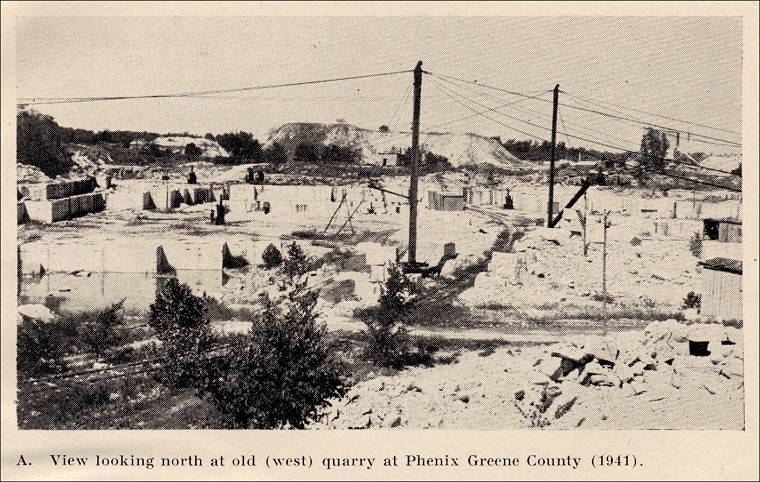
“The abandoned quarry of the Phenix Marble Company is located at Phenix, Greene County, Missouri, in the NW ¼ of Sec. 35, T. 31 N., R. 24 W. The plant was situated on a branch line of the St. Louis-San Francisco Railway Company which extended from Ash Grove, Mo. to Phenix and which provided transportation facilities for the marble company. This branch line has recently been abandoned and the tracks removed.
Plate V. A. View looking north at old (west) quarry at Phenix Greene County (1941). 
Plate V. B. View looking west at old (west) quarry at Phenix, Green County (1941). 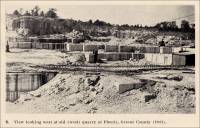
“The beds which were quarried are a part of the Burlington or Keokuk formations of the Mississippian system of rocks, which make up the surface rock over a wide area of southwestern Missouri. The exact geologic age of the beds in the quarry is being investigated by paleontologic studies which are being carried on by workers who are interested in trying to establish reliable faunal and stratigraphic bases for determining the boundary between the Burlington and Keokuk formations in this area. However, the relative stratigraphic position of the quarry beds is accurately known from regional stratigraphic studies in southwestern Missouri as the Short Creek oolitic limestone outcrops at the top of the sequence of limestone strata in the old west quarry at Phenix. The Short Creek oolite is a reliable marker in the Mississippian succession in this portion of the State and serves as a good datum of reference in the determination of the position of various units of the Mississippian limestones and cherty limestones. The top of the 40-foot sequence of beds which have been quarried for marble at the old west quarry at Phenix lies at a position about 35 to 40 feet below the base of the Short Creek. Thus, whether the marble beds prove ultimately to be of lower Keokuk or upper Burlington age, their position in the Mississippian section of the region is known. The following is a measured section of the quarry exposure:
Section in north part of old west quarry of the Phenix Marble Company, in the NW ¼, SW ¼, NW ¼, Sec. 35, T. 31 N., R. 24 W. Greene County, Missouri.
Top
8. Soil and residuum, about 5 (feet thick).
Warsaw formation:
7. Limestone; oolitic an fossiliferous; light gray; the so-called Short Creek oolite. About 2 ½ (feet thick).
Keokuk and Burlington formations:
6. Limestone; gray; crystalline; fossiliferous; containing almost no chert in the quarried face; stylolites prominent, with some attaining a length of several inches; formerly quarried for crushed stone. Approximately 30 (feet thick).
5. Limestone; fine-grained and coarse-grained; fossiliferous; very cherty; estimated to contain at places about 10 percent to 20 percent of light gray chert in upper portion and as much as 30 percent in some parts of lower portion - 8 (feet thick).
4. Limestone; lighter gray than No. 6 above; crystalline; stylolitic; this is the uppermost marble bed quarried and was termed marble bed ‘C’ by the quarry operators; contains some chert in isolated lens-shaped nodules, with chert at base of bed at places - 7 ½ to 8 (feet thick).
3. Limestone; gray; chiefly coarse-crystalline with thinner bands of more finely crystalline limestone; fossiliferous; stylolitic; slight alternation of lighter and darker gray color-banding; chert occurs as discrete, flatted nodules at places in this unit. This was the quarrymen’s ledge ‘AB’, which was channel-cut in a single lift with a thickness of 11 ½ to 12 (feet thick).
2. Limestone; crystalline; fossiliferous; gray; stylolitic; finely to coarsely crystalline; a few chert nodules. This was the quarrymen’s ledge ‘XAB’, which was cut in a single lift having a vertical thickness of 12 ½ to 13 (feet thick).
1. Limestone; crystalline; gray; fossiliferous; stylolitic; finely crystalline; variations in cryatallinity seem to attend a slight color-banding; some flattened chert nodules in a zone near the middle. This is the lowest ledge quarried and was known to the operators as marble bed ‘XCD’. It is channel cut to a depth of 10 (feet thick).
“NOTE: The beds exposed in the Phenix Quarry are fossiliferous and contain the remains of crinoids, brachiopods, bryozoons, corals, and other fossil forms.
“The beds in the old Phenix quarry are essentially flat-lying at this locality and have been extensively quarried. The description of the ledges given in the measured section above show the essential uniformity of the appearance of the stone. The styololites (‘suture-joints’ or ‘crows-feet’) are usually not large or deep in the marble beds, but are prominent and well-developed in the 30-foot, chert-free bed (No. 6 in the measured section) which lies above the marble ledges. A subtle color-banding of the even shades of gray in the stone is to be noted in some polished specimens of the marble. This banding is apparently due to variations in the size of crystal-grains in the stone or to concentrations of fossil remains along certain beds. Much of the polished marble is even-colored and even-textured, and without the color-banding mentioned. The stylolites (‘crow-feet or ‘sutures’) are darker than the intervening stone and are, in the main, narrow and ‘tight’. Some 20 or 30 stylolites were counted at one place in a 12-foot cut off the marble-ledge ‘AB’.
“The following data, which pertain to samples of ‘Napoleon Gray’ marble of the Phenix Marble Company, were the results of tests made by the Bureau of Standards,* U.S. Department of Commerce, and published as Technologic Paper No. 123 (1919) of that Bureau:
“Average compressive strength in lbs. per. sq. in.,
specimens dry
{ on bed - 11,773
{ on edge - 12,261
specimens wet
{ on bed - 11,967
{ on edge - 16,114
specimens frozen and thawed 30 times
{ on bed - 10,425
{ on edge - 10,052
Transverse tests; modulus of rupture in lbs. per sq. in.,
perpendicular to bed (average) - 2453
parallel to bed (average) - 1515
Tension tests; tensile strength in lbs. per sq. in.,
perpendicular to bed (average) - 1155
Average apparent specific gravity - 2.643
Weight per cubic foot - 165.2 lbs.
Chemical Analysis:
Calcium oxide (CaO) - 55.19
Magnesium oxide (MgO) - 0.40
Loss on ignition - 43.87
(carbon dioxide, CO2 - 43.25)
Aluminum oxide (Al2 O3 ) - 0.30
Iron oxide (Fe2O3) - 0.03
Insoluble in HCl - 0.40
Sulphur Trioxide (SO3 ) - Nil
(total) - 100.19
“Quarrying operations are reported to have been started in 1888 at and near the southeast part of the present quarry. In recent years, quarrying has been carried to the northwest, and in 1941 the main quarry was estimated to be approximately 700 feet long in a northwest-southeast direction by 400 or 500 feet wide in the northeast-southwest direction. In addition, bed No. 6 of the accompanying measured section has been quarried for crushed stone in an area about 250 by 300 feet in the northwest part of the quarry. The long quarry face extends in a direction N. 30° W., here called ‘northwest’. When the quarry was examined in September 1941, marble was being taken from the lower ledges in the northeast part of the quarry. For reference, it may be mentioned that the wooden derricks in the quarry were at that time set on the top of the ledge ‘XAB’.
“When the quarry was last operated the marble beds were cut vertically with steam-powered channeling machines and blocks were lifted by wedging at their bases or were cut to natural bedding-planes in some lifts. Lifts averaged about 10 to 13 feet in depth, the thickness of the ledges described above and were usually 5 by 24 feet in horizontal directions. Recent quarrying, prior to 1943, had been in beds ‘AB’, ‘XAB’, and ‘XCD’. Little, if any, marble had been taken from bed ‘C’ for a number of years prior to the suspension of operations in 1943.
“In 1941, the quarry was equipped with electricity operated compressors, steam channelers, pneumatic drilling equipment, several electric-powered 45-foot hoisting derricks, blacksmith shop, railroad-spur trackage, etc. The plant facilities included a large power-plant; sawing, cutting, and polishing equipment; a lathe and rubbing bed; and overhead conveyor cranes. Electricity was then purchased and was not generated at the plant.
“The interior decorative marble products of the quarry were marketed under the trade-names ‘Napoleon Gray’ and ‘ Annellen’ marble. ‘Napoleon Gray’ was sawed across the bed, whereas the ‘Annellen’ marble was sawed with the bedding. Building stone taken from the quarry was marketed as ‘Phenix Stone’. Stock was shipped to fabricators in various parts of the country. The stone takes a high polish and pleasing tones of dark gray and slightly brownish-gray are seen in the finished marble.
“A few of the many installations of Phenix marble are given below from a brief list which was supplied by the company in 1941. They were said to represent typical installations of this material.
South Calif. Edison Bldg., Los Angeles, Calif.
City Hall, Los Angeles, Calif.
Federal Res. Bank Bldg., San Francisco, Calif.
Palace of the Legion of Honor, San Francisco, Calif.
Standard Oil Co. Bldg., San Francisco, Calif.
Missouri State Capitol, Jefferson City, Mo.
Nelson Art Gallery, Kansas City, Mo.
Kansas City City Hall, Kansas City Mo.
U.S. Post Office and Court House, Kansas City, Mo.
Cook County Court House, Chicago, Ill.
Cook County Criminal Court and Jail Bldg., Chicago, Ill.
Scottish Rite Temple, St. Louis, Mo.
Civil Courts Bldg., St. Louis, Mo.
City Infirmary, St. Louis, Mo.
National Acad. Sci. Bldg., Washington, D.C.
Red Cross Bureau Bldg., Washington, D.C.
Baltimore Life Ins. Co., Bldg., Baltimore, Md.
New York Stock Exchange Bldg., New York, N.Y.
American Telephone and Telegraph Bldg., New York, N.Y.
Bank of America Bldg., New York, N.Y.
American Radiator Bldg., New York, N.Y.
Standard Oil Co., Bldg., New York, N.Y.
U.S. Post Office or Court House buildings in Oroville, Calif.; Hartford, Conn.; Pocatello, Ida.; Lake Forest, Ill.; Ames, Davenport, and Dubuque, Ia.; Reno, Nev.; Meridian, Miss.; Omaha, Nebr.; Bartlesville, Okla.; Oregon City, Ore.; and Fort Worth, Tex.”
-
Phenix, Missouri – the Phenix Marble Company (originally known as the Phenix Stone and Lime Company) and Other Phenix District Quarriers.
The Phenix Marble Company and other quarriers in the Phenix district are discussed in the article entitled, “Quarrying Marble at Phenix, Missouri,” by B. B. Brewster (St. Louis, Missouri), from Mine and Quarry magazine, Sullivan Machinery Co., Publisher, Chicago, Illinois, Vol. VIII. No. 2 – January, 1914, pages 791 – 796, Whole No. 27. (If you would like to read the entire article and view the photographs, please click here.)
"A" Quarry of Phenix (Mo.) Mable Company, showing extent of working faces, and Sullivan Channelers 
Sullivan "Y" Channelers on a 13-foot Cut in Phenix "A" Quarry 
A block 23 x 13 x 8 cut by Sullivan Channelers in the "A" Quarry for Tulsa County Courthouse, Tulsa, Okla. 
"A" Mill and Yard (wholesale), Phenix Marble Company 
Stone Tools in "B" Mill at Phenix 
Phenix Marble Co. Daily Channeler Record 
Phenix Marble Co. Store Room Stock Sheet for Receipts and Dispursments 
Phenix Marble Co. Gang Saw Report 
- Phenix, Green County, Missouri - Phenix Marble Quarry (photographs and history), presented by the City of Ash Grove.
- Phenix, Greene County, Missouri – “Phenix Quarry Station, northwest Greene County, Missouri,” (photograph) in the OzarkWatch Photo Gallery, Vol. VII, No. 2, Fall 1993 / Winter 1994. (Scroll down the page to the above photo.)
- Phenix, Missouri - the Vermont Marble Company (& the Phenix Marble Company) (from Missouri Marble, by Norman S. Hinchey, Report of Investigations No. 3, Missouri Geological Survey and Water Resources, Rolla, Missouri, 1946. Used with permission of the Missouri Department of Natural Resources.)
“In 1945, the Vermont Marble Company of Proctor, Vermont, purchased the property which includes the quarry and plant of the Phenix Marble Company. The Phenix Marble Company had long operated the quarry, described below,* which is located at Phenix in Greene County, Missouri. At the present time, the Vermont Marble Company has opened a new quarry about one-fourth mile east of the old Phenix Company’s quarry and is confining its current operations to this new site (May 1946). This new venture is described below as the ‘east quarry’, following the description of the older ‘west quarry’ which was operated by the Phenix Marble Company until 1943. The old ‘west quarry’ was not being worked at the time it was visited early in 1946.”
(* See the entry for the old West Quarry at Phenix above.)
- Phenix, Missouri – the Phenix Stone and Lime Company (from Stone: An Illustrated Magazine, May 1899, Vol. XVIII, No. 6, “Trade Notes” section, pp. 364)
“The New Albany Manufacturing Company has just shipped a pair of Knobel patent wire rip saws to the Phenix Stone & Lime Company, Phenix, Mo., and a single machine of the kind to Butler Ryan Company, of St. Paul, Minn. These wire saws have been given a thorough test in the Bedford region, and have demonstrated their value.”
- Phenix, Missouri - the Phenix Stone and Lime Company’s Limestone Quarry (Limestone) (The following information is from The Quarrying Industry of Missouri, by E. R. Buckley, Director and State Geologist, and H. A. Buehler, Missouri Bureau of Geology and Mines Vol. II, 2nd Series, 1904.)
“This quarry is located just west of the tracks of the Kansas City, Ft. Scott and Memphis railroad at Phenix. It has been in operation since 1888 and is one of the largest and best equipped quarries in the State. The stone, which is of Burlington age, covers a large part of the northwest portion of Green county. At this place it is coarsely crystalline and has a bluish gray color and occurs in thick beds. It has a uniform texture and, where free from chert nodules, can be quarried in blocks of any desired dimensions.
Plate XXXI. Mill of the Phenix Stone and Lime Company, Phenix, Mo. 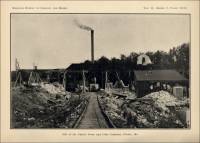
Plate XXXII. Phenix Limestone (Burlington). Quarry of the Phenix Stone and Lime Company, Phenix, Mo. 
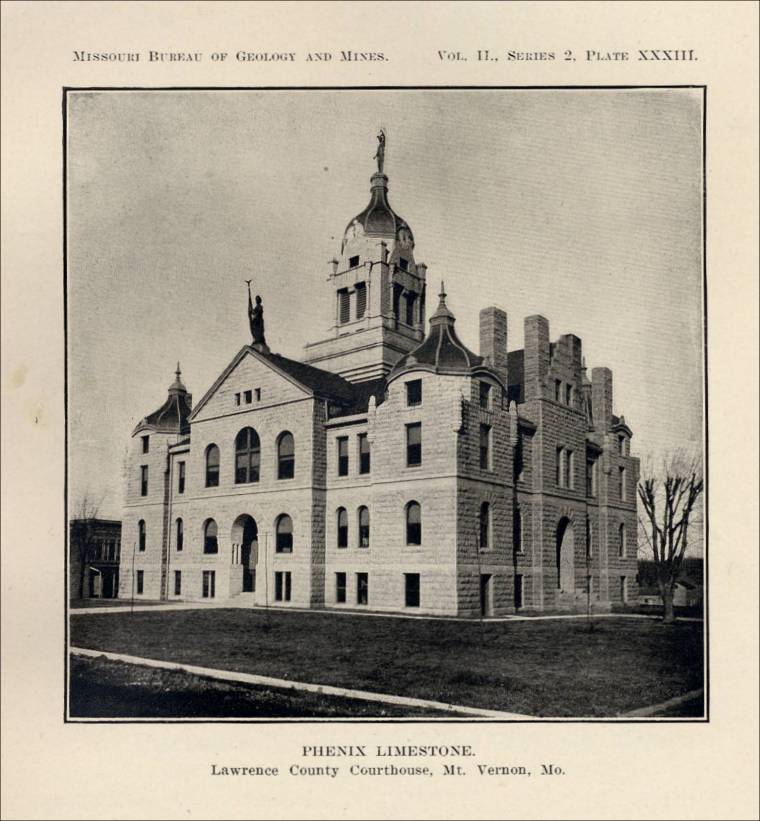
Plate XXXIII. Phenix Limestone (Burlington). Lawrence County Courthouse, Mt. Vernon, Mo. 
“The nodules or lenses of chert are chiefly in layers, although occasionally one is found within the limestone beds. In some parts of the quarry, especially where now being operated, the limestone is very free from chert.
“Suture joints or stylolitic parting planes occur here as in the Carthage limestone. They vary in size from fine pencil-like markings to lines three inches in depth. These so-called suture joints frequently contain a thin layer of bituminous or carbonaceous shale which is especially noticeable when the stone is sawed. Most of the sutures in this quarry do not contain this bituminous material. The smaller ones are very tight and evidently do not affect the strength of the stone. The larger ones are more open and are more liable to cause injury to the stone. The suture joints occur from two to fourteen inches apart throughout most of the quarry.
“The quarry faces the east and has been opened for a distance of 225 feet and extends into the hill about 300 feet. The following is a description of the stone by channel cuts:
1-10 ft. - Bouldery limestone and clay.
3 ft. 6 in. - Gray, coarsely crystalline, fossiliferous limestone, containing tight sutures from two to six inches apart. An irregular bed of flint separates this channel cut from the one immediately below.
5 ft. 2 in. - Bluish gray, coarsely crystalline, fossiliferous limestone. Contains numerous suture joints.
5 ft. - Stone very similar to that in channel cut above. A layer of flint occurs at the bottom.
“The bouldery formation at the top consists of limestone and clay, having a maximum thickness of ten feet at the middle of the quarry.
“The limestone comes to within a foot or two of the surface and is separated into knobs by the weathering along joints and seams which are now filled with clay.
“The stone is essentially the same in all parts of the quarry, having the color and texture of typical Burlington limestone. In color, it is not quite as light as that from Carthage, but it is not sufficiently dark to in any way affect its use as a white limestone. The suture joints are not large or deep, although many of them have been opened up through weathering as shown by the natural exposures.
“The company has started a second opening across the ravine, southeast of the one now being operated. At the time the quarry was inspected, no stone had been taken out. There is practically an inexhaustible supply on the ridge where this opening is located. Just northwest of the mill the company at one time worked an opening which has not been operated for a number of years and probably will not be reopened.
“The stone from the south part of the quarry is used for burning lime. Two continuous kilns are operated and a good grade of white lime is produced. All the waste from the quarry is used in this way, as well as the stone from the bouldery portion at the surface.
“The quarry is well equipped with machinery for quarrying, handling and dressing the stone. The mill for sawing the stone is located south of the quarry and is connected with the quarry by a tramway. The mill is equipped with all modern machinery, including engines, pumps, gang-saws and traveling crane. The gang-saws will take blocks 10 feet 6 inches, 8 feet 6 inches and 6 feet 6 inches in length. The stone is sawed parallel to the bed as in the case of that in the Carthage quarries. The quarry is equipped with channelers, steam drills, derricks and other necessary machinery. The company operates its own electric light system by which the plant and the houses of the employees are lighted.
Laboratory Examination.
Chemical Analysis.-The following analysis shows the composition of the stone from this quarry.
Insoluble -.21
Fe2O3, Al2O3 -.23
CaCO3 - 99.06
MgCO3 -.58
Total - 100.08
This is remarkably pure limestone, being over 99 per cent. calcium carbonate.
Physical tests.. - Two-inch cubes of stone from this quarry were tested in the laboratory with the following results:
Specific Gravity - 2.663
Porosity - 1.939 per cent.
Ratio of Absorption -.742.
Weight per cubic foot - 163.2 lbs.
Tranverse (sic) Strength - 1684.7 lbs. per sq. in.
Tensile Strength - 883.5 lbs. per sq. in.
Crushing strength
{ (a) 11,748.3 lbs. per sq. in. on bed.
{ 11,366. lbs. per sq. in. on edge.
{ (b) 12,375. lbs. per sq. in. on bed.
{ 12,530. lbs. per sq. in. on edge.
Crushing strength of samples subjected to freezing test
{ (a) 11,121.5 lbs. per sq. in. on bed.
{ (b) 12,146.5 lbs. per sq. in. on bed.
(a) Samples of stone free from suture joints.
(b) Samples of stone containing sutures ¼” in depth.
“The tensile and traverse strength tests were made on pieces which were coarser grained than the ordinary run of stone from the quarry, which accounts for the results not being higher. In the two sets of crushing strength tests which were made there was a loss due to freezing and thawing in the first instance of 626.8 pounds per square inch; and in the second case of 228.1 pounds per square inch. The crushing strengths of the fresh and frozen samples are so near alike as to warrant one in saying that the strength of the stone is very little affected by alternate freezing and thawing. The samples (a) show a crushing strength of 382.3 lbs. per sq. in. more on bed than on edge; while the samples (b) show a crushing strength of 155 lbs. less on bed than on edge. This stone can apparently be used with equal safety on bed or on edge.”
- Phenix, Missouri - the Phenix Stone and Lime Company’s Limestone Quarry (Limestone) (The following information is from The Quarrying Industry of Missouri, by E. R. Buckley, Director and State Geologist, and H. A. Buehler, Missouri Bureau of Geology and Mines Vol. II, 2nd Series, 1904.)
- Phenix, Missouri - the “Phenix Quarry” - Excerpt from Missouri Mining Heritage Guide, by John R. Park, Stonerose Publishing Co., Miami, Florida, March 2005. (The following excerpted quotations are used with the permission of John R. Park, author. A photograph of a stone with the name of “Phenix” is included with John Park’s article.)
“...In mid-2004, when I attempted to visit the site of the Phenix Quarry, the quarry was apparently being operated by Pennington Lawn & Garden Products. Entrances were posted, and the main entranced was patrolled by a pair of Dobermans. An abandoned building across the main entrance was apparently historically associated with the quarry. Within the main entrance a large two-storey building remains, abandoned but apparently in good condition. The best view of the quarry is actually from FM 43 on the west side of the property.
“Piecing together several conflicting accounts (which is always hazardous), it appears that local quarrying began about 1875 by C.R. Hunt and Patrick Dugan. The limestone was used to produce lime in a kiln owned by Dugan (and maybe Hunt). Subsequently, Hunt bought out Dugan and went into business with Bill Scarritt. Apparently, Hunt and Scarritt created the Phenix Stone & Lime Company (unless it existed earlier), opened the Phenix Quarry, and built a lime kiln, in 1888, on or near the site of the earlier quarry and kiln. The limeworks consisted of two kilns with a daily capacity of 125 barrels each. The kilns processed waste rock from the quarry, which was operated primarily for building stone.
“In the 1890s, the Kansas City, Clinton, & Springfield Railroad, and the Memphis & Gulf Railroad (in 1894) were built through Phenix.
“A company store was built ca 1902, followed by a schoolhouse in 1905. The town also had two hotels, a post office, a Methodist church, a recreational hall, and 32 company houses. By 1910 the community of Phenix had a population of about 250.
“In 1922 a coal-fired powerhouse was built to supply electrical power for the mill which cut the rough block from the quarry into dimension stone. Much of the waste rock was calcined in three lime kilns. The powerhouse also supplied electricity to Phenix and to the town of Walnut Grove. A channeling machine was used to cut rough blocks, ca 6’ x 5’ x 3’, in the quarry. Initially, the blocks were hauled by horsepower to the mill (probably on a tramway). Later a small locomotive was used for this purpose. At peak operations the complex employed about 250 workers, but ca 125 was more typical.
“At some point, W.J. Grant, a marble finisher in Milwaukee, WI, discovered that the stone would take a high polish. As a result, he acquired an interest in PS&L. To avoid customer confusion, PS&L decided to concentrate on ‘marble’ production, and lime production ceased. (Actually, it is my impression that the limeworks were spun off to a wholly-owned subsidiary or sold to an independent company, and continued in operation). Most likely the company name was changed to the Phenix Marble Company at this time. By 1925, the town had a population of about 500.
“The older West Quarry is about 700’ x 400’-500’. When operating, it was equipped with electric compressors, steam channelers, pneumatic drilling equipment, and several 45’-tall electric derricks. Facilities included a blacksmith shop, powerplant, sawing, cutting, and polishing equipment (including a lathe and rubble bed), and overhead conveyor cranes. The quarry was served by a spur from the St. Louis & San Francisco Railroad (now Burlington Northern & Santa Fe) from Ash Grove. During the Great Depression (the 1930s), the town and quarry slowly died. Apparently the track of the spur serving the quarry was taken up when the quarry closed in 1943.
“The quarry was purchased by the Vermont Marble Company in 1945, which shifted operations to a new quarry ¼-mile east.
“Marble from the younger East Quarry (opened in late-1945) was shipped by truck to Walnut Grove for shipment on a different branch of the St. Louis & San Francisco Railroad (now abandoned). The quarry used electric channelers.
“Marble from the Phenix Quarry has been used in the Greene County Courthouse, the Missouri State Capitol (...Missouri State Museum), the National Academy of Sciences Building and the Red Cross Building in Washington, DC, and many other locations, from Idaho to New York.
“The limestone (‘marble’) was quarried from the Mississippian-age lower Keokuk Formation or the upper Burlington Formation.”
- Phenix, Missouri - the Phenix Stone Company (from Stone: An Illustrated Magazine, May 1899, Vol. XVIII., No. 6)
“The Phenix (Mo.) Stone Company, W. Delarue, secretary and general manager, has secured the contract to furnish 500 carloads of building stone for a railroad bridge in Arkansas.”
- Phenix, Missouri - the Vermont Marble Company “East Quarry” (from Missouri Marble, by Norman S. Hinchey, Report of Investigations No. 3, Missouri Geological Survey and Water Resources, Rolla, Missouri, 1946. Used with permission of the Missouri Department of Natural Resources.)
“After their purchase of the properties at Phenix, the Vermont Marble Company opened a new quarry on the east side of the creek valley, approximately one-fourth mile east of the old Phenix Marble Company’s quarry. A preliminary drilling program, initiated in 1944, was followed by the installation of modern quarrying equipment and machinery. Channeling operations were started late in December 1945, and this new venture was well under way when the quarry was examined by the writer early in May 1946. Several car-loads of the stone had been shipped for processing.
“This new (east) quarry is located near the center of Sec. 35, T. 31 N., R. 24 W. at a slightly lower surface elevation than the old west quarry at Phenix. The marble blocks are taken by truck to Walnut Grove, Mo., three miles north of the quarry, where they are loaded for shipment on the St. Louis-San Francisco Railway. The first two shipments have gone to Proctor, Vermont and San Francisco, California for processing.
Plate IV. B. Vermont Marble Co. Two views of new quarry at Phoenix (May, 1946). 
“Stone is removed from the quarry by channeling and drilling. When examined a few months after channeling work had started, the new operation had extended two channel cuts into the face of the gently sloping valley wall. Surficial material had been removed to expose the limestone ledges for a distance of from 175 to 200 feet along the side of the valley in a generally northeast-southwest direction. Five electric channelers were in operation, and the channel-cuts had exposed a quarry face about 30 feet high.
“The ledges beneath the thin zone of surface weathering appear to be massive with stylolitic ‘sutures’ which are irregularly spaced in the beds. In blocks which have been removed from the quarry, the stylolite ‘seams’ or ‘sutures’ appear to be tight. The beds dip approximately 6° in a direction which is near to S. 35° E. This southeasterly dip is followed by the channeling machines, which are set to cut at that inclination.
“The operation is powered by electricity. Electric channeling-machines, an electric-powered compressor, and pneumatic drills are in use. The quarry is served with a 75-foot wooden-mast derrick. Reported plans for future operation include the development of lower beds, which have been prospected by the preliminary core-drilling, and extension of the face of the present workings along the valley wall to the northeast and southwest.”
- Phenix, Missouri - “The Ghost Town,” presented by Missouri State University (photographs)
- Memoirs of Phenix (Phenix History II), by Klova Helfrecht.
- Phenix, Missouri - the Old Abandoned Phenix Marble Quarry (history and photographs) The following information was taken from the web site “Underground Ozarks” in the “Phenix - Underground” section. The article is entitled, “Have You Been To Phenix?” by Loretta J. Goodwin.
According to this web site, “all that is left of Phenix is a silent quarry, empty buildings, and memories....”



Phenix Quarries continued on Page 1 2
Commercial use of material within this site is strictly prohibited. It is not to be captured, reworked, and placed inside another web site ©. All rights reserved. Peggy B. and George (Pat) Perazzo.