
Quarries in Maine & Quarry Links, Photographs, and
Articles
(Continued)
- Hallowell, Maine – Granite Quarries in Hallowell, Maine. Excerpt from “Our Building Stone Supply” (Quarrying in the United States circa 1887), by George P. Merrill, Scientific American Supplement, No. 577, January 22, 1887, & “Our Building Stone Supply” Conclusion, Scientific American Supplement, No. 578, January 29, 1887.
“Granite Quarries, Hallowell, Maine” 
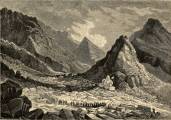
- Hallowell, Maine - the Granite Quarries at Hallowell, Maine (January 1888). The Manufacturer and Builder, Vol. 20, Issue 1, January 1888, pg. 12. (includes a sketch of the Hallowell, Maine, granite quarry; article in digital images viewed at American Memory, Library of Congress)
- Hallowell, Maine – Destruction of Building Stone (January 1888). The Manufacturer and Builder, Vol. 20, Issue 1, January 1888, pg. 12. (includes a sketch of the Hallowell, Maine, granite quarry; article in digital images viewed at American Memory, Library of Congress)
- Hallowell Area Granite Quarries - Structures in which this stone was used include: the Capitol Building in Albany, New York; Library and Academy Building in Annapolis, Maryland; Kennebec Courthouse in Augusta, Maine; Kennebec County Jail in Augusta, Maine; Maine State House in Augusta, Maine; Boston Custom House in Boston, Massachusetts; National Shawmut Bank in Boston, Massachusetts; Continental Bank Building in Chicago, Illinois, Illinois Trust Co. Building in Chicago, Illinois; Marshall Field Building in Chicago, Illinois; Post Office Building in Houston, Texas; American Surety Building in New York City; First National Bank in New York City; Hall of Records in New York City; Johnson Building in New York City; Masonic Temple in New York City; Metropolitan Art Museum Extensions in New York City; Long John Wentworth Monument in Chicago, Illinois; Pullman Monument in Chicago, Illinois; Eugene Hale Memorial in Ellsworth, Maine; Soldiers Monument in New Haven, Connecticut; National monument for Forefathers in Plymouth, Massachusetts; Pilgrim monument in Provincetown, Massachusetts; and the National monument in Yorktown, Virginia. (From Maine Quarries and Prospects published by the Maine Geological Survey, written by M. B. Austin and A. M. Huseey, II, John R. Rand, State Geologist, May 1, 1958.)
-
Hallowell, Maine - Hallowell Granite Quarry, Hallowell,
Me.
(colorized postcard photograph #819; made in Germany; unmailed, early 1900 
- Hallowell, Maine – the Hallowell Granite Quarries (The following information is from the section “Marble and Granite” in Stone: An Illustrated Magazine Devoted to Stone, Marble, Granite, Slate, Cement, Contracting and Building, Vol. XXIV, No. 1, January, 1902, Stone Publishing Co., New York, pp. 61.)
Hallowell Granite Quarries
There is a great deal of activity at the Hallowell granite quarries and 180 cutters are at work there and 200 at Frankfort. It is expected that the cutting of the Chicago post office and court house building will be finished on or about the first of June.
- Hallowell, Kennebec County, Maine - the Archie Ledge, one of the Hallowell Granite Quarries (light gray color) (For a more detailed description of granite and location of quarry, see Maine Quarries and Prospects published by the Maine Geological Survey, written by M. B. Austin and A. M. Huseey, II, John R. Rand, State Geologist, May 1, 1958, pp. 16.)
- Hallowell, Maine - “Granite Works, Hallowell, Maine @1900” (Image # 5445 - photograph) This photograph is located in the statewide cultural database/online museum on The Maine Memory Network web site, a project of the Maine Historical Society. [Use the title in quotes above as the search words or use the image number in the search function of the web site to locate the photograph.]
-
Hallowell, Maine – Hallowell Granite Quarries – C. E. Tayntor & Co. (The following information is from an advertisement in Stone: An Illustrated Magazine Devoted to Stone, Marble, Granite, Slate, Cement, Contracting and Building, Vol. XXIV, No..1, January, 1902, Stone Publishing Co., New York, pp. 67.)
C. E. Tayntor & Co.
Hallowell Granite Quarries, Hallowell, ME.
For Prices on Rough Stock For Building Purposes, Address
New York Office, 239 Broadway. Telephone, 4727 Cortlandt.
- Hallowell, Kennebec County, Maine - the Haines Ledge (Stinchfield Quarry), one of the Hallowell Granite Quarries (light gray color) Structures in which this stone was used include: Capitol Building in Albany, New York; Post Office Allegheny, Pennsylvania; Academic Building in Annapolis, Maryland; Library Building in Annapolis, Maryland; Masonic Temple in Boston, Massachusetts; Suffolk Savings Bank in Boston, Massachusetts; Illinois Trust Co. Building in Chicago, Illinois; Northwestern Mutual Life Insurance Company in Milwaukee, Wisconsin; Several mausoleums in New Orleans, Pittsburgh, Pennsylvania, and Chicago, Illinois; Brooklyn Savings Bank in New York City; Hall of Records in New York City; New York State monument in Gettysburg, Pennsylvania; Soldiers monument in New Haven, Connecticut; Richard M. Hunt monument in Central park, New York City; Statuary of Hall of Records in New York; Statuary on Plymouth monument in Plymouth, Massachusetts; Governor Cleaves monument in Portland, Maine; and National monument in Yorktown, Virginia. (For a more detailed description of granite and location of quarry, see Maine Quarries and Prospects published by the Maine Geological Survey, written by M. B. Austin and A. M. Huseey, II, John R. Rand, State Geologist, May 1, 1958, pp. 16.)
-
Hallowell, Kennebec County - the Longfellow Quarry,
from The Commercial Granites of New England, Bulletin
738, by T. Nelson Dale, U. S. Geological Survey, 1923.
The Longfellow Quarry was discussed in the section pertaining to the Stinchfield Quarry. The Longfellow Quarry opened about 1826. In 1905 the Longfellow was not in operation, and it was filled "up to 20 feet with water." This quarry was "southwest of the Stinchfield and communicat(ed) with it." The Longfellow Quarry measured 400 by 200 feet with a depth from 50 to 70 feet.
-
Hallowell, Maine - the Longfellow Quarry - Northwest Wall
of Longfellow Quarry Near Hallowell.
Showing intersection of two headings, one with a NW., the other with a N. 65° E. strike; also the progressive concentric ferruginous discoloration ("sap") from the sheet and joint surfaces. (From The Granites of Maine, Bulletin 313, 1907, Plate IX-B.) 
- Hallowell, Kennebec County, Maine - the Longfellow Ledge, one of the Hallowell Granite Quarries (light gray color) (For a more detailed description of granite and location of quarry, see Maine Quarries and Prospects published by the Maine Geological Survey, written by M. B. Austin and A. M. Huseey, II, John R. Rand, State Geologist, May 1, 1958, pp. 16.)
- Hallowell-Augusta, Kennebec County, Maine - the Melvin Granite Quarry (Tayntor Quarry), one of the Hallowell Granite Quarries (light gray color) Structures in which this stone was used include: the General Miles mausoleum in Arlington, Virginia; the Latham mausoleum in Hopkinsville, Kentucky; the Dunlap mausoleum in Woodlawn Cemetery, New York City; the Ziegler mausoleum in Woodlawn Cemetery, New York City; and for paving. (For a more detailed description of granite and location of quarry, see Maine Quarries and Prospects published by the Maine Geological Survey, written by M. B. Austin and A. M. Huseey, II, John R. Rand, State Geologist, May 1, 1958, pp. 16.)
-
Hallowell, Kennebec County - the Stinchfield Quarry,
from The Commercial Granites of New England, Bulletin
738, by T. Nelson Dale, U. S. Geological Survey, 1923.
This quarry was located "in the town of Hallowell, 2 1/2 miles northwest of the city of Hallowell, on the southern part of Lithgow Hill." The operator was the Hallowell Granite Works, C. B. Paine, receiver, of Hallowell, Maine. Granite from the quarry, "Hallowell," was reportedly a light-gray color with a fine texture. Transport of the granite was by cart 2 1/2 miles to the railroad or to the wharf on Kennebec River at Hallowell, which was accessible to schooners of 12-foot draft. George A. Fuller Co. leased the quarry in 1922 and supplied part of the stone for the courthouse in New York.
The Stinchfield Quarry was opened about 1826 at the same time as the Longfellow Quarry, which was southwest of the Stinchfield quarry "and communicating with it." In 1905 the quarry was measured and it was 600 feet from northeast to southwest by 400 feet across and had a depth from 30 to 60 feet.
The granite from the Stinchfield Quarry was used for buildings and sculpture. "It lends itself remarkably well to delicate ornamental work and statuary." About seven-eighths of the granite went into building and one-eighth into carved works in 1905. Granite from this quarry was used in the following examples: the Capitol in Albany, New York; the Marine National Bank in Buffalo, New York; the Hall of Records (including the statuary), the Brooklyn Savings Bank, in New York; the Masonic Temple in Boston, Massachusetts, the academic and library buildings at the United States Naval Academy in Annapolis, Maryland; the vestibule of the Terminal Station in Chicago, Illinois; the Northwestern Insurance Co.'s building in Milwaukee, Wisconsin; and the Savings Bank in Bangor, Maine. The granite was also used in the following monuments and statuary: the Statue on Pilgrim monument in Plymouth, Massachusetts; the National Monument in Yorktown, Virginia; the New York State monument in Gettysburg, Pennsylvania; the Soldiers' Monument in New Haven Connecticut; the Richard M. Hunt monument in Central Park in New York; and the Battlefield Monument in Trenton, New Jersey.
-
Hallowell (near), Maine - Stinchfield Quarry near
Hallowell.
Looking West-Northwest. Showing the sheets gradually increasing in thickness downward, crossed by joint (C) and overlain by glacial drift. (From The Granites of Maine, Bulletin 313, 1907, Plate IV-B.) 
-
Hallowell, Maine - Stinchfield Quarry - Carvings from
Light-Gray Fine-Textured Biotite-Muscovite Granite From the
Stinchfield Quarry, Near Hallowell, Showing Adaptation to
Delicate Sculpture. Plate XIV (photographs)
(From The Granites of Maine, Bulletin 313, 1907, Pl.
XIV-A and XIV-B.)
A. Part of panel at side of entrance to New York Bank of Commerce. 
B. Statue erected in 1906 at the Hall of Records in New York. 
- Hallowell, Kennebec County, Maine - the Stinchfield and Longfellow Granite Quarry, one of the Hallowell Granite Quarries (light gray color) (For a more detailed description of granite and location of quarry, see Maine Quarries and Prospects published by the Maine Geological Survey, written by M. B. Austin and A. M. Huseey, II, John R. Rand, State Geologist, May 1, 1958, pp. 16.)
-
Hallowell, Kennebec County, Maine - The Tayntor Quarry
(Melvin Quarry), from The Commercial Granites of New
England, Bulletin 738, by T. Nelson Dale, U. S.
Geological Survey, 1923.
This quarry was "in the town of Hallowell, 2 miles north-northwest of the city of Hallowell." It was owned by the Hallowell Granite Works. At the time of the report, the quarry had not been worked for many years. The granite from the quarry was reportedly a light-gray color with a fine texture.
The Tayntor Quarry opened before 1840. In 1905 the quarry measured "520 feet N. 30° W. to S. 20° E. by 275 feet across and from 10 to 40 feet in depth. The deeper part of it is 275 by 150 feet and 40 feet deep." Transport of the granite was by rail 2 miles to the cutting shed at the dock.
The granite from the Tayntor Quarry was used for monumental work. Examples can be seen at: the General Slocum monument in Gettysburg, Pennsylvania; the State of Maine Monument in Andersonville, Georgia; the New York State Monument on Lookout Mountain (Craven House), in Tennessee; the Soldiers' Monument at Pittsfield, Maine; the Dunlap mausoleum (Corinthian style, 16 by 28 feet) and the Ziegler mausoleum (Grecian Doric style, 25 by 34 feet, after the temple at Paestum) in the Woodlawn Cemetery in New York; and the General Miles mausoleum in Arlington, Virginia.
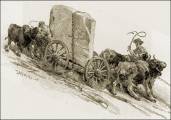
- Hallowell, Kennebec County, Maine - the Taynter Quarry - Granite Quarrying in Maine, text and present-day photos by Robert Johnston, August 2003, Maine Department of Conservation, Maine Geological Survey. This article includes photographs of the following: (1) Granite hauling wagon called a galamander; (2) Close-up of a piece of granite; and (3) Tayntor Quarry, Hallowell, Maine)
- Hallowell, Kennebec County, Maine - the Wescott Granite Quarry, one of the Hallowell Granite Quarries (light gray color) (For a more detailed description of granite and location of quarry, see Maine Quarries and Prospects published by the Maine Geological Survey, written by M. B. Austin and A. M. Huseey, II, John R. Rand, State Geologist, May 1, 1958, pp. 16.)
- Hallowell, Kennebec County, Maine - the Williams Lot, one of the Hallowell Granite Quarries (light gray color) This stone was used in the construction of the Custom House in Boston, Massachusetts. (For a more detailed description of granite and location of quarry, see Maine Quarries and Prospects published by the Maine Geological Survey, written by M. B. Austin and A. M. Huseey, II, John R. Rand, State Geologist, May 1, 1958, pp. 16.)
- Harmony, Maine – Granite Quarry (From Stone: An Illustrated Magazine, Vol. XII, No. 1, December, 1895, “Notes From Quarry and Shop” section, Stone Publishing Co., New York, pp. 82.)
“There is a large granite quarry in the town of Harmony, Me., known as ‘Devil’s Head.’ This stone is of reddish color, and when cut in blocks makes a handsome as well as a solid building. This quarry has been purchased by parties in Hartland, who will open it in the spring, having several large orders now on hand.”
- Hartland, Somerset County, Maine - the Hartland
Quarry, from The Commercial Granites of New England,
Bulletin 738, by T. Nelson Dale, U. S. Geological Survey,
1923.
This quarry was "in the town of Hartland, near Hartland village, on the Sebasticook & Moosehead Railroad." Prior to 1905 the operator was Joseph H. Baker, and the property was reportedly owned by the Linn estate. Rock from the quarry was "a quartz diorite with conspicuous black particles on a more bluish than yellowish-white ground" and had a medium to coarse texture.
- Hartland, Somerset County, Maine - the Hartland Granite Quarry (For a more detailed description of granite and location of quarry, see Maine Quarries and Prospects published by the Maine Geological Survey, written by M. B. Austin and A. M. Huseey, II, John R. Rand, State Geologist, May 1, 1958, pp. 16.)
- Hebron Pond, Maine - Hebron Pond Slate Quarry Opening circa 1910 (from Slate: It’s Products and Interests, Vol. 1, No. 3, August 1910, pp. 12)
“Everything looks favorable to the opening up of the Hebron Pond (Maine) slate quarry, which has been shut down for the last twenty-six years. Probably no better slate was ever obtained in this town than that which came from this quarry when in operation.”
- Hermon, Penobscot County, Maine - the Hermon Hill
Quarry, from The Commercial Granites of New England,
Bulletin 738, by T. Nelson Dale, U. S. Geological Survey,
1923.
This quarry was "on Hermon Hill, 5 1/2 miles northwest of Bangor." The owner was Dr. H. F. Hanson of Bangor, Maine. Granite from the quarry was reportedly a dark-green ("black granite") color with a fine texture. Transport of the granite was by cart 1 mile to the Maine Northern Seaport Railroad or 5 1/2 miles to Bangor. The quarry was only occasional worked.
The granite from the Hermon Hill Quarry was used for dies, memorial tablets, and wainscoting. Examples can be seen in the following: about 20 dies in Mount Hope and in the Mount Pleasant cemeteries at Bangor, Maine; the dies at the cemetery at Springfield, Illinois; the cornerstone of the Catholic Church at Orono, Maine; the keystone, etc., at the Lord Hall at the University of Maine.
- Hermon, Penebscot County, Maine - the Hermon Hill Quarry (dark green color) Structures in which this stone was used include: the Cornerstone, Catholic Church in Orono, Maine; the Keystone at Lord Hall, University of Maine in Orono, Maine; 20 dies in Mt. Hope and Mt. Pleasant cemeteries in Bangor, Maine; Dies on Soldiers monument in Herman, Maine; and Dies in Springfield, Maine. (For a more detailed description of the granite and location of quarry, see Maine Quarries and Prospects published by the Maine Geological Survey, written by M. B. Austin and A. M. Huseey, II, John R. Rand, State Geologist, May 1, 1958, pp. 17.)
-
Heron Neck, Green Island, Maine - East-West Joint
Structure in Granite on Heron Neck at South End of Green
Island.
Looking south-southeast from Hurricane Island. Plate II (photograph) (From The Granites of Maine, Bulletin 313, 1907.) 
- Hollis, York County, Maine - the Bear Hill Quarry,
from The Commercial Granites of New England, Bulletin
738, by T. Nelson Dale, U. S. Geological Survey, 1923.
This quarry was "in the town of Hollis, on Bear Hill, 1 mile west-southwest of Bradbury station (Hollis Center) on the Portland & Rochester Railroad." The operator was E. M. Bradbury of Hollis Center, Maine, in 1905. Granite from the quarry was reportedly a medium to light gray color with a slight greenish tinge, evenly spangled with black and white mica and a medium texture. Transport of the granite was by cart one-fourth mile to the railroad.
The Bear Hill Quarry opened in 1855 and reopened in 1901. There was an older opening of irregular shape and a later opening 50 feet square with a depth from 5 to 10 feet.
The Bear Hill Quarry produced granite for the foundation of a pulp mill at Bar Mills and for a dam on the Saco River.
- Hollis, York County, Maine - Bear Hill Granite Quarry (medium gray color) Random stone - location not stated. (For a more detailed description of granite and location of quarry, see Maine Quarries and Prospects published by the Maine Geological Survey, written by M. B. Austin and A. M. Huseey, II, John R. Rand, State Geologist, May 1, 1958, pp. 7.)
- Houlton, Maine - the Houlton Granite & Marble Works (from Design Hints For Memorial Craftsmen, May 1930, Vol. 6, No. 11, pp. 27)
The Houlton Granite & Marble Works was listed as one of the customers of the Mount Brothers of Memphis Missouri, who sold their Air Take-off Device used in carving cemetery stones.
-
Hurricane Island, Maine - the Hurricane Isle Quarry,
Eastern End.
Showing the lower 60-foot sheet overlain by 20-foot sheet and crossed by vertical east-west joint and by diagonal joint. (From The Granites of Maine, Bulletin 313, 1907, Plate IV-A.) 
- Hurricane Island, Maine - Photograph entitled, "Stone Cutters, Hurricane Island, Granite Quarry 1874," J. P. Armbrust, Railroad and Mechanical Photographer, contributed by Jim Cheyne in Aboyne, Aberdeenshire, Scotland.
- Jay, Franklin County, Maine - the American Stone Company Granite Quarry (very light gray color) Structures in which this stone was used include: the Clark residence at 77th & 5th Avenue, New York City. (For a more detailed description of granite and location of quarry, see Maine Quarries and Prospects published by the Maine Geological Survey, written by M. B. Austin and A. M. Huseey, II, John R. Rand, State Geologist, May 1, 1958, pp. 6.)
- Jay, Franklin County, Maine - the Belsaw's Granite Quarry (very light gray color) (For a more detailed description of the granite and location of quarry, see Maine Quarries and Prospects published by the Maine Geological Survey, written by M. B. Austin and A. M. Huseey, II, John R. Rand, State Geologist, May 1, 1958, pp. 7.)
-
Jay, Franklin County, Maine - the Maine & New
Hampshire Granite Corporation's Quarries, from The
Commercial Granites of New England, Bulletin 738, by T.
Nelson Dale, U. S. Geological Survey, 1923.
Granite from these quarries was reportedly a very light gray color referred to as "North Jay White" and had a fine texture.
There were three openings to the quarry, which opened in 1872, referred to as the upper quarry, the lower quarry, and the boulder quarry. In 1905 the upper quarry measured 425 feet north to south by 200 feet east to west and had an average depth of 20 feet. The lower quarry, which was adjacent to the west, measured 500 feet north to south and 35 feet. These openings were on the west side of the north-south ridge. The boulder quarry was a little north of the other two quarries. It measured 150 feet square and had a depth of 20 feet. Transport of the granite was by gravity track to the Maine Central Railroad, which was 1,300 feet distant and 300 feet down. Byproducts of the quarries were rough stone, paving blocks, and crushed stone.
Minerals in descending order of abundance: potash feldspar (microcline and orthoclase), smoky quartz, a little soda-lime feldspar (oligoclase), and biotite with accessory zircon, apatite, and magnetite.
Granite from the Maine & New Hampshire Granite Corporation's quarries was used in buildings and monuments in the following examples: General Grant's tomb, Riverside Drive, New York; Richard Smith Soldiers and Sailors' Memorial gateway at Fairmount Park and the Penn Mutual Life Insurance Co. building in Philadelphia, Pennsylvania; the Hahnemann monument in Washington; City Hall in Portland, Maine; the Chicago & Northwestern Railway Building and Field Annex Building in Chicago, Illinois; the Union Trust Building in South Bend, Indiana; and the Exchange National Bank Building in Tulsa, Oklahoma.
- Jay, Franklin County, Maine - the Reisaw Granite Quarry (very light gray shade) (For a more detailed description of granite and location of quarry, see Maine Quarries and Prospects published by the Maine Geological Survey, written by M. B. Austin and A. M. Huseey, II, John R. Rand, State Geologist, May 1, 1958, pp. 7.)
- Jay and Phillips, Franklin County, Maine - the Maine and New Hampshire Granite Corporation Quarries (very light gray color) Structures in which this stone was used include: the Chicago & North Western Railway building in Chicago, Illinois; the Western German Bank in Cincinnati, Ohio; the Union County Courthouse in Elizabeth, New Jersey; the Public Library in Farmington, Maine; the Maine Building (from World's Fair) in Poland Spring, Maine; the Union Mutual Life Insurance Company building in Portland, Maine; the State Capitol in Wisconsin; the General Grant's Tomb in New York City, New York; the Richard Smith Soldiers and Sailors Memorial Gateway in Fenway Park, New Jersey; and the Hahnemann monument in Washington, D.C. (For a more detailed description of the granite and location of quarry, see Maine Quarries and Prospects published by the Maine Geological Survey, written by John R. Rand, State Geologist, May 1, 1958, pp. 19.)
-
Jonesboro, Washington County, Maine - the
Bodwell-Jonesboro Quarry, from The Commercial Granites
of New England, Bulletin 738, by T. Nelson Dale, U. S.
Geological Survey, 1923.
This quarry was "in the town of Jonesboro, 2 miles east of Jonesboro village." The operator was the Bodwell Granite Co. of Rockland, Maine. Granite from the quarry, "Jonesboro Red," was reportedly a medium pinkish-gray color with a coarse to medium texture. Transport of the granite was by cart 1 mile to the wharf on Englishmans Bay. The granite was shipped to Vinalhaven for finishing.
The Bodwell-Jonesboro Quarry opened about 1875. At the time of the report the quarry measured "about 700 feet N. 80° E.-S. 80° W. by 200 feet from north to south, and has a depth of 10 to 33 feet." At the time of the report, the quarry was "not in operation for want of demand for granite of this color."
Granite from this quarry can be seen in the following examples: the Customhouse and post office in Buffalo, New York; the Methodist Book Concern Building; the Havenmeyer residence at Fifth Avenue and 66th Street in New York; the customhouse and post office in Fall River, Massachusetts; the Western Savings Bank Building in Philadelphia, Pennsylvania; and the National Bank of Commerce in Kansas City, Missouri, with two 2-story fronts with carved and polished surfaces; and the Dimock family mausoleum (Egyptian style), in New London Connecticut.
- Jonesboro, Washington County, Maine - the Bodwell-Jonesboro Granite Quarry (pinkish gray color) Structures in which this stone was used include: the Custom House in Buffalo, New York; the Post Office in Buffalo, New York; the Custom House in Fall River, Massachusetts; the Havemayer residence at 5th and 66th in New York City; the Methodist Book Concern in New York City; the Town Building in Peabody, Massachusetts; and the Western Savings Bank in Philadelphia, Pennsylvania. (For a more detailed description of granite and location of quarry, see Maine Quarries and Prospects published by the Maine Geological Survey, written by M. B. Austin and A. M. Huseey, II, John R. Rand, State Geologist, May 1, 1958, pp. 10.)
-
Jonesboro, Washington County, Maine - the Booth Bros.
Jonesboro Quarry, from The Commercial Granites of New
England, Bulletin 738, by T. Nelson Dale, U. S.
Geological Survey, 1923.
This quarry was "in the town of Jonesboro,.1 1/4 miles east of Jonesboro village." The operator was the Booth Bros. Hurricane Isle Granite Co., 208 Broadway, New York. Granite from the quarry, "Jonesboro Red," was reportedly a pinkish-gray color with a coarse to medium texture. Transport of the granite was along a track one-third mile to the wharf on Englishmans Bay.
The granite from the Booth Bros. Jonesboro Quarry was used for building. At the time of the report, the quarry was not in operation.
- Jonesboro, Washington County, Maine - the Booth Brothers Jonesboro Granite Quarry (pinkish gray color) Stone from this quarry was used for monuments and buildings - locations not stated. (For a more detailed description of granite and location of quarry, see Maine Quarries and Prospects published by the Maine Geological Survey, written by M. B. Austin and A. M. Huseey, II, John R. Rand, State Geologist, May 1, 1958, pp. 11.)
-
Jonesboro, Washington County, Maine - the Fish Quarry,
from The Commercial Granites of New England, Bulletin
738, by T. Nelson Dale, U. S. Geological Survey, 1923.
This quarry was "in the town of Jonesboro, 1 mile northwest of Jonesboro village." The operator was N. W. Fish of Jonesboro, Maine. The granite from the quarry was reportedly a lavender medium-gray color with a medium texture.
The quarry was a small opening about 300 feet northwest of Mr. Fish's house, and was only worked occasionally. Sheets were cut up to 5 feet thick.
- Jonesboro, Washington County, Maine - the Fish Granite Quarry (lavender-gray color) (For a more detailed description of granite and location of quarry, see Maine Quarries and Prospects published by the Maine Geological Survey, written by M. B. Austin and A. M. Huseey, II, John R. Rand, State Geologist, May 1, 1958, pp. 14.)
- Jonesboro, Washington County, Maine - the Look Brothers Granite Quarry (pink-gray color) (For a more detailed description of the granite and location of quarry, see Maine Quarries and Prospects published by the Maine Geological Survey, written by M. B. Austin and A. M. Huseey, II, John R. Rand, State Geologist, May 1, 1958, pp. 19.)
-
Jonesport, Washington County, Maine - the Hardwood Island
Quarry, from The Commercial Granites of New England,
Bulletin 738, by T. Nelson Dale, U. S. Geological Survey,
1923.
This quarry was "in the town of Jonesport, on Hardwood Island, which lies 3 1/2 miles southwest of Jonesport village." The operator was Rockport Granite Co. of Rockport, Massachusetts. Granite from the quarry, "Moose-a-Bec Red," was reportedly a dark reddish-gray color, with a white and pinkish feldspar. Transport of the granite was by lifting the blocks onto the wharf, which was 125 feet from the quarry.
In 1905 the Hardwood Island Quarry measured 150 by 60 feet and had a depth of 15 feet, "but its bottom was between tide levels."
Granite from this quarry was used for buildings as in these examples: the wainscoting and stairway to the main entrance of the Suffolk County Courthouse in Boston, Massachusetts; the American Baptist Publication Society Building in Philadelphia, Pennsylvania; the 25 columns in the Catholic Cathedral in Newark, New Jersey; the Germania Life Insurance Building in New York; Miami Hotel in Dayton, Ohio; the Cuyahoga Hotel in Cleveland, Ohio; the Old State National Bank in Evansville, Indiana; and the city baths in Kansas City, Missouri.
-
Jonesport, Washington County, Maine - the Minerva Cove
Quarry, from The Commercial Granites of New
England, Bulletin 738, by T. Nelson Dale, U. S.
Geological Survey, 1923.
This quarry was located "in the town of Jonesport on the north side of Head Harbor Island, about 3 1/2 miles southeast of Jonesport." Granite from the quarry was reportedly a dark reddish-gray color with a pinkish and greenish feldspar, "but in the upper sheets has a white instead of a greenish feldspar" with a coarse texture. Transport of the granite was by cart 700 feet and 50 feet down grade from the upper opening to the wharf. From the opening at the wharf stones were loaded by derricks directly on schooners.
The Minerva Cove Quarry had five openings: "(1) 100 by 25 and 14 feet deep; (2) 50 by 25 and 40 feet deep; (3) 300 by 70 and 35 feet deep; (4) triangular, 100 by 150 by 75 feet deep, with working face 35 feet high; (5) 50 by 25 and 20 feet deep." At the time of the report, the quarry was no longer in operation.
Granite from the quarry was used for buildings and following are some examples: the Colorado building at 14th and G Streets in Washington; the State Armory at Providence, Rhode Island; the power house of the Metropolitan Street Railway (Interurban), 95th to 96th Streets and First Avenue to the Hudson River in New York.
- Jonesport, Washington County, Maine - the Minerva Cove Granite Quarry (dark reddish gray color) Structures in which this stone was used include: the Powerhouse of Metropolitan Street Railway in New York City, the State armory in Providence, Rhode Island, and the Colorado Building at 14th and G, Washington, D. C. (For a more detailed description of the granite and location of quarry, see Maine Quarries and Prospects published by the Maine Geological Survey, written by M. B. Austin and A. M. Huseey, II, John R. Rand, State Geologist, May 1, 1958, pp. 21.)
- Jonesport, Washington County, Maine - the Moose-a-bec Granite Quarry (Hardwood Island Quarry) (dark reddish gray color) Structures in which this stone was used include: the First National Bank in Boston, Massachusetts; the Manchester Savings Bank in Manchester, the New Hampshire; the Catholic Cathedral in Newark, New Jersey; the Wainscoating (sic) and stairway at Suffolk County Courthouse in Boston, Massachusetts; the Midtown Tunnel in New York City; and Providence War Memorial in Providence, Rhode Island. (For a more detailed description of the granite and location of quarry, see Maine Quarries and Prospects published by the Maine Geological Survey, written by M. B. Austin and A. M. Huseey, II, John R. Rand, State Geologist, May 1, 1958, pp. 22.)
- Jonesport, Washington County, Maine - the New England Granite Quarry (dark reddish gray color) (For a more detailed description of the granite and location of quarry, see Maine Quarries and Prospects published by the Maine Geological Survey, written by M. B. Austin and A. M. Huseey, II, John R. Rand, State Geologist, May 1, 1958, pp. 22.)


Commercial use of material within this site is strictly prohibited. It is not to be captured, reworked, and placed inside another web site ©. All rights reserved. Peggy B. and George (Pat) Perazzo.