

List of Quarries in Georgia & Quarry Links,
Photographs and Articles
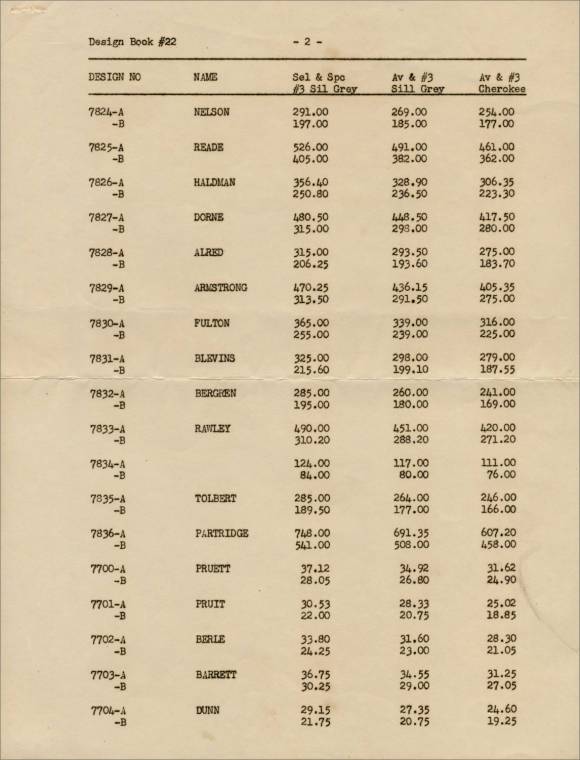
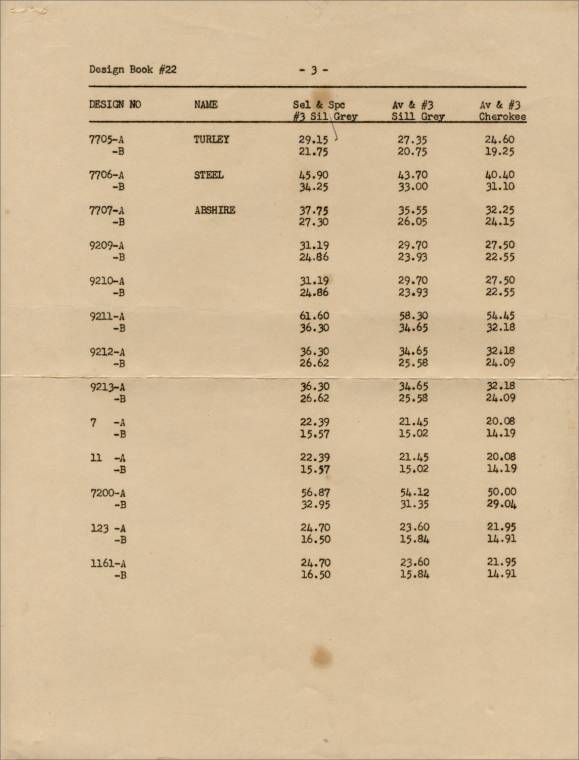
- Tate, Georgia – the Georgia Marble Company November 1, 1947 Price List (pdf) that accompanied the Georgia Beauties: Catalog Number Twenty-Two (pdf), The Georgia Marble Finishing Works, Builders of Fine Monuments, Canton, Georgia (no date of publication – possibly 1940s – catalog of cemetery monuments, urns, and vases)


Georgia Marble Co. Nov. 1, 1947 Price List - Page 1
Georgia Marble Co. Nov. 1, 1947 Price List - Page 2
Georgia Marble Co. Nov. 1, 1947 Price List - Page 3
- Tate, Georgia - the
Georgia Marble Company and Tate Historic District (Marble),
centered on GA 53 between GA 5 and Long Swamp Creek, Tate, Georgia,
on the Wisconsin National Register of Historic Places web site presented
by the Wisconsin Historical
Society.
Added to the Wisconsin National Registry of Historic Places:
Georgia, Pickens County,
Georgia Marble Company and Tate Historic District,
Centered on GA 53 bet GA 5 and Long Swamp Creek,
Tate, 05000644,
Listed, 6/10/05 - Tate, Georgia - the Georgia Marble Company (Marble) (present-day
company), P.O. Box 238, 200 Marble Lane, Tate, GA 30177; (800) 324-0122.
(Official web site: Polycor - see
next entry.)
The information below was obtained from the Georgia Mountain Parkway web site:
The Georgia Marble Company was founded 1884. According to this web site, the Columbia Marble Company quarry is known as the world’s largest open pit marble quarry. The quarry, which is located in Tate, Georgia, contains marble that varies in color from white to grey and pink. During the Marble Festival during the first weekend in October, quarry tours are available to the public.
- Tate, Georgia - Georgia
Marble Company Today a part of Polycor (Marble) (present-day company)
“Our History” Timeline on the Polycor web site.
“Marble Quarry – Building the Industry,” video presented on the Polycor web site.
“Our Quarries & Plants,” presented on the Polycor web site.
Locations of all Polycor Quarries
White Georgia Marble, Marble Hill, Georgia
White Cherokee Marble, Tate, Georgia
Pearl Grey Marble, Tate, Georgia
Solar Grey Marble, Tate, Georgia
Etowah Fleuri Marble, Tate, Georgia
- Tate, Georgia - Marble Quarry Photographs at Tate, Georgia (photographs). Photograph by Ed Jackson, Carl Vinson Institute of Government, The University of Georgia.
- Tate, Georgia – Marble
Quarry Scene, Tate, Ga. (postcard
photograph; Pub. by Asheville Post Card Co., Asheville, N.C., early
1900s; unmailed)
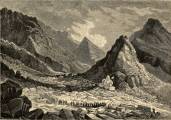
Marble Quarry Scene, Tate, Georgia 
- Tate, Georgia -
Interior of Marble Quarry, Tate, Georgia (postcard
photograph; early 1900s; unmailed)
Interior of Marble Quarry, Tate, Georgia 
- Tate, Pickens County, Georgia – Marble Quarries (Marble) Robert Wilson, the author of the brochure, Building Stones of Downtown Chattanooga, stated that the major types of stone quarried near Tate are known as Cherokee (pure white to white with light gray veining), Etowah (all pink with varying amounts of green veins), Creole (white with numerous dark-gray to black veins), Silver Gray (a uniform gray), and Mezzotint (gray with dark-gray to black veins). Georgia marble was used in the pillars of the First Presbyterian Church, the exterior of the Provident Building, and the exterior of the Federal Building, all in Chattanooga, Tennessee. (See the photograph section, 1. First Presbyterian Church; photograph 36. Provident Life and Accident; and photograph 12. Federal Building.) (From Building Stones of Downtown Chattanooga (Tennessee), by Robert Lake Wilson, 1979.)



Commercial use of material within this site is strictly prohibited. It is not to be captured, reworked, and placed inside another web site ©. All rights reserved. Peggy B. and George (Pat) Perazzo.