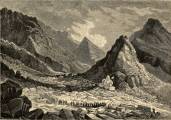
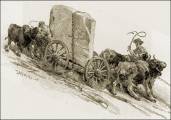

Ancient African Marble Quarries.
S. A. MacFarland of Carrara, Italy, who during the thirteen years he has been in Italy has taken considerable pains to investigate antique marbles, writes as follows to an English paper in regard to the ancient African quarries and the probability of their not being the same as those now worked:
"Samples obtained from the original walls of the Baths of Carracalla just outside Rome, constructed as early as 300 B. C., show they had been taken from some building of an earlier period, as they are polished on one face, and in this instance used only in the general construction of the wall as were any odd bits of stone or marble, a system in vogue to the present time in Italy. The Romans in this manner ruthlessly destroyed enough fine palaces and buildings to make the world rich now in examples of early art and architecture, to build walls of more modern but inferior buildings. The samples in many instances are entirely different from the products of the African quarries discovered in the last few years, but there are ample proofs the stone came from Africa. The work was done in many instances by African slaves brought to Rome by the roman conquerors. It is therefore not only presumable, but highly probable that the most valuable quarries of the dark continent are still to be rediscovered, and the enterprising prospector who succeeds in bringing them to the light of civilization will make at once a fortune and a name. One curious fact in connection with these marbles of a different texture and color from the more modernly quarried ones is that the present day marble workers are unable to polish them with any degree of success although many pieces bear evidence of a beautiful gloss having been given by the ancient workers. The grain is exceedingly fine and close knit and when broken resembles that of a very fine flint. I also found small pieces of more varied hues than any samples yet produced from the Algerian quarries."
Commercial use of material within this site is strictly prohibited. It is not to be captured, reworked, and placed inside another web site ©. All rights reserved. Peggy B. and George (Pat) Perazzo.