
Structures and Monuments in Which Missouri Stone was Used
- Finished Products from Missouri Stone in Nevada
- Reno, Nevada – the U.S. Post Office or Court House Buildings (from Missouri
Marble,
by Norman S. Hinchey, Report of Investigations No. 3, Missouri Geological
Survey and Water Resources, Rolla, Missouri, 1946. Used with permission
of the Missouri Department of Natural Resources.)
Marble quarried from the Phenix Marble Company’s “Old West Quarry” at Phenix, Greene County, Missouri, was used in the construction of the U.S. Post Office or Court House buildings prior to 1942.
- Reno, Nevada – the U.S. Post Office or Court House Buildings (from Missouri
Marble,
by Norman S. Hinchey, Report of Investigations No. 3, Missouri Geological
Survey and Water Resources, Rolla, Missouri, 1946. Used with permission
of the Missouri Department of Natural Resources.)
- Finished Products from Missouri Stone in
New Hampshire
- Concord, New Hampshire - the State House (from Missouri Marble, by Norman S. Hinchey, Report of Investigations No. 3, Missouri Geological Survey and Water Resources, Rolla, Missouri, 1946. Used with permission of the Missouri Department of Natural Resources.)
Adorado or Ste. Genevieve Botticino Marble quarried from the Inkley Marble Quarries Company quarry located southwest of Ste. Genevieve, Missouri, was used in the construction of the State House.
- Manchester, New Hampshire - the Post Office Building (from Missouri Marble,
by Norman S. Hinchey, Report of Investigations No. 3, Missouri Geological
Survey and Water Resources, Rolla, Missouri, 1946. Used with permission
of the Missouri Department of Natural Resources.)
Ste. Genevieve Golden Vein Marble, quarried in Ste. Genevieve County, Missouri, was used in the construction of the Post Office building.
- Concord, New Hampshire - the State House (from Missouri Marble, by Norman S. Hinchey, Report of Investigations No. 3, Missouri Geological Survey and Water Resources, Rolla, Missouri, 1946. Used with permission of the Missouri Department of Natural Resources.)
- Finished Products from Missouri Stone in
New Jersey
- Elizabeth, New Jersey - the National State Bank Building (from Stone Magazine, September 1922, Vol. XLIII, No. 9, pp. 466)
National State Bank, Elizabeth, N.J. Dennison & Hirons, New York, Architects. Executed in Napoleon gray marble cut by George Brown & Co. 
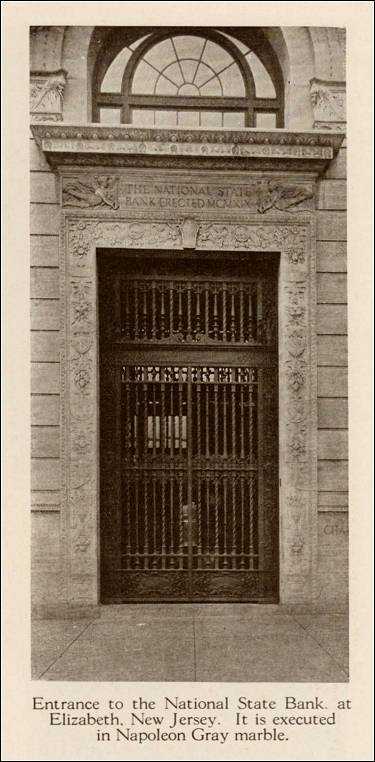
- Elizabeth, New Jersey -
the National State Bank Entrance (from Throvgh The
Ages Magazine, October 1923, Vol. 1, No. 6, “Doorways
in Marble: The Detail that Strikes the Keynote of Character in any
Structure,” pp. 23.)
Entrance to the National State Bank at Elizabeth, New Jersey. It is executed in Napoleon Gray marble. 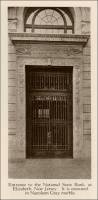
-
Elizabeth, New Jersey – the National State Bank – the Front & Interior (from Napoleon Gray, An Adaptable Marble, Phenix Marble Company, Kansas City, Missouri, Producers, and Tompkins-Kiel Marble Company, New York City, New York, Distributors, 1926, pp. 16, 45, & 51)
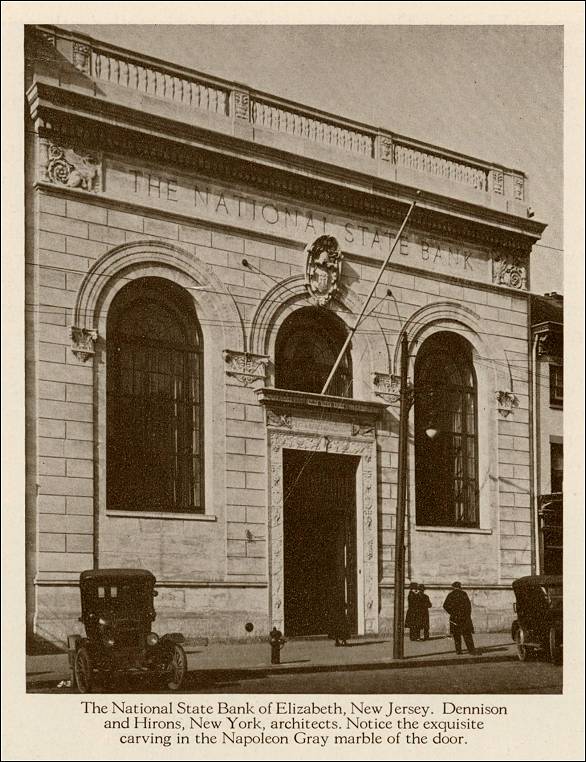
- Elizabeth,
New Jersey - the National State Bank of Elizabeth, New Jersey (from
article entitled, “Banks
- And Marble,” by
Alfred C. Bossom, in Throvgh The Ages Magazine, September
1926, Vol. 4, No. 5, pp. 31-37.)
The National State Bank of Elizabeth, New Jersey. Dennison and Hirons, New York, architects. Notice the exquisite carving in the Napoleon Gray marble of the door. 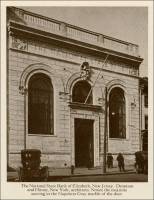
- Newark, New Jersey - the Post Office Building (from Missouri Marble,
by Norman S. Hinchey, Report of Investigations No. 3, Missouri Geological
Survey and Water Resources, Rolla, Missouri, 1946. Used with permission
of the Missouri Department of Natural Resources.)
Ste. Genevieve Rose Marble or Adorado Marble, quarried in Ste. Genevieve County, Missouri, was used in the construction of the Post Office building.
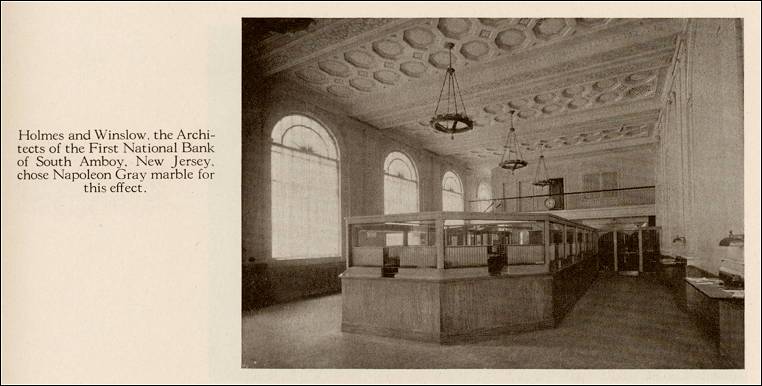
- South Amboy, New Jersey - the First National Bank Interior (from Throvgh The Ages Magazine, “Bank Interiors: Why Marble Offers Unusual Advantages in Securing the Necessary Effects,” by William W. Emmart, Architect, Baltimore, Md., March 1924, Vol. 1, No. 11, pp. 11.)
Holmes and Winslow, the Architects of the First National Bank of south Amboy, New Jersey, chose Napoleon Gray marble for this effect. 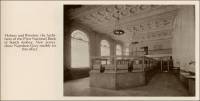
-
South Amboy, New Jersey – First National Bank Building Interior – the Counter Screen & Wainscot (from Napoleon Gray, An Adaptable Marble, Phenix Marble Company, Kansas City, Missouri, Producers, and Tompkins-Kiel Marble Company, New York City, New York, Distributors, 1926, pp. 42)
“The National State Bank of Elizabeth, New Jersey, with a front of Napoleon Gray marble. Dennison & Hirons, New York, Architects, Marble Contractor, George Brown & Co., Newark, New Jersey.” (pp. 16) 
“Detail of carving on the entrance doorway of the National State Bank of Elizabeth, New Jersey. The material is Napoleon Gray marble. Dennison & Hirons, New York, Architects; Marble Contractors, George Brown & Company, Newark.” (pp. 51) 
“The Interior of the National State Bank of Elizabeth, New Jersey, contains floor and counters of Napoleon Gray marble. Dennison & Hirons, New York, Architects; Marble Contractor, George Brown & Co., Newark.” (pp. 45) 
“First National Bank, South Amboy, New Jersey. Counter screen and wainscot in Napoleon Gray. Holmes and Winslow, New York, Architects; Marble Contractor, Charles M. Gray Marble and Slate Co., Long Island City.” (pp. 42) 
- Elizabeth, New Jersey - the National State Bank Building (from Stone Magazine, September 1922, Vol. XLIII, No. 9, pp. 466)
- Finished Products from Missouri Stone in
New Mexico
- Albuquerque, New Mexico - the Madonna of the Trail Statue (photographs) The following quotation is from Wikipedia, the free encyclopedia.
The following quotation is from Wikipedia, the free encyclopedia.
Madonna of the Trail is a series of monuments dedicated to the spirit of pioneer women in the United States. The monuments were commissioned by the National Society of Daughters of the American Revolution (NSDAR). They were placed along the National Old Trails Highway and extended from Bethesda, Maryland, to Upland, California, in each of the 12 states the road passed through.
Created by sculptor August Leimbach and funded by contributions, the Madonna of the Trail monuments were intended to provide a symbol of the courage and faith of the women whose strength and love aided so greatly in conquering the wilderness and establishing permanent homes.
Dedicated in 1928 and 1929, with each of the 12 located in a different state, they became a source of local pride. Through the continuing efforts of local and national groups, all are currently in good condition and on display.
The figure stands 10 feet high with a weight of 5 tons. The figure and the base are made of algonite stone (a poured mass) of which Missouri granite is used as the main aggregate, thus giving the monument a warm, pink shade. With the base, the monuments are about 18 feet high. The inscriptions on the east and west sides of each base are the same, but the north and south sides of each monument usually include local information as well.
- Albuquerque, New Mexico - the Madonna of the Trail Statue (photographs) The following quotation is from Wikipedia, the free encyclopedia.




Commercial use of material within this site is strictly prohibited. It is not to be captured, reworked, and placed inside another web site ©. All rights reserved. Peggy B. and George (Pat) Perazzo.