
Photo Tour from Ventura to Scorpion Ranch, Santa Cruz Island, Channel Islands National Park, Santa Barbara County, California
Including Some Uses of Local Stone
The following photographs were taken on January 13, 2011, during a field trip at the 2011 International Stonework Symposium, held by the Stone Foundation. Wikipedia includes an article on “Santa Cruz Island” if you’d like to learn more about the island and its history. Peggy B. Perazzo
 |
 |
 |
Scorpion Ranch implement shed |
Scorpion Ranch implement shed |
Scorpion Ranch implement shed |
|
 |
Detail of Scorpion Ranch implement shed |
Wheel standing at Scorpion Ranch implement shed |
 |
 |
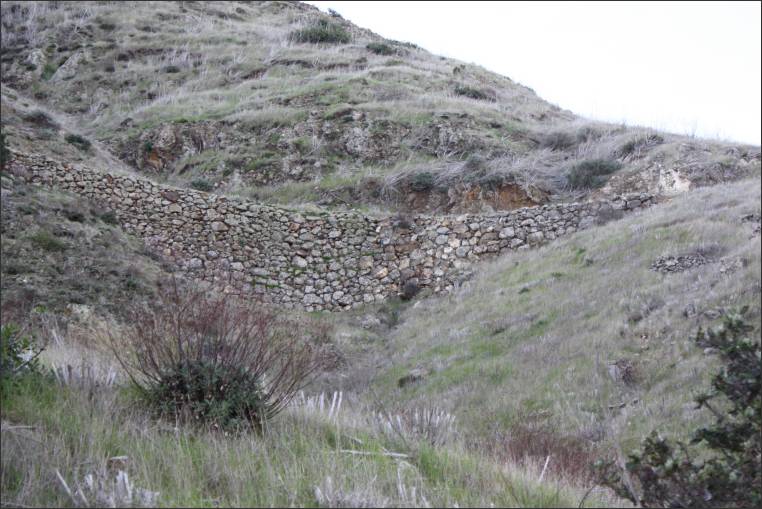 |
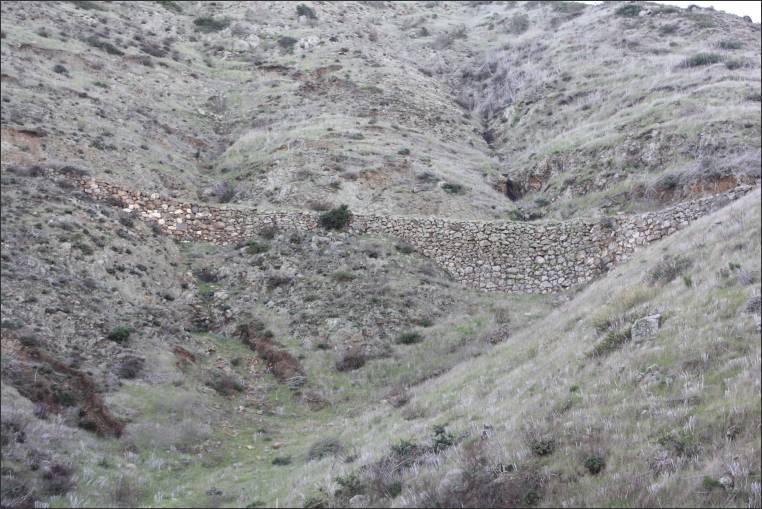
Dry stone masonry retaining wall high up on the hill of Scorpion Valley |
Dry stone masonry retaining wall high up on the hill of Scorpion Valley |
Dry stone masonry retaining wall high up on the hill of Scorpion Valley |
 |
 |
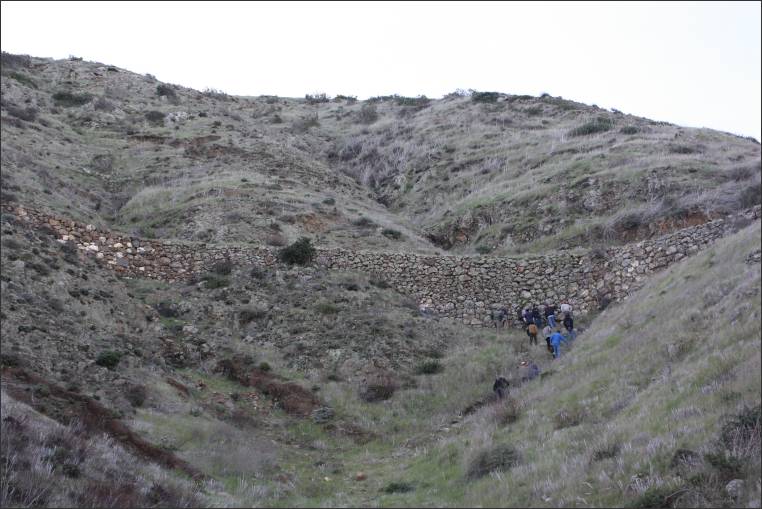 |
Members of the 2011 International Stonework Symposium hiking up to the dry stone masonry retaining wall high up on the hill of Scorpion Valley |
Dry stone masonry retaining wall high up on the hill of Scorpion Valley |
Dry stone masonry retaining wall high up on the hill of Scorpion Valley |
 |
 |
 |
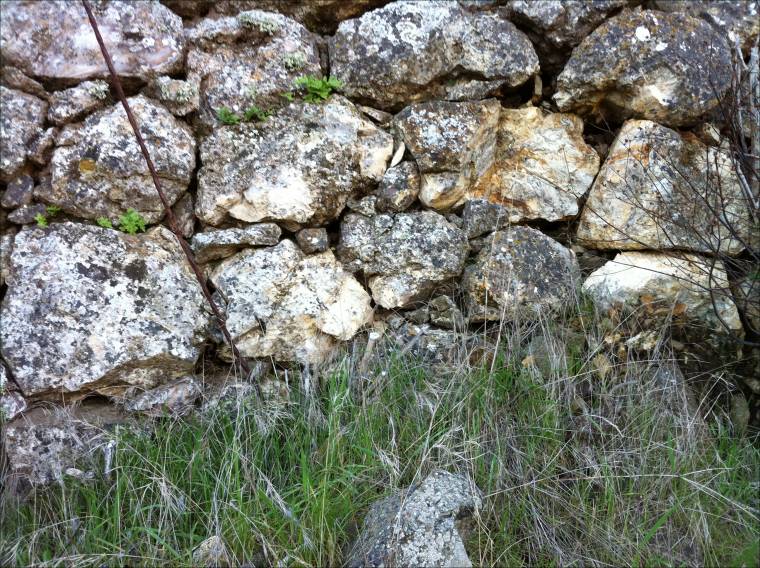
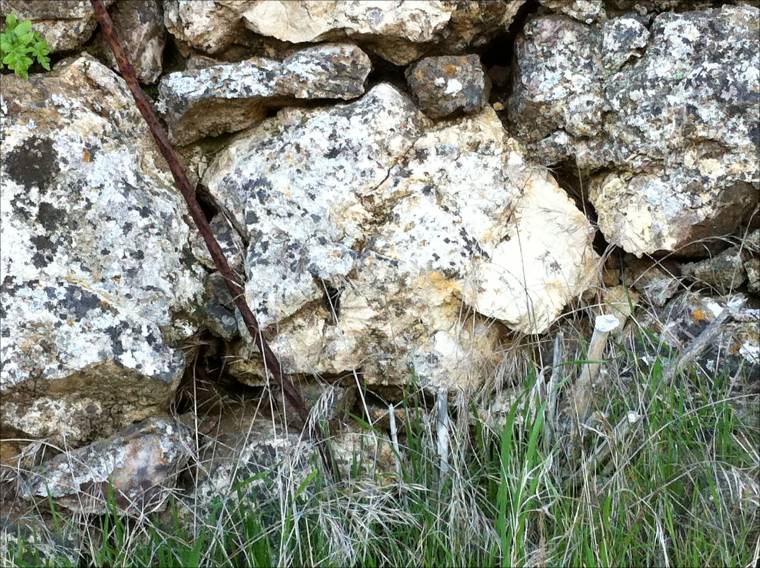
Closeup of dry stone masonry retaining wall high up on hill of Scorpion Valley |
Closeup of dry stone masonry retaining wall high up on hill of Scorpion Valley |
Historic rock wall in Scorpion Valley stream bed |
 |
 |
|
Closeup of historic rock wall in Scorpion Valley stream bed
|
Closeup of historic rock wall along Scorpion Valley stream bed |
Closeup of historic rock wall along Scorpion Valley stream bed
|
“Dry Stone Masonry Structures (on eastern Santa Cruz Island),” excerpt from Interpretive Guide: Eastern Santa Cruz Island, Channel Islands National Park, National Park Service, pp. 18:
“Dry stone masonry structures (retaining walls, check dams, stone piles) are found throughout Santa Cruz Island. Over 200 of the structures are located on the east end of the island. These features were constructed by Italian stone masons between 1880 and 1900 for the Justinian Caire family, which owned the island. Although the work was probably carried out by both skilled stone masons and less skilled workers, as differences in quality can be detected in the various structures, the masonry involved has been examined by experts and has been judged as ‘good quality work, built to high standards.’”
Retaining Walls and Check Dams
“Retaining walls are constructed for road support and erosion control. The early records of the various ranch foremen describe these projects. The stone retaining wall supporting the road out of Scorpion Valley towards Smugglers Cove is notable for massive size, the large size and number of rocks used to build it, and the difficulty of constructing such a large structure in its steep hillside location. Walls are still visible today along the Scorpion and Smugglers stream beds and along the Cavern Point trail.
“Check dams were built in the drainages leading into the developed valleys to slow the force and amount of water entering these valleys and to capture the eroding sediment. Evidence of flooding at Scorpion Ranch has been found as far back as 1916; the dams were an effort to protect the ranch structures from erosion and flooding. Some of the best examples of these dams can be found along the trail to Cavern Point.
“Many of the retaining walls and check dams have deteriorated over time from erosion, flooding, and lack of maintenance. In an effort to preserve this slice of history, the National Park Service began repairing these dry stone structures on the east end of the island during the summer of 1999. Efforts were focused on structures that required minimal repairs, structures that could function to prevent or slow flooding and erosion, and structures in areas of high visitor visibility, such as the check dams along the Cavern Point trail. Nearly 100 retaining walls and check dams were repaired during this period.
Stone Piles
“‘To make better use of the land, workers cleared the fields of rocks; then piled the huge rocks into cairns which remain today as a monument to their labor,’” wrote Gherini about the large rock piles that can be seen as one hikes along the road to Smugglers Cove. The ‘better use of the land’ Gherini writes about is the planting of a variety of crops such as wheat, corn, potatoes, beans, barley, onions, hay, and alfalfa in these cleared fields between Scorpion and Smugglers. These crops supplied many of the food products and hay for the island operation and led to the east end of the island, known as the ‘granary.’”
Commercial use of material within this site is strictly prohibited. It is not to be captured, reworked, and placed inside another web site ©. All rights reserved. Peggy B. and George (Pat) Perazzo.