
List of Quarries in Alaska & Quarry Links, Photographs and Articles
- Prince of Wales Island (northern part), Alaska – Map
showing marble deposits examined on northern Prince
of Wales Island and on Kociusko, Marble, Orr,
and Heceta islands (circa 1920) (Marble) (Excerpt
from Mineral Resources of Southeastern Alaska, Bulletin
682, by Ernest F. Burchard, U. S. Geological Survey, 1920)
Plate III. Map showing marble deposits examined on northern Prince of Wales Island and on Kociusko, Marble, Orr, and Heceta islands (Alaska). From Coast and Geodetic Survey charts Nos. 8200 and 8150. (pp. 28) 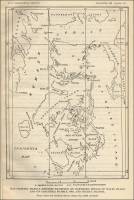
- Prince of Wales Island (southeastern part), Alaska – Map showing marble deposits examined on southeastern Prince
of Wales Island and on Revillagigedo Island (Marble) (Excerpt
from Mineral Resources of Southeastern Alaska, Bulletin
682, by Ernest F. Burchard, U. S. Geological Survey, 1920)
Plate V. Map showing marble deposits examined on southeastern Prince of Wales Island and on Revillagigedo Island (Alaska). From Coast and Geodetic Survey chart No. 8100. (pp. 32) 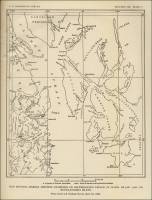
-
Prince of Wales Island, Outer Ketchikan, Alaska – “Abandoned Equipment in Rock Quarry,” presented on Panoramio by Gary O. Grimm.
- Prince of Wales Island, Alaska – American Marble
Co. Tramway (The following information was obtained
from Railways
of Alaska – Rails to Riches: Historic Railways of Alaska
and the Yukon Territory, by Murray Lundberg, presented
on the Railsnorth.com web site.)
The author states that the Alaska Marble Company operated “a 3,200-foot gravity line” tramway about 1905 on Prince of Wales Island.
- Prince of Wales Island, Baldwin, Alaska – American
Coral Marble Co. – Marble Quarry (The following
information is from the section “Marble and Granite” in Stone:
An Illustrated Magazine Devoted to Stone, Marble, Granite, Slate,
Cement, Contracting and Building, Vol. XXIV, No. 1, January,
1902, Stone Publishing Co., New York, pp. 61.)
American Coral Marble Co.
The American Coral Marble Co. has been incorporated at Tacoma, Wash., with a capital stock of $1,000,000, to develop marble claims on the Prince of Wales Island, Alaska. The incorporators are: W. H. Reminigton, L. J. Pentecost, Sidney Plummer and Walter M. Harvey, of Tacoma, and Francis Clarno, F. O. Downing and E. A. Baldwin, of Portland.
- Prince of Wales Island, Baldwin, Alaska – the American
Coral Marble Company (circa 1905) (Marble) (The following
information is from “Marble Production in Individual States,” Mineral
Resources of the United States, 1905, David T. Day,
Chief of Division, Department of the Interior, United States Geological
Survey, Government Printing Office, Washington, D.C., 1906, pp.
1054.)
“Only a small quantity of Alaskan marble was put upon the market in 1905, and that was chiefly for the local monument trade. At Baldwin, Prince of Wales Island, the American Coral Marble Company has done considerable development work in the years 1904 and 1905, but has not sold any marble as yet….”
- Prince of Wales Island, Baldwin, Alaska – the
American Coral Marble Company Quarry (North Arm Property) near
Baldwin (circa 1907) (Marble) Excerpt from “The
Building Stones and Materials of Southeastern Alaska,” by
Charles W. Wright, in Mineral Resources of Alaska: Report
on Progress of Investigations in 1907, Bulletin 345, by Alfred
H. Brooks and Others, Department of the Interior, United States
Geological Survey, 1908, 120-121.
American Coral Marble Company.
“The properties of the American Coral Marble Company are at two localities – (1) at the head of North Arm, where 12 claims have been located along the north shore of the inlet, and (2) at the north entrance to Johnson Inlet, where the company has several claims extending from Dolomi eastward to Clarence Strait. The principal developments have been made at the North Arm property, and at this point a post-office named Baldwin has been established. Active work at this locality began in 1904, and the marble deposits were prospected during that year. In 1905 a wharf was built, machinery was installed, and buildings were erected preparatory to quarrying the marble. During 1906, however, practically no work was done, and all the machinery was removed in 1907….”
“The deposits at North Arm and Dolomi consist of marble beds interstratified with chloritic and calcareous schists, striking northwest with steep dips, usually to the southwest. The surrounding area is mantled by a dense growth of vegetation, and the limits of the deposits have not been definitely determined, though where the marble is exposed it is much fractured, variable in color and composition, and intersected by a few narrow dikes of diabase. The fracture planes were probably formed principally during the period of tilting and folding of the beds and existed before erosion exposed the present surface outcrops. Since that time weathering has accentuated and to some extent increased the number of fracture planes. It seems probable, however, that in depth these planes, although potentially present as lines of weakness, will become less numerous and will not interfere greatly in quarrying.
“Although some parts of the deposits consist of pure-white, fine-grained marble of excellent quality, other parts are poorly colored, coarse grained, and of little commercial value, and it will probably be difficult to obtain large quantities of uniform grade. The better grade is reported to give the following analysis: Calcium carbonate 94 percent; alumina, 3.9 per cent; silica, 1.4 per cent; magnesia, 0.7 per cent. Pyrite is also present in small amounts, occurring in thin seams and finely disseminated in some of the marble.”
- Prince of Wales Island, Baldwin, Alaska – the American
Coral Marble Company Quarry at Baldwin (circa 1907/1908) (Marble) Excerpt
from “Building Stones,” The Ketchikan and Wrangell
Mining Districts of Alaska, Bulletin 347, by Fred Eugene
Wright and Charles Will Wright, Department of the Interior, United
States Geological Survey, Washington: Government Printing Office,
1908, pp. 196-197.
American Coral Marble Company.
“General description. – The properties of the American Coral Marble Company are located at two localities – (1) at the head of North Arm, where twelve claims have been located along the north shore of the Inlet, and (2) at the north entrance to Johnson Inlet, where the company has several claims extending from Dolomi eastward to Clarence Strait (see Pl. I). The principal developments have been made at the North Arm property, and at this point a post-office named Baldwin has been established. Active work at this locality began in 1904, and the marble deposits were prospected during the year. In 1905 a wharf was built, machinery installed, and buildings erected preparatory to quarrying the marble. During 1906, however, practically no work was done, and all of the machinery was removed in 1907….”
“Marble deposits. – The deposits at North Arm and at Dolomi consist of marble beds interstratified with chloritic and calcareous schists, striking northwest with steep dips usually southwest. The surrounding area is mantled by a dense growth of vegetation, and the limits of the deposits have not been definitely determined, though where the marble is exposed it is much fractured, variable in color and composition, and intersected by a few narrow dikes of diabase. The fracture planes were probably formed principally during the period of tilting and folding of the beds and existed before erosion exposed the present surface outcrops. Since that time weathering has accentuated and to some extent increased the number of fracture planes, and it seems probable, however, that in depth these planes, although potentially present as lines of weakness, will become less numerous and will not interfere greatly in quarrying.
“Although some parts of the deposits consist of pure white, fine-grained marble of excellent quality, other parts are poorly colored, coarse-grained, and of little commercial value, and it will probably be difficult to obtain large quantities of uniform grade. The better grade is reported to give the following analysis: Calcium carbonate, 94 per cent; alumina, 3.9 per cent; silica, 1.4 per cent; magnesia, 0.7 per cent. Pyrite is also present in small amounts, occurring in thin seams and finely disseminated in some of the marble.”
- Prince of Wales Island, Baldwin, Alaska – the American
Coral Marble Company (circa 1905) (Marble) (The following
information is from “Marble Production in Individual States,” Mineral
Resources of the United States, 1905, David T. Day,
Chief of Division, Department of the Interior, United States Geological
Survey, Government Printing Office, Washington, D.C., 1906, pp.
1054.)
-
Calder Bay, Prince of Wales Island, Alaska – Southeast Alaska’s Marble History: Calder Bay Marble, Prince of Wales Island Alaska, presented by Fathom Stone of Whistler, British Columbia.
-
Prince of Wales Island, Calder Bay, Alaska – Marble Quarry, Calder, Alaska (postcard photograph No. 57; White & Pond Co., Juneau, Alaska; early 1900s; postmark 1909)
Marble Quarry, Calder, Alaska (postcard photograph No. 57; White & Pond Co., Juneau, Alaska; early 1900s; postmark 1909) 
-
Prince of Wales Island, Calder Bay, Alaska – Calder Bay Marble Quarry Photograph, circa 1890-1910 (Photograph) Alaska State Library, Historical Collections, Alaska’s Digital Archives.
Collection Name: Julia Willma Weber (b. 1904). Papers, ca. 1890-1901. UAA-HMC-0344
Identifier: UAA-hmc-0344-26-c
Title: Calder Bay marble quarry, ca. 1890-1910. Description: “Title taken from caption. View of three men working in the Calder Bay marble quarry. The bay is located half way between Mount Calder and the abandoned village of Calder on Prince of Wales Island in southeast Alaska. Photograph taken between 1890 and 1910….” - Prince of Wales Island, Calder Bay, Alaska – Alaska
Marble Company’s Quarry and Dock (Photographs from
between 1896 to 1913) Marble
quarry photographs listed in the “Winter and Pond Collection,
Southeast and Alaska-Yukon related views, 1893-1943” (Lloyd
Winter & E. Percy Pond) in the Alaska
State Library Historical Collections – Guide to Collection – Winter
and Pond Co., Photographers (a Microsoft Word document)
The following is a list of photographs of the Alaska Marble Company’s dock and quarry listed in the Winter & Pond Collection:
“Marble Quarry, Calder, Alaska, c. 1906.” Photograph description: “View down into a quarry of Alaska Marble Company at Calder, with men at work, ca. 1906.” Photograph from the Winter and Pond. Photographs, 1893-1943. ASL-PCA-87 collection. Photograph taken by Winter & Pond between 1896 to 1913.
“Hoisting marble from Quarry, Calder, Alaska. ca. 1906.” Photograph description: Title taken from image. “Moving marble at the Calder Works, Alaska. Men loading marble suspended from hoist onto rail car, surrounded by marble blocks.” Photograph from the Winter and Pond. Photographs, 1893-1943. ASL-PCA-87 collection. Photograph ID ASL-P87-0432. Photograph by Winter & Pond between 1896 and 1913.
“Calder, Alaska.” Photograph description: “Title taken from image. Dwellings and tramway for marble quarry on Prince of Wales Island. Photographer's number 637.” Photograph from the Winter and Pond. Photographs, 1893-1943. ASL-PCA-87 collection. Photograph ID ASL-P87-0429; Photograph taken by Winter and Pond between 1896 and 1913.
- Prince of Wales Island, Calder Bay, Alaska – Alaska
Marble Company Wharf & Quarry (Marble) (photograph)
This photograph is presented on the United
States Geological Survey Photographic Library.
(photo caption) “Calder Island, Alaska. Wharf and quarry of Alaska marble Company on Prince of Wales Island. Taken in the rain. Circa 1912.”
- Prince of Wales Island, Calder Bay, Alaska - Marble Quarry.
From 1905 to 1920 the mine served as a marble quarry producing building
materials. Today the Calder Bay Mine continues to produce rock. (The
link from which this information was obtained is no longer available.)
<http://yukonweb.com/community/yukon-news/1999/jan11.htmld/> - Prince of Wales Island, Calder Bay, Alaska – Marble
Quarry Photographs listed in the “Winter and Pond Collection,
Southeast and Alaska-Yukon related views, 1893-1943” (Lloyd
Winter & E. Percy Pond) in the Alaska
State Library Historical Collections – Guide to Collection – Winter
and Pond Co., Photographers (a Microsoft Word document)
The following is a list of Alaska stone quarry-related photographs listed in the Winter & Pond Collection:
429 Calder, Alaska [dwellings and tramway for marble quarry on Prince of Wales Island, ca. 1906].
430 Moving marble at the Calder Works, Alaska [men loading marble suspended from hoist onto tram car in foreground, surrounded by marble blocks, ca. 1906].
431 Alaska Marble Co.’s dock at Calder [view of marble blocks and hoisting works on wharf, ca. 1906].
432 Hoisting marble from Quarry, Calder, Alaska [men loading marble blocks onto rail car, ca. 1906].
433 A.M. Co’s Quarry, Calder, Alaska [men at work on floor of Alaska Marble Co.’s quarry, ca. 1906].
434 View down into a quarry of Alaska Marble Company at Calder, [with men at work, ca. 1906].
- Prince of Wales Island, Calder (near),
Alaska – Commercial Marble Quarrying Began near Calder (circa
1920) (Marble) (Excerpt from Mineral Resources
of Southeastern Alaska, Bulletin 682, by Ernest F. Burchard,
U. S. Geological Survey, 1920)
“Alaska marble was first used, long before the coming of the white man, by natives, who carved utensils and ornaments from some of the more highly colored varieties. The Russian occupants of Alaska gave no heed to the marble, though they may have utilized a few slabs for tombstones. The marbles of southeastern Alaska were among the first of the mineral deposits of the Territory to be mentioned in the official reports of the United States Government. For many years these marbles excited no interest, for in spite of their favorable location on tidewater there was no market for them and accordingly they had no value. Probably some time in the early nineties a little marble was quarried on Ham Island, in the Wrangell district, and worked up into tombstones, which were sold at localities near by. These tombstones were in considerable demand among the natives, who learned their use from the white man and substituted them for the crudely carved wooden totems.
“It was about 1896 that the first thought was given to opening the Alaska marble deposits on a commercial scale, for by this time the rapid growth of the cities of the west coast had made a demand for ornamental and building stone. After some years of prospecting on the deposits on the northwest side of Prince of Wales Island, a quarry was opened near Calder, and shipments were begun in 1902. Since 1904 there has been a steady increase in the marble output of Alaska, which, however, has practically all come from a few quarries in the Shakan-Calder region of the Ketchikan district. Although, as this report shows, marble is widely distributed in southeastern Alaska, its development has thus far been limited to one generation region.”
- Prince of Wales Island, Calder Bay, Alaska – the
Alaska Marble Company (circa 1908) (Marble) Excerpt
from “Building Stones and Materials,” Mineral
Resources of Alaska: Report on Progress of Investigations in 1908,
Bulletin 379, By Alfred H. Brooks and Others, Department
of the Interior, United States Geological Survey, 1909, 84.
“The principal marble quarry in southeastern Alaska is located at Calder Bay, on the north end of Prince of Wales Island. At this quarry, the property of Alaska Marble Company, developments have been carried to an average depth of 45 feet, the area of the floor being 60 by 90 feet. At this level a tunnel has been started under the hill, the plan being to excavate large room underground. This room will be gradually enlarged and eventually the quarry operations will be protected from the weather by a roof of stone, and can thus be carried on throughout the winter. The marble at this depth is reported to be better than that near the surface, being comparable with the best grades of Italian white marble. Large shipments were made during the year to Seattle, Tacoma, and San Francisco, and a much greater production is planned for 1909.”
- Prince of Wales Island, Calder Bay, Alaska – Vermont
Marble Company Calder & Marble Tokeen Quarries, Report by
J. G. Shepard, U. S. Bureau of Mines, dated March 1925 (Tokeen & Calder,
Prince of Wales Island, Ketchikan Precinct) in PDF format.
(This report includes 2 photographs that relate to the Vshermont
Marble Co. quarries. The photo captions are: “Tokeen Harbor” and “Marble
blocks at dock.” Below is a transcription of the portion
of the report that relates to the Vermont Marble Company.)
The Vermont Marble Co.
Tokeen and Calder.
Prince of Wales Island.
Ketchikan Precinct. March 1925
Examined by J. G. Shepard.
U. S. Bureau of Mines.
Location:
The Vermont Marble Co. operates two plants on Prince of Wales Island, Tokeen and Calder. The first is situated on Davidson Inlet and Calder on Shakan straits. Both have excellent deep water harbors which offer no obstacles to ocean going vessels.
Tokeen Plant:
The Tokeen plant is working at full capacity. As operations have only been recently resumed for the season, a large amount of dead work is being necesarily (sic) carried on, in order to place the pits in full producing condition. Four pits are being worked at the main quarry. A derrick is used at each pit. Nine channelers and five burleys are in operation. The lowest point reached at any of the pits is approximately one hundred feet below the surface. At this depth surface joints still presist (sic) and cause a large percentage of waste. Another cause of annoyance and waste is a series of intersection andesite dikes.
One quarter mile north of the main workings a prospect is being floored off. One derrick is being operated and a shore derrick is being erected. Two channelers and one burley are in operation. More equipment will be added as soon as space is cleared.
At the beach two derricks handle the blocks of marble, which are freighted by barge, to Tacoma and San Francisco, for manufacture.
All machinery is run by steam, an aggregate of 450 H.P. being generated by coal fed boilers.
Ninty (sic) men are employed at present at the plant and production should reach 800 tons per month, with the completion of dead work.
A complete machine shop, equipped to care for the simple repairs needed for the quarrying machinery is located half way between the beach and the pits. Lights are generated by a small gas engine, direct (sic) connected to the dynamo.
Calder Plant:
At the Calder plant a small crew of men are engaged in moving machinery and equipment from the quarry operated last year to the pits of old Calder. The prospect operated last season turned out marble, apparently of a good quality, but on attempting to manufacture, it was found to be of insufficient hardness, making it necessary to abandon the prospect. It is hoped that the material fom (sic) the old pits will be found to meet manufacturing requirements.
Conclusion:
It is the intention of the Vermont Marble Co. to continue operations on a large scale and to increase production as much as possible. Business conditions on the Pacific Slope are said to be excellent and Alaska marble is much in demand. The entire situation depends on the grade of marble which can be produced with out exceeding the maximum amount of waste allowable. The waste percentage has been found to be very great, reaching at times, over 70%. Some material of a seemingly good grade is found to be to (sic) soft and unsuitable for manufacture in the facturies (sic).
However, in spite of these handicaps, officials of the Company look forward to a prosperous year in the marble business.
- Prince
of Wales Island, Calder Bay, Alaska – Vermont
Marble Company Properties at Calder (circa 1932) (Marble) (From Mineral
Industry of Alaska in 1932, by Philip S. Smith, United
States Geological Survey, Bulletin 857-A, 1934.
“The largest single enterprise that is included under this section is the quarrying of marble by the Vermont Marble Co. from its properties in southeastern Alaska. For many years this company was a large and consistent producer, but later its output decreased, and in 1931 its quarries were idle throughout the year. Resumption of work is therefore regarded as a very favorable indication that the industry will continue to be significant in the general mineral activity of the Territory. The quarries owned by this company are near Tokeen and Calder, on the west coast of Prince of Wales Island, but the finishing plants to which the rough stone is sent are in Tacoma, Wash., and San Francisco, Calif. The stone has been in great demand throughout the west coast and has been used in many of the most imposing buildings, principally for interior trim and decoration. According to the reports of the company only about two thirds of the marble quarried during the year was shipped to its finishing plants, the rest being held at the mine. Limestone and marble are widely distributed throughout southeastern Alaska, and, according to Burchard,* many different grades, some even approaching statuary quality, are found in the region. It therefore seems strange that more of these limestone and marble deposits, many of which are favorably situated with respect to deep-water transportation, have not been profitably developed.”
(* Footnote 33, pp. 74: Burchard, E. F., Marble resources of southeastern Alaska: U.S. Geol. survey Bull. 682, pp. 29-39, 1920)
- Prince of Wales Island, Calder, Alaska – Vermont
Marble Company Properties at Calder (circa 1934) (Marble) (Excerpts
from Mineral Industry of Alaska in 1934, by Philip S. Smith,
United States Geological Survey, Bulletin 868-A, Government Printing
Office, 1936.)
“…one of the hitherto large mining enterprises is the quarrying of marble by the Vermont Marble Co. from its properties near Tokeen and Calder, in southeastern Alaska. No productive mining was done there during 1934, though the property was kept in condition so that work could be resumed promptly when required. The stone from these quarries is used in most of the larger and better buildings in the whole Pacific coast region, being especially in demand for interior trim and decoration. Ordinarily the company ships its rough stone from Alaska to finishing plants it maintains in Tacoma, Wash., and San Francisco, Calif. There is, of course, no basis for believing that the cessation of quarrying during the year means the permanent closing of the property. It only marks halt in production until sales of the product now on hand deplete the stock so that replacements are needed, and there is every indication that this will occur shortly so that the quarries will again be running. Limestone and marble are widely distributed throughout southeastern Alaska, and, according to Burchard,* many different grades, some even approaching statuary quality, are found in the region. It therefore seems certain that some of these limestone and marble deposits, many of which are favorably situated with respect to deep-water transportation, will ultimately be profitably developed.
(* Footnote 5, pp. 81: Burchard, E. F., Marble resources of southeastern Alaska: U.S. Geol. Survey Bull. 682, pp. 29-39, 1920)
- Prince of Wales Island, Calder, Alaska – the Vermont
Marble Companies Quarries at Calder (circa 1935) (Marble) (Excerpt
from Mineral Industry of Alaska in 1935, by Philip S.
Smith, United States Geological Survey, Bulletin 880-A, Government
Printing Office, 1937.)
“…one of the hitherto large mining enterprises is the quarrying of marble by the Vermont Marble Co. from its properties near Tokeen and Calder, in southeastern Alaska. No productive mining was done there during 1935, though the property was kept in condition so that work could be resumed promptly when required. The general practice of this company has been to operate these quarries actively at intervals and supply all the stone it needed for the ensuing 2 or 3 years, during which time the quarries are kept only in a stand-by condition. The stone from these quarries is used in most of the larger and better buildings in the whole Pacific coat region, being especially in demand for interior trim and decoration. Ordinarily the company ships its rough stone from Alaska to finishing plants it maintains in Tacoma, Wash., and San Francisco, Calif. There is, of course, no basis for believing that the cessation of quarrying during the year means the permanent closing of the property. It only marks a halt in production until sales of the product now on hand deplete the stock so that replacements are needed, and there is every indication that this will occur shortly so that the quarries will again be running. Limestone and marble are widely distributed throughout southeastern Alaska, and, according to Burchard,* many different grades, some even approaching statuary quality, are found in the region. It therefore seems certain that some of these limestone and marble deposits, many of which are favorably situated with respect to deep-water transportation, will ultimately be profitable developed.”
(* Footnote 9, pp. 86: Burchard, E. F., Marble resources of southeastern Alaska: U.S. Geol. Survey Bull. 682, pp. 29-39, 1920)
- Prince of Wales Island, Calder, Alaska – Vermont
Marble Company Properties at Calder (circa 1934) (Marble) (Excerpts
from Mineral Industry of Alaska in 1934, by Philip S. Smith,
United States Geological Survey, Bulletin 868-A, Government Printing
Office, 1936.)
-
Prince of Wales Island, Calder, Alaska – Marble Quarries at Calder (1939) (Marble) (Excerpt from The Stone Industries: Dimension Stone, Crushed Stone, Geology, Technology, Distribution, Utilization, by Oliver Bowles, 2nd ed. 1939, pp. 203.)
“Alaska. – Numerous marble deposits in southeastern Alaska have been described by Burchard.* While several companies have operated in various places production has been confined chiefly to Tokeen on Marble Island and Calder on Prince of Wales Island. The Calder quarry is on a bluff about 100 feet above sea level. Metamorphism of the original limestone probably was caused by an intrusive granite which lies northeast of the marble. The belt is approximately 3,000 feet wide and at least 200 feet deep. Three types of marble are quarried – a pure white, which is the most valuable, a blue-veined white, and a light blue or mottled variety. The white marble is very pure, as analyses show more than 99 per cent calcium carbonate. Blocks are conveyed over an inclined railway to a wharf on deep water at Marble Cove….”
“All Alaska marbles are shipped by freight steamers to finishing mills on the Pacific coast, the largest being at Tacoma, Wash. To save freight only perfect blocks are shipped. Finished products are marketed chiefly throughout the Pacific Coast States.”
(* Footnote 34, pp. 203: Burchard, E. F., Marble Resources of Southeastern Alaska. U. S. Geol. Survey Bull. 682, 1920, p. 118.)
- Prince of Wales Island, Calder Bay, Alaska - Marble/Limestone
Quarry - Vermont Marble Company (Marble) (From Southeastern
Coastal Alaska Limestone Terrain (1944), presented by the Alaska
Department of Natural Resources. The information in the report
was taken from a report "Limestones
of the Pacific Northwest," by Edwin Hodge, industrial raw
materials consultant, September 1, 1944, for the Bonneville Power
Administration.) (The link from which this information was
obtained is no longer available.)
<http://wwwdggs.dnr.state.ak.us/scan1/mr/text/MR191-08.PDF>"Calder Region, Limestone occurs in Calder Range and extends northward to Labouchere Bay. Vermont Marble Company.
Rocks: Pro-silurian. Marble belt 3,000 feet wide strikes northwest and dips southwest, extends south across dry pass to Marble Island; cut off on northeast and just back of Shakaan by granite. To northwest crosses Calder Bay and reappears to north and beyond, Cut by diabase dikes which contain pyrite and pyrrhotite."
"Commercial considerations: Limestone beds 100 to 1,000 feet thick. Calder quarry on south side and near head of Marble creek. Quarry connected with deep water at Marble Cove by tram (1935). Elevation 100 feet. To Seattle 812 miles."
-
Prince of Wales Island, Calder Bay, Alaska – the Admiral Calder (Calcium Carbonate) (present-day company) – “Tri-Valley sells quarry in Alaska,” 2011, presented on the Free Library, Mining Media, Inc.
According to this article, the Admiral Calder calcium carbonate quarry on Prince of Wales Island in Alaska was sold by Tri-Valley corporation (a California company) to Columbia River Carbonates in 2011.


Commercial use of material within this site is strictly prohibited. It is not to be captured, reworked, and placed inside another web site ©. All rights reserved. Peggy B. and George (Pat) Perazzo.